About Libellula angelina Selys, 1883
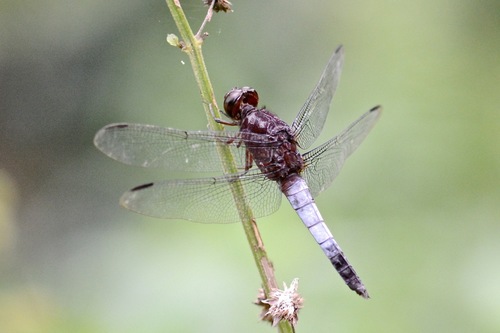
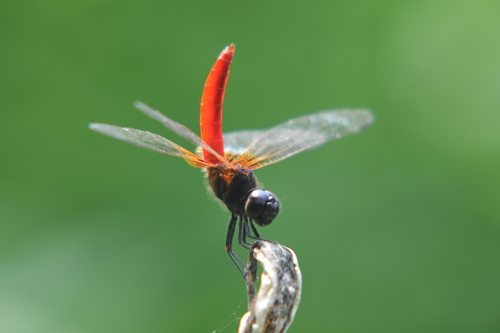
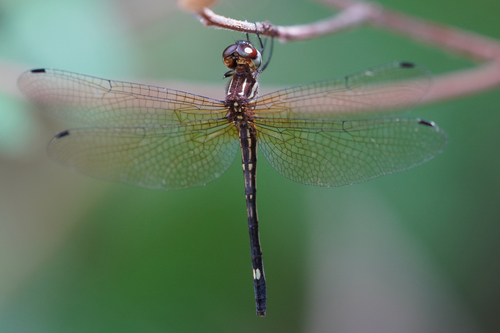
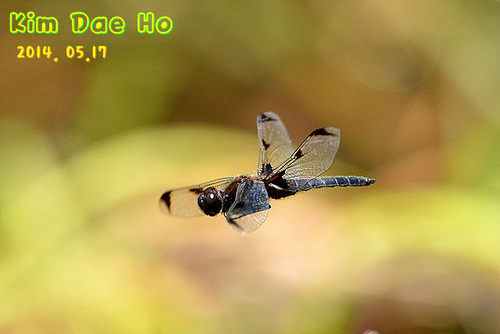
This dragonfly species, Libellula angelina Selys, 1883, is commonly called the bekko tombo. It ranges in color from golden to rusty-brown, with a dark stripe running down the center of its abdomen and a distinct pattern of dark markings on its wings. Like all other members of the Libellulidae family, this species has a relatively short, broad abdomen, and its total body length is distinctly shorter than its wingspan.
The bekko tombo is distributed across central and northern China, Japan (including Honshu, Shikoku, Kyushu and offshore Japanese islands), and Korea. It lives in old, stable ponds with moderate plant growth located in lowland hill areas. Its nymphs require clear, open water, where they move through bottom sediments.
The bekko tombo is univoltine, meaning it has one generation per year. Its larval period lasts one year. Eggs hatch between May and June, and adult dragonflies emerge the following spring. Males often compete fiercely for access to reproductive females. After copulation, females typically start laying eggs in water immediately, and are often guarded by their mate. Females of some dragonfly species can store live sperm inside their bodies for several days.