About Leymus cinereus (Scribn. & Merr.) Á.Löve
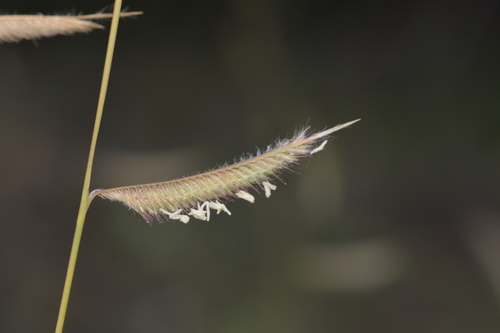
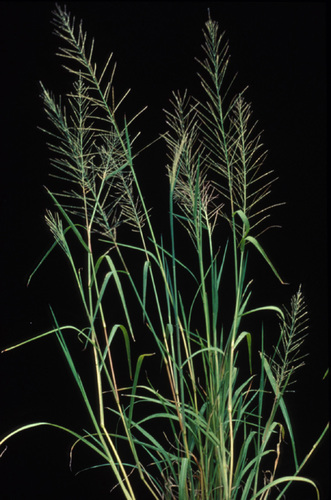
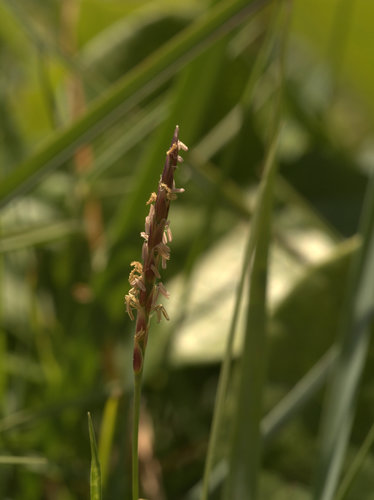
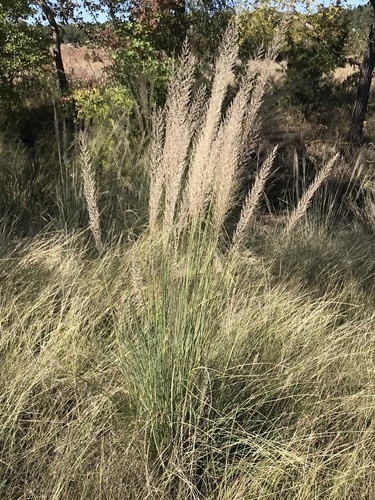
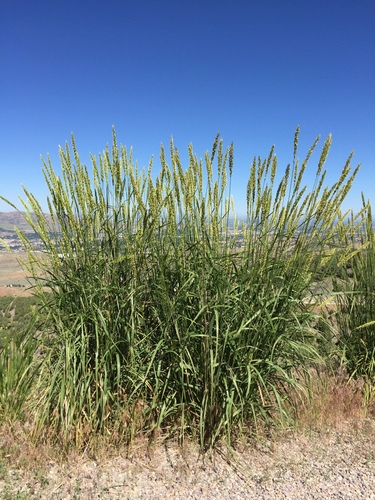
Leymus cinereus (Scribn. & Merr.) Á.Löve is a perennial bunchgrass that forms large, tough clumps. These clumps can grow up to around 2 metres (6+1⁄2 feet) tall, and sometimes reach over 1 m (3+1⁄2 ft) in diameter. It has a large fibrous root system, and sometimes produces small rhizomes. Its inflorescence is an unbranched cylindrical spike, divided into up to 35 nodes, with several flower spikelets growing at each node.
This species is a common native grass of western North America, found in western Canada and the United States, ranging from California to Minnesota. It grows in many habitat types including grassland, prairie, forest, scrub, chaparral, and sagebrush. It can also be found in moist, semi-alkaline flats. In salt flats, it is replaced by the species Distichlis stricta.
Leymus cinereus may hybridize with Leymus triticoides, Leymus salina, and Elymus elymoides.
Native American groups had a variety of uses for this grass. The Okanagan and Colville used its roots medicinally to treat internal bleeding and gonorrhea, and also used it as a hair tonic. The Cheyenne burned the grass and mixed the resulting ash with blood to create a black dye. Multiple different Native American groups used the grass for bedding, floor coverings, arrow construction, and basketry. Cultivars of Leymus cinereus, including 'Magnar' and 'Trailhead', are used for rangelands and site reclamation.