About Levisticum officinale W.D.J.Koch
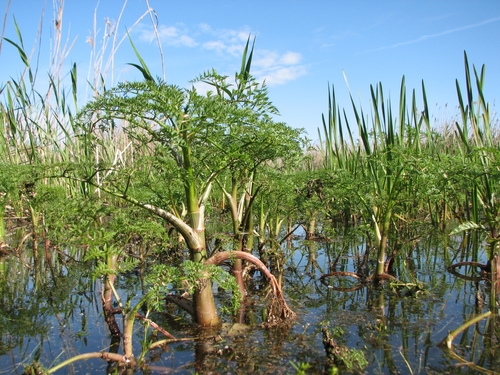
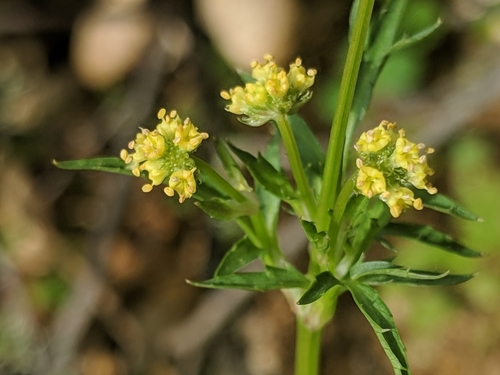
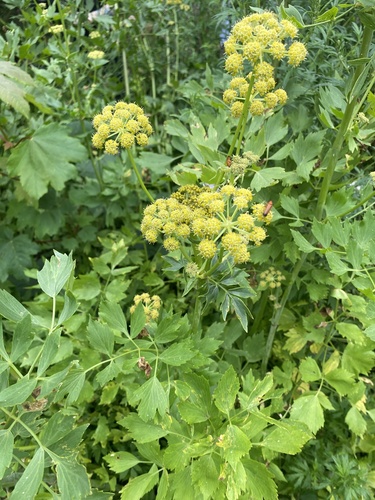
Lovage (Levisticum officinale W.D.J.Koch) is an erect, herbaceous perennial plant. It grows up to 2.5 metres (8 ft) tall, with a basal rosette of leaves and additional leaves growing on its stems. Flowers form in umbels at the tops of the stems. Stems and leaves are shiny, hairless, and range in colour from green to yellow-green; when crushed, they have a scent similar to celery. The larger basal leaves can reach up to 70 centimetres (28 in) long, and are tripinnate, with broad triangular to rhomboidal, sharply pointed leaflets that have a few teeth along their margins. Stem leaves are smaller, less divided, and have fewer leaflets. Flowers are yellow to greenish-yellow, 2–3 mm (1⁄16–1⁄8 in) across, and grow in globose umbels up to 10–15 cm (4–6 in) in diameter; flowering occurs in late spring. The fruit is a dry two-part schizocarp 4–7 mm (3⁄16–1⁄4 in) long, which matures in autumn. Levisticum officinale is native to Afghanistan and Iran, but has been introduced to most of Europe, parts of Southeast Asia, and the Americas. Its leaves can be used in salads, to make soup, or to season broths. Its roots can be eaten as a vegetable or grated for use in salads. The flavour and scent of lovage are similar to both celery and parsley, but more intense and spicy than either. The seeds can be used as a spice the same way fennel seeds are used. This plant has been cultivated in Europe for a long time, with leaves used as a herb, roots as a vegetable, and seeds as a spice, especially in southern Europe. In the Netherlands, lovage leaves are traditionally cooked with white asparagus and salt, and served with boiled eggs. In Ukraine, lovage (called любисток/liubystok in Ukrainian) is considered an aphrodisiac. Traditionally, women have used an infusion made from lovage leaves to rinse their hair, to attract men with the plant's pleasant spicy scent. Today, hair conditioners containing lovage extract to strengthen hair are available for purchase. Lovage leaves and roots are also used in salads and as a spice in Ukraine. In Romania, the leaves are a preferred seasoning for various local broths, and are just as popular for this purpose as parsley or dill. Additionally, dried lovage foliage and seeds are added to pickled cabbage and cucumbers, both to help preserve the pickles and add flavour to them. In the UK, an alcoholic lovage cordial is traditionally added to brandy as a winter drink; it was historically popular in Cornwall, where it was originally added to slightly spoiled smuggled brandy to mask the taste of salt. The roots, which contain a heavy volatile oil, are used as a mild aquaretic.