About Leucostele chiloensis subsp. chiloensis
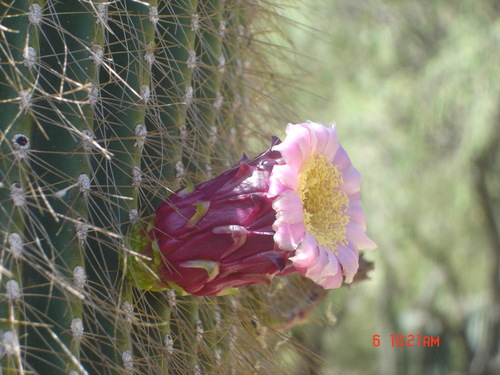
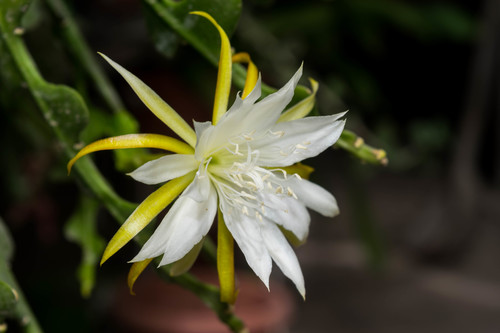
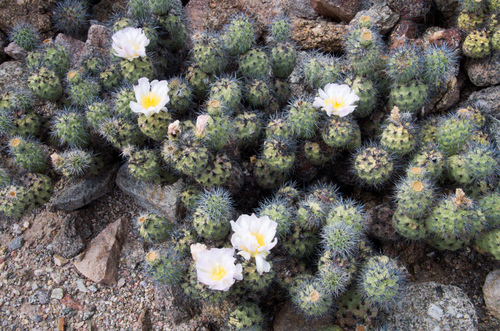
Leucostele chiloensis subsp. chiloensis (previously described as Cactus chiloensis) is a tree-like cactus with branching growth. It is straight, vigorous, and can reach up to 8 meters in length. Its cylindrical shoots measure 10 to 12 cm in diameter, and bear 16 to 17 mostly low, wide ribs. Glochids bear bright yellow spines that turn gray as they age. The straight central spine is 4 to 7 cm long, and rarely reaches up to 20 cm. There are 8 to 12 radially arranged lateral radial spines, each 1 to 2 cm long or longer. The species produces white, funnel-shaped flowers that open during the day, and grow up to 14 cm long. Its fruits are spherical, green, and edible. One confirmed location where this taxon occurs is La Campana National Park in Chile. Leucostele chiloensis ranges across central Chile from north to south, growing in coastal areas, valleys, and Andean foothills at elevations up to 1800 meters. It was first described and published as Cactus chiloensis in 1826 by Luigi Colla. After multiple reclassifications, Heimo Friedrich and Gordon Douglas Rowley placed the species in the genus Echinopsis in 1974.