About Leucauge blanda (L.Koch, 1878)
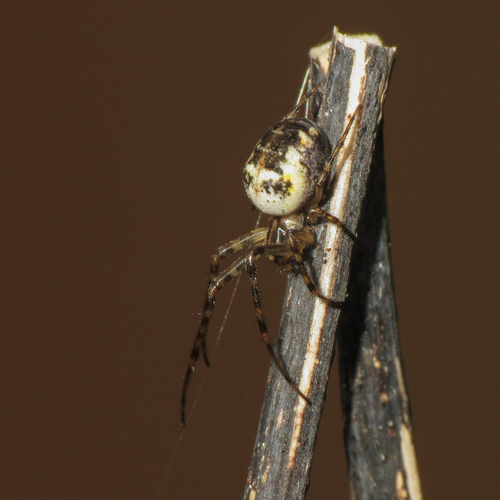
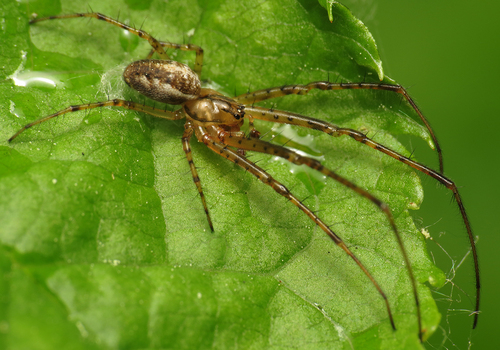
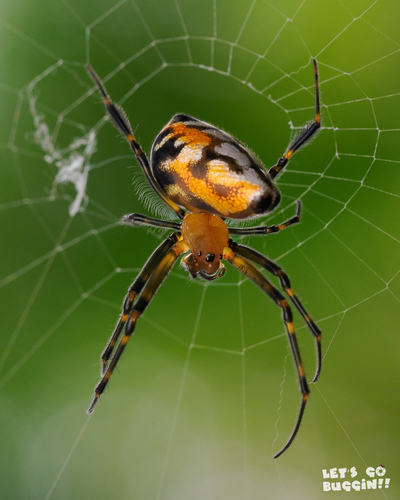
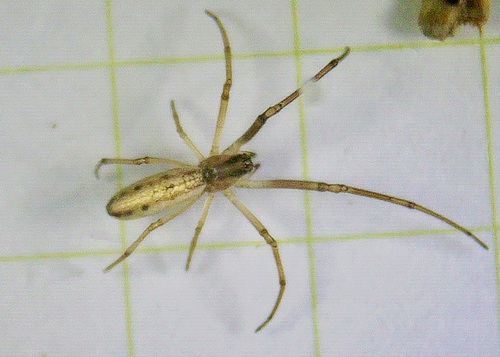
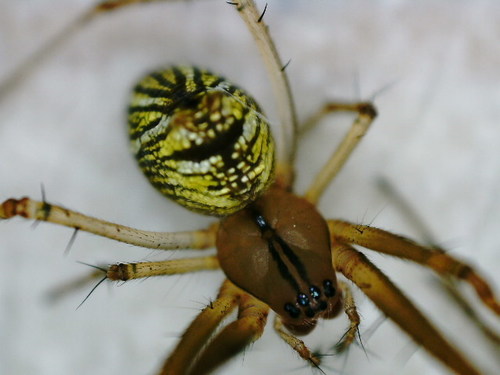
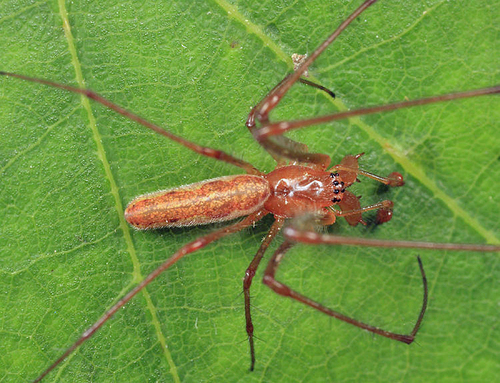
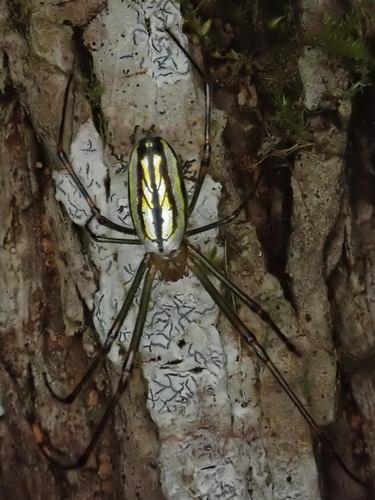
Leucauge blanda (L.Koch, 1878) is a medium-sized orb weaver spider. Males have a body length of 9–13 mm, while females have a body length of 6–10 mm. This species can be told apart from similar species including Leucauge magnifica and Leucauge subgemmea by the presence or absence of tubercles on the shoulders of the male opisthosoma. Based on L. Koch's original description, the female has a brownish-yellow cephalothorax with narrow black lateral margins. Its chelicerae are brownish-yellow with black tips and claws; the pedipalps are brownish-yellow, with more heavily tanned tarsal segments. The legs are brownish-yellow with black tips at the joints. The upper and side surfaces of the female opisthosoma are silvery-yellowish white, with two brown spots at the base and three brown longitudinal stripes that reach the spinnerets. The female cephalothorax is roughly 1.25 times longer than it is wide, rounded at the sides and very glossy. The anterior eye row is strongly recurved, and the median anterior eyes are smaller than the posterior median eyes. The female chelicerae are smooth and glossy, with strongly curved claws that have three teeth on the front margin and four on the rear margin. Males of this species build inclined orb webs among grass stems, just like other Leucauge species. Leucauge blanda is widely distributed across East Asia, with records from Russia's Far East, China, Korea, Taiwan, and Japan. In Japan, adult individuals emerge from summer through autumn. This species lives in open areas including grasslands and fields, and it prefers more exposed locations than related species that live in forest environments.