About Leucanthemopsis alpina (L.) Heywood
Classification and Native Range
Leucanthemopsis alpina, commonly known as Alpine Marguerite, is a perennial plant in the Asteraceae family. Native to the mountainous regions of Europe and Asia, it thrives in alpine meadows, rocky slopes, and crevices.
Size
Typically, this plant reaches up to 30 cm in height with a spread of 20 cm.
Leaf Characteristics
The leaves of Leucanthemopsis alpina are basal and form a rosette at the base of the stem. They are dark green with toothed edges.
Flower Features
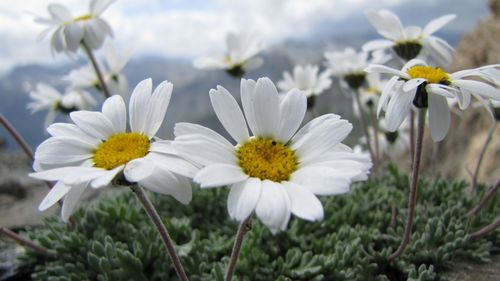
The plant produces daisy-like flowers with white petals surrounding a yellow center disk, blooming from June to August.
Soil and Light Requirements
Leucanthemopsis alpina prefers well-drained, organically rich soil and full sun exposure but can tolerate partial shade.
Watering Needs
It requires moderate watering during its growing season but should be kept dry during its winter dormancy.
Ornamental Uses
The Alpine Marguerite is prized for its ornamental value due to its attractive flowers, making it an excellent choice for rock gardens or border plantings.
Ecological Role
Additionally, it attracts pollinators such as bees, promoting biodiversity in the ecosystems where it grows.
Garden Value
Overall, Leucanthemopsis alpina is a beautiful perennial plant that enhances any garden or landscape.
Ecological Benefits
It also provides ecological benefits by supporting pollinators in the local ecosystems where it naturally grows.