About Lethe europa Fabricius, 1775
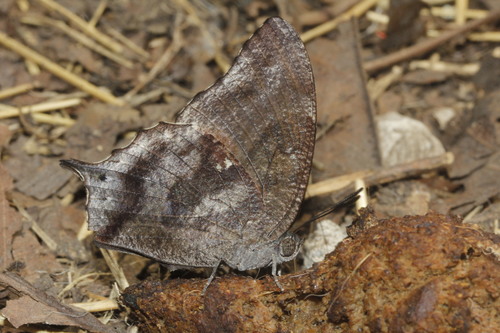
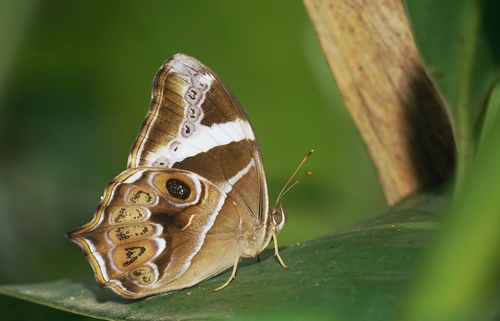
Lethe europa was named by Fabricius in 1775. For this species, the inner third of the hindwing is covered in long brown hairs. Males have a rich dark brown upperside. On the male forewing, the oblique short white discal fascia from the underside shows through the upperside, with two unclear black spots or ocelli, followed by two prominent white spots; the upper of these two spots is double. Along the terminal margins of both the forewing and hindwing, there are some black markings bordered outwardly by pale dusky brown, and the hindwing also has an unclear subterminal pale line. The underside is very dark blackish brown. The wings are crossed subbasally by a thin, straight lilacine-white line. After this line, the forewing has an oblique short white discal fascia, and both the forewing and hindwing have a postdiscal series of large black ocelli, plus a narrow, somewhat ochraceous terminal band that is bordered on the inner side by a more or less silvery purple line. The series on both wings is margined inwardly and outwardly by silvery purple lunular lines; the lines curve inwards on the forewing and outwards on the hindwing. The ocelli on the forewing are confluent, black, and non-pupilled; the ocelli on the hindwing are black, with irregular, disintegrate silvery-speckled centres set on a brown ground. Females are similar to males in general appearance, but on the upperside of the female forewing there is an oblique broad white discal band, and the female hindwing has an incomplete postdiscal series of black spots. The female underside matches the male underside, though the female’s markings and ocelli are larger. Lethe europa tamuna, a race of this species, was originally described from Little Nicobar by de Nicéville. In 1948, Michael Lloyd Ferrar reported that he observed this race on Great Nicobar island in 1931. It has been rediscovered in recent times in the Campbell Bay area of Great Nicobar. Both adults and larvae of this race were found along roadsides in disturbed forests. They breed on the bamboo Dinochloa andamanica Kurz. Eggs are laid on leaves deep inside bamboo clumps, and are never laid on clump fringes.