About Lestes virens (Charpentier, 1825)
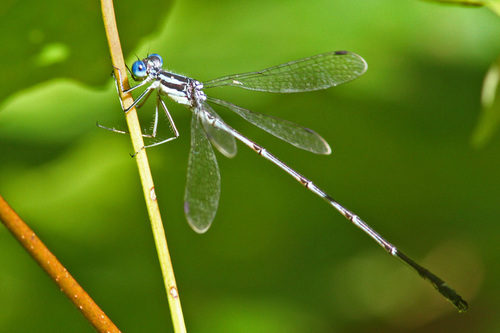
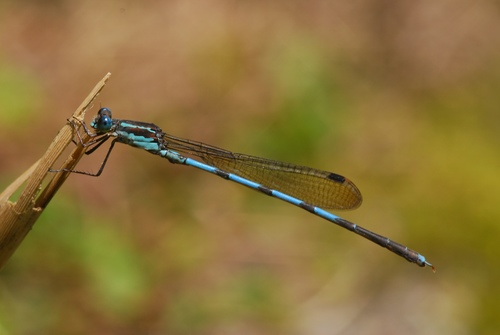
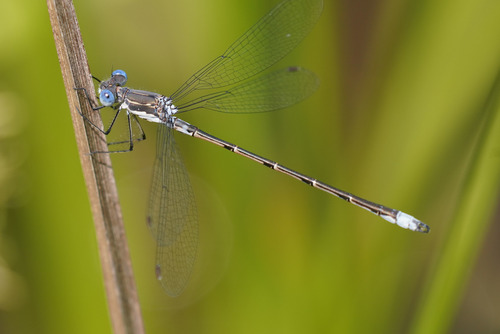
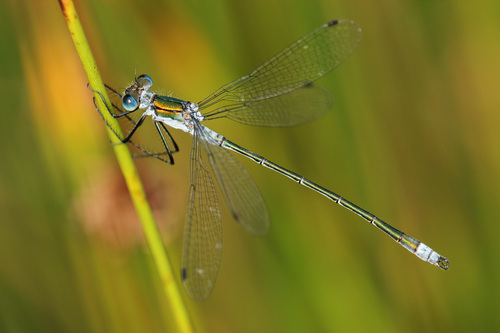
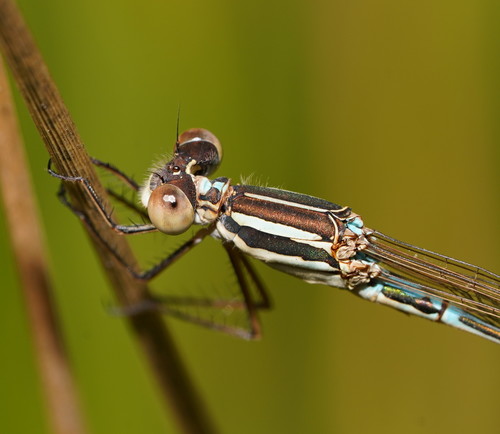
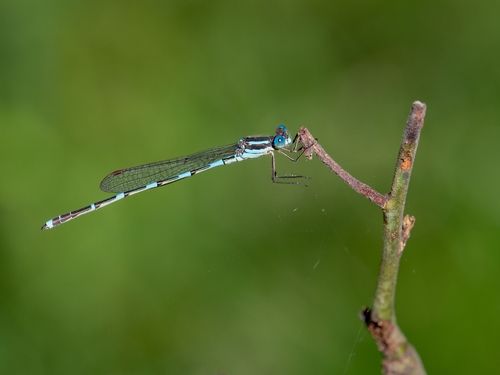
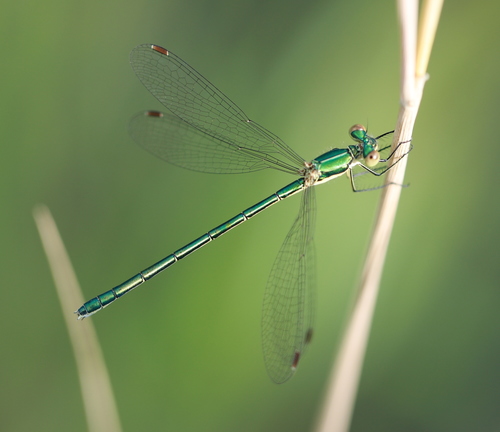
For identification, Lestes virens closely resembles other species in the genus Lestes, with a metallic green body and holds its wings away from the body when at rest. This species is smaller than Lestes sponsa. It has a pale brown pterostigma with white lateral edges, and its anal appendages range from pale to yellowish; by contrast, both Lestes sponsa and Lestes dryas have black anal appendages. There are two described subspecies, but the validity of this division has been questioned. In the nominate subspecies L. v. virens, a continuous yellow line runs along the humeral suture that almost reaches the base of the forewing. In the other subspecies L. v. vestalis, this yellow line is reduced, broken, and does not reach the forewing. L. v. virens occurs in the southern portion of the species' overall range, while L. v. vestalis occurs in the northern portion. Regarding distribution and habitat, L. v. virens is found in southern parts of the range including Spain, southern France, Sardinia, and North Africa. L. v. vestalis occurs in the north: northern France, Italy, and across central Europe. The species as a whole is not present in northern Europe or the United Kingdom. Lestes virens is a damselfly that inhabits still waters, and is found in lakes, ponds, ditches, and bogs with abundant vegetation.