About Lessingia germanorum Cham.
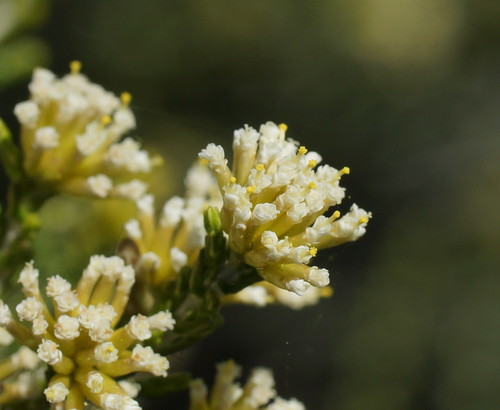
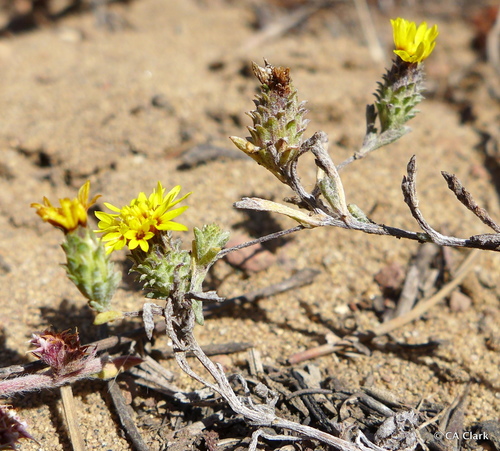
Lessingia germanorum Cham. is a rare flowering plant in the Asteraceae family, commonly known as San Francisco lessingia. It is endemic to California, with four known populations in the Presidio of San Francisco and one additional occurrence on San Bruno Mountain, south of San Francisco. It is an endangered species listed at both the state and federal level. This already rare plant faces threats from many processes, including invasive species, land development, sand mining, off-road vehicles, bulldozers, habitat fragmentation, trampling, pollution, and stochastic events. It is an annual herb that produces a decumbent to erect reddish stem, reaching no more than 30 centimeters in length. Its deeply lobed leaves grow up to 3 or 4 centimeters long. Some leaves and new stem parts are covered in woolly fibers. The inflorescence is either a solitary flower head or a cluster of heads growing at the tip of the stem. It has a bell-shaped involucre lined with pointed phyllaries that curl back as the flower head matures. The flower head is discoid: it has no ray florets, but instead has several tubular golden disc florets with raylike lobes. This plant blooms from July through November. Its fruit is an achene equipped with a whitish pappus. Lessingia germanorum grows in beach sand dunes, scrub, and other similar sandy habitats. It is native to the tip of the intensely developed and urbanized San Francisco Peninsula. The single known population on San Bruno Mountain, near Daly City, was discovered in 1989 and is currently threatened by house construction in its immediate vicinity. The plant’s largest population grows in the dunes at the mouth of Lobos Creek in the San Francisco Presidio. Habitat in this area is heavily infested with non-native species such as ice plant (Carpobrotus sp.), which forms thick mats of foliage over sand dunes and stabilizes the sand; San Francisco lessingia requires shifting, windblown sand to survive. Introduced trees have also altered the plant’s native habitat. Old Monterey cypress (Cupressus macrocarpa) and Monterey pine (Pinus radiata) planted decades ago remain in the Presidio dunes. While these are native California trees, they are not native to this specific local ecosystem and have become detrimental to San Francisco lessingia.