About Leptura quadrifasciata Linnaeus, 1758
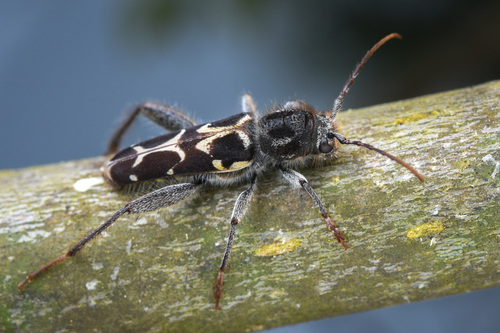
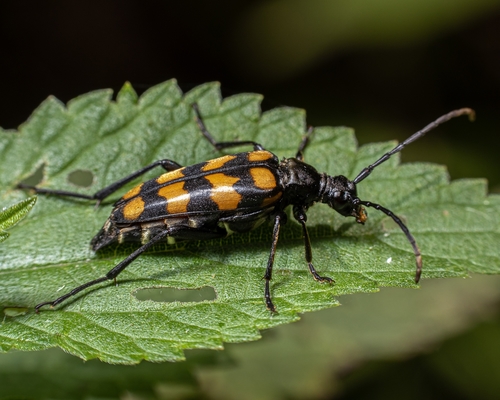
Leptura quadrifasciata, commonly known as the four-banded longhorn beetle, is a species of beetle belonging to the family Cerambycidae. This species was first described by Carl Linnaeus in 1758, in his landmark 10th edition of Systema Naturae. Adult four-banded longhorn beetles measure between 11 and 20 millimeters in length. They are primarily black, with four more or less continuous transverse yellow bands across their bodies; in extreme cases, their elytra may be almost entirely black. This species is found across the entire northern and central Palearctic realm, with a distribution covering the northern and central regions of Europe and Asia. It is especially common in Scandinavia, Finland, and Great Britain, and adults are typically active and visible during the summer months. The larvae of Leptura quadrifasciata create meandering feeding galleries inside the wood of various tree species, including oak, beech, birch, willow, alder, elder, and spruce. They typically develop in dead and decaying trees, and prefer damp growing areas. The full life cycle of this species lasts between two and three years.