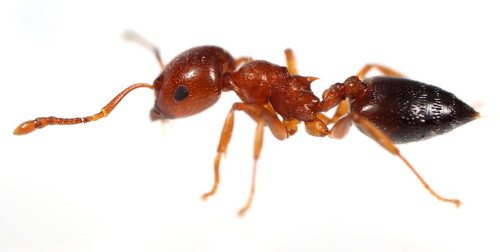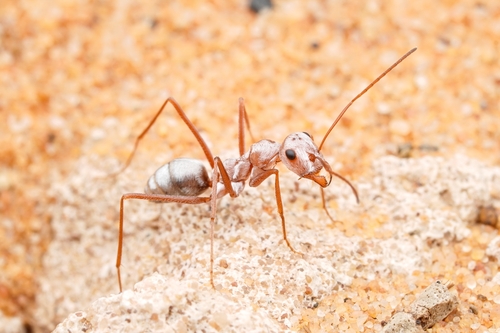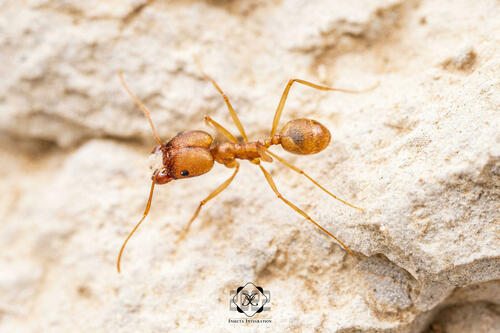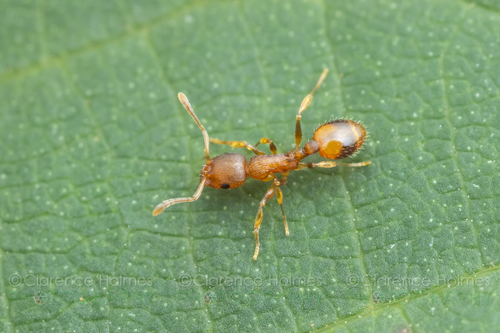
About Leptothorax nylanderi (Foerster, 1850)
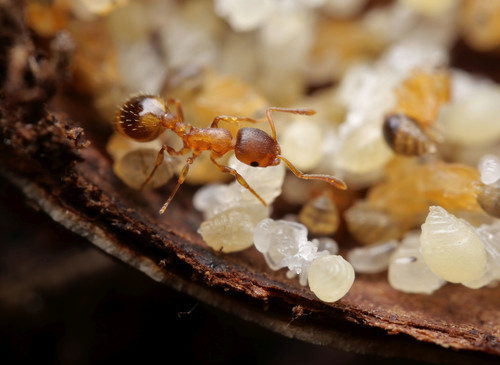
For the ant species currently known as Temnothorax nylanderi (originally published as Leptothorax nylanderi by Foerster in 1850), worker individuals show substantial size variation. This size variation does not appear to come from environmental adaptations; instead, it stems from a lack of canalization during larval development. This developmental lack of canalization likely occurs because these ants inhabit environments where temperature and humidity vary widely. Intercaste individuals, which carry shared morphological traits of both queens and workers, occur frequently in this species. A cestode parasite, Anomotaenia brevis, can alter the morphology of these ants. The parasite increases the frequency of intercaste individuals and induces a color change: infected individuals are paler than uninfected ants. Ecologically, Temnothorax nylanderi lives in leaf litter. Its nests are located in small cavities, for example in twigs and acorns. Nests typically hold fewer than 400 individuals, and include only a single queen. Studies have found that if individual ants of this species become socially isolated, they will have decreased interaction with their colony members and altered stress responses.