About Leptospermum lanigerum (Aiton) Sm.
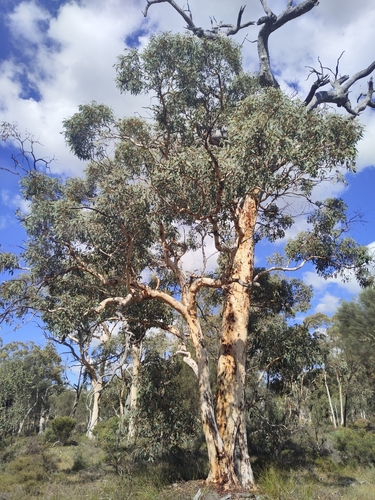
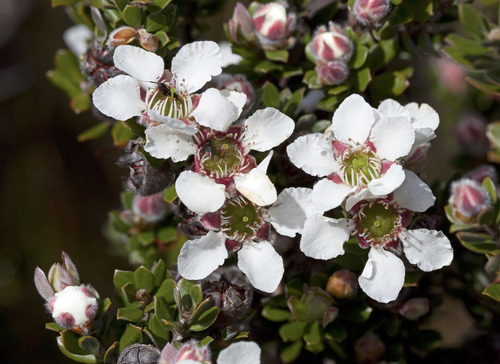
Leptospermum lanigerum (Aiton) Sm. is a variable species that grows as a small tree or medium-sized shrub, with multiple distinct forms. It can develop into large, spreading or erect shrubs that reach up to 3 metres (9.8 ft) high and 3 metres (9.8 ft) across, or very compact, columnar shrubs that grow up to 3 m high and 1 metre (3.3 ft) across. In montane habitats in Tasmania, this species can also grow as a slender tree reaching up to 18 metres (59 ft) tall. This species is endemic to Australia, distributed primarily across the country's south eastern states. Native populations occur in eastern South Australia, across Victoria and southern New South Wales, and throughout the entire island of Tasmania. It is common and widespread across its range, growing predominantly in wet, swampy areas, along river banks, on sandy coastal heaths, and within woodlands. It is occasionally found in cool temperate rainforest in western Tasmania, though it is not considered a true rainforest species because it requires disturbances like fire to release its seeds. The species' hardiness and preferred habitat make it useful for riparian restoration and stream bank stabilisation, as it thrives in swampy areas where many other plant species cannot grow. In Tasmania, L. lanigerum is a key species of swamp forest, a habitat that forms on flat, poorly drained sites with a closed tree canopy made up of sclerophyllous species from the genera Leptospermum, Acacia and Melaleuca. In Tasmania, L. lanigerum forms tall, dense stands that reach up to 18m in height. In other Australian states, individuals of this species mostly grow as short, thick shrubs. While it occurs mainly at low altitudes, some individuals also grow among sub-alpine vegetation and along the edges of montane grasslands. It is an adaptable species that can adjust to different site aspects and soil types; although it prefers wet areas, it can grow successfully in drier soil. Leptospermum species like L. lanigerum are pollinated by insects, most commonly beetles. Each flower produces sweet nectar at its center to attract beetles, which carry pollen on all parts of their body, mainly the head and legs, to other flowers. The nectar, along with the insects it attracts, also draws other animals such as birds. This makes Leptospermum species and other Myrtaceae genera popular garden plants. L. lanigerum is an adaptable species that tolerates most soils and aspects. It is often propagated from seedlings or cuttings, sold at nurseries for garden use, and is a popular garden plant thanks to its attractive flowers and adaptability. Three main forms of the species are recognized: a large, spreading or erect shrub to 3 m high and 3 m across, a compact columnar shrub to 3 m high by 1 m wide, and a slender tree up to 18 m tall that only occurs in Tasmania. L. lanigerum was the first Leptospermum species brought into cultivation, in March 1773. Captain Tobias Furneaux of HMS Adventure collected seed from Adventure Bay, Tasmania, during Captain James Cook's second voyage to the South Seas. This seed was recorded growing in cultivation at the Royal Botanic Gardens, Kew, in 1774. Indigenous Australians used L. lanigerum for many purposes, including making kangaroo spears and double barbed spears from its wood. Young shoots and stems of many Leptospermum species, including this one, were used medicinally to treat urinary disorders. It is recorded that many Leptospermum species were used as a tea substitute by European settlers, though this practice is not common today. Captain Cook's crew also brewed tea from the plant, as they believed it would help prevent diseases such as scurvy.