About Leptopogon superciliaris Tschudi, 1844
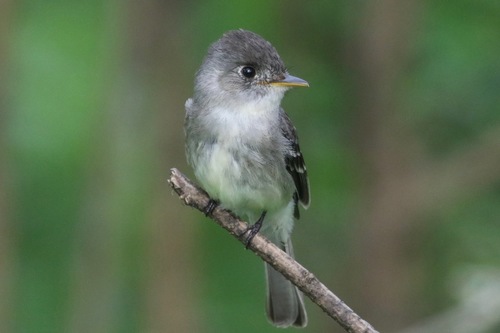
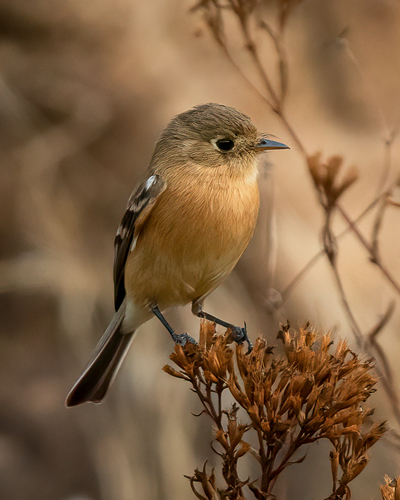
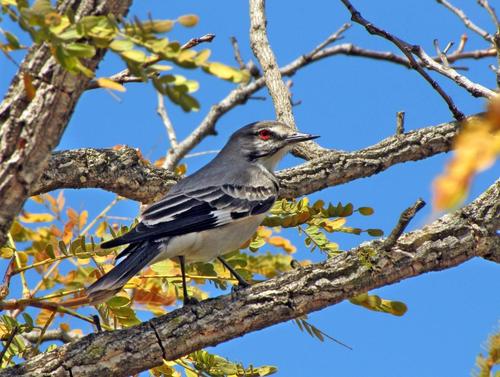
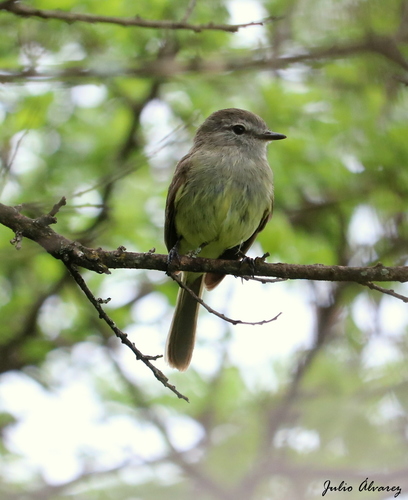
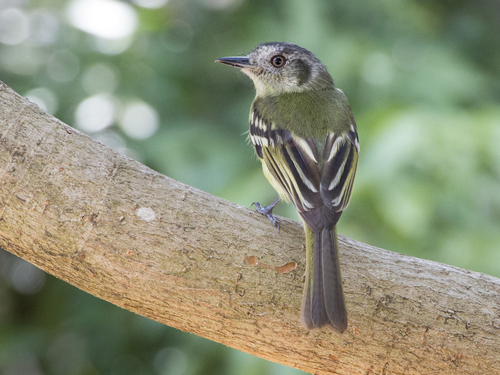
Leptopogon superciliaris Tschudi, 1844, commonly known as the slaty-capped flycatcher, is 13 to 14 cm (5.1 to 5.5 in) long and weighs 9.5 to 14.8 g (0.34 to 0.52 oz). Males and females have identical plumage, and both recognized subspecies display significant individual plumage variation within their groups. Adults of the nominate subspecies have a slaty gray crown. They have white lores, a thin white supercilium, and a wide dusky to black crescent that curves around the back of their otherwise mottled whitish face. Their back and rump are dark olive, their wings are dusky with yellow-green edges on the flight feathers, and their wing coverts are dusky with whitish, pale yellow, or rich cinnamon-buff tips that form two distinct wing bars. Their tail is dusky olive. Their throat is mottled grayish, their breast is yellow with heavy but thin grayish olive streaks, and their remaining underparts are plain pale yellow. Nominate adults have a medium grayish brown to dark brown iris, a black bill that sometimes has a pale orange or pinkish base on the mandible, and dark gray legs and feet. Subspecies L. s. albiventer has grayish olive upperparts, pale yellow wing bars, and whitish to pale yellowish white underparts with gray rather than grayish olive breast markings. It has a pale brown to grayish brown iris, a black bill that sometimes has a pinkish base on the mandible, and gray to pale blue-gray legs and feet. The slaty-capped flycatcher has a disjunct distribution. The nominate subspecies occurs on the Caribbean and Pacific slopes of Costa Rica and western Panama, in Panama's Darién Province, on Trinidad, in the Venezuelan Coastal Range, in the Serranía del Perijá along the Venezuela-Colombia border, on both the eastern and western slopes of the Andes from western Venezuela through Colombia and Ecuador just into Peru, and along the eastern Andean slope in Peru south to Cuzco Department. (When L. s. transandinus is treated as a separate taxon, it refers to populations in Central America and the South American range west of the Andes.) Subspecies L. s. albiventer is found on the east slope of the Andes from Cuzco, Peru, south into northern Bolivia as far as western Santa Cruz Department. The slaty-capped flycatcher lives in humid foothill and montane evergreen forest, secondary forest, and coffee plantations in upper tropical and subtropical zones. Its elevation range differs by region: it occurs between 500 and 1,600 m (1,600 and 5,200 ft) in Costa Rica and Panama, between 400 and 2,000 m (1,300 and 6,600 ft) in Venezuela, between 500 and 2,100 m (1,600 and 6,900 ft) in Colombia, between 200 and 1,500 m (700 and 4,900 ft) in western Ecuador, between 600 and 1,500 m (2,000 and 4,900 ft) in eastern Ecuador, and between 600 and 2,000 m (2,000 and 6,600 ft) in Peru.