About Leptodon cayanensis (Latham, 1790)
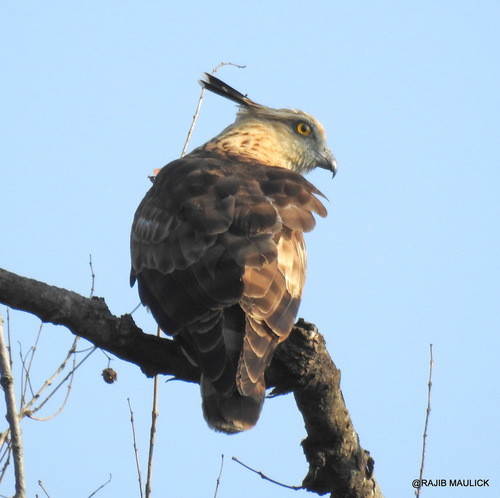
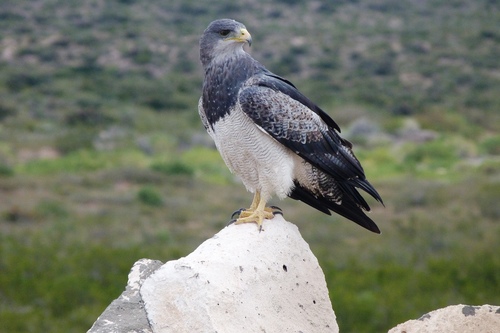
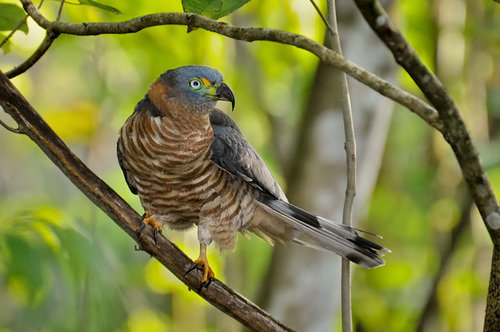
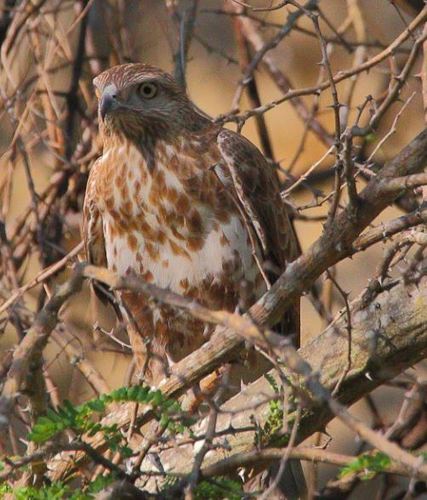
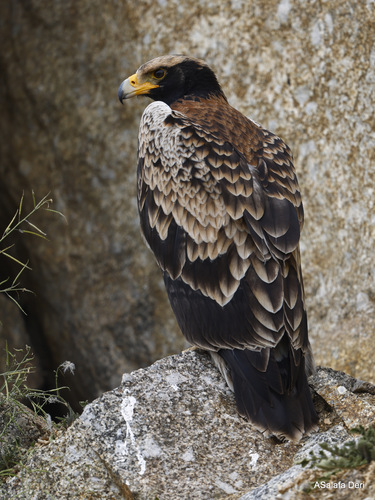
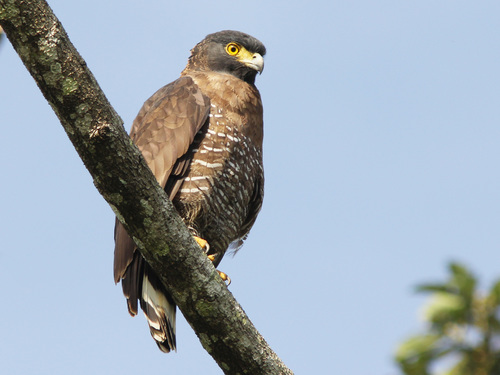
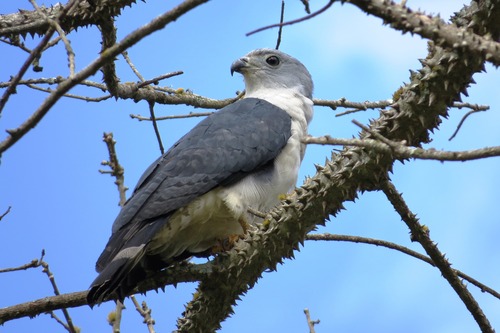
The gray-headed kite (Leptodon cayanensis) measures 46–53 cm in length and weighs 410–605 g. Adult individuals have a grey head, black upperparts, white underparts, and a black tail marked with two or three white bars. They have a blue bill and grey legs, and their flight pattern consists of deliberate two flaps followed by a glide. Immature gray-headed kites have three distinct colour morphs, each of which closely mimics a different hawk-eagle species. The light morph is similar to the adult gray-headed kite, but has a white head and neck, a black crown and eyestripe, a black bill, and yellow legs; this morph closely resembles the Black-and-white hawk-eagle (Spizaetus melanoleucus). The rufous morph has a reddish neck, white throat, black malar stripes, and a long black crest, and closely resembles an adult Ornate hawk-eagle (Spizaetus ornatus). The dark morph has blackish head, neck, and upperparts, with dark-streaked buff underparts, and closely resembles the Black hawk-eagle (Spizaetus tyrannus). The sophisticated mimicry displayed by these juvenile kites is remarkable, and has only been documented a few times. In terms of ecology, the gray-headed kite feeds mainly on reptiles, including arboreal geckos, other lizards, and snakes. It also preys on frogs, molluscs, large insects (including larvae and combs of hornets, wasps, and bees), and the eggs, young, or injured individuals of other bird species. It typically hunts from an open high perch, swooping down to catch its prey. Its call is a mewling keow. It builds its nest high in a tree; the nest is constructed from sticks and lined with grass. It lays a clutch of one or two white eggs, which are purplish at one end and marked with brown spots.