About Leptochloa panicea (Retz.) Ohwi
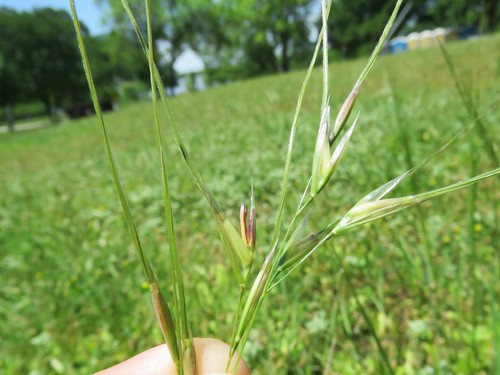
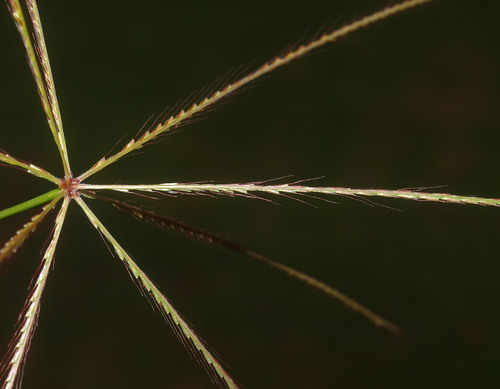
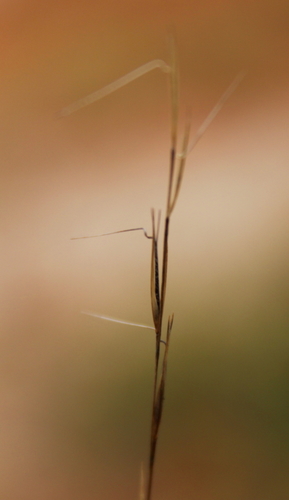
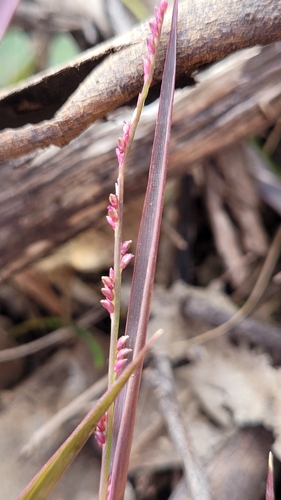
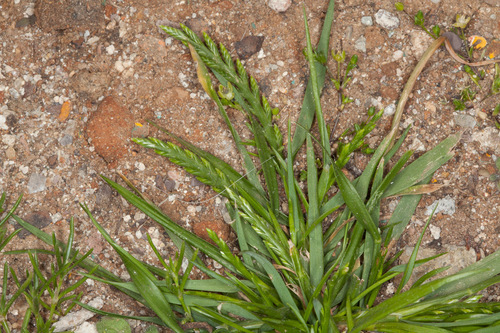
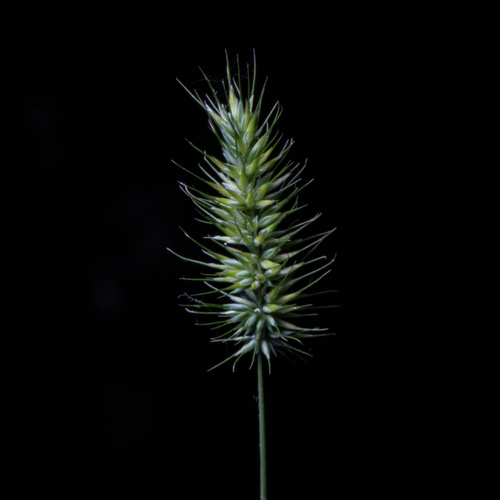
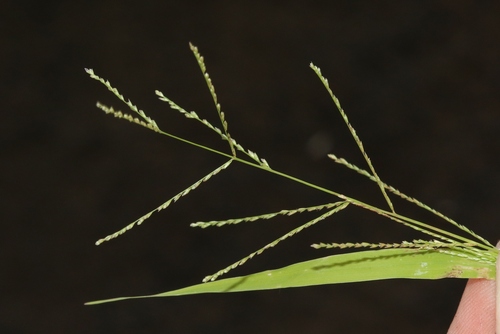
This grass species, Leptochloa panicea (Retz.) Ohwi, has much-branched panicle inflorescences. At maturity, its spikelets break apart above the glumes, and the uppermost florets within the spikelets — which are tiny petal-less grass flowers — are reduced to small rudiments. Each spikelet is relatively small, measuring 1.8 to 3 mm long, and holds 2 to 4 florets. The leaf sheaths (the leaf bases that clasp the stems) have long hairs with bulbous bases. The ligules at the leaf bases are conspicuous and membranous, topped with a fringe of hairs, and have irregularly toothed edges.
Documented observations of this species (also referenced as Dinebra panicea in iNaturalist records) occur across the Americas from the central United States south to Chile and Brazil, and in southern Asia. It is also found in scattered locations across Africa, Europe, Australia, and Oceania, growing both in its native ranges and as an introduced invasive species.
Subspecies panicea and brachiata grow in wetlands, swamps, streams in open lowland regions, as well as in waste places, gardens, and rice fields. In the southeastern United States, subspecies mucronata is found on sandy shores and in disturbed areas. In the Great Plains region of the United States, Dinebra panicea is classified as a facultative wetland species, meaning it typically grows in wetlands but can also grow in non-wetland areas. The International Livestock Research Institute lists this species as a weed.