About Lepidosperma laterale R.Br.
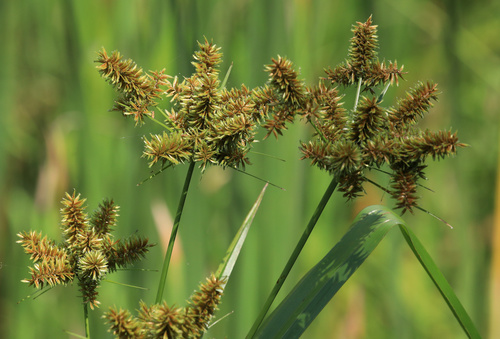
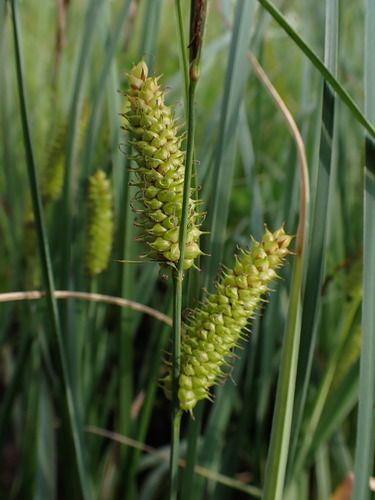
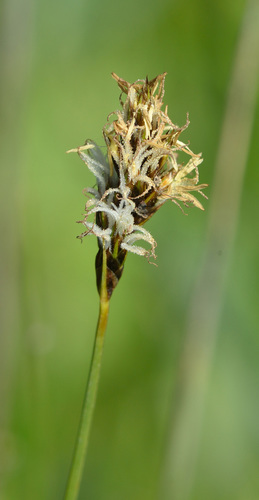
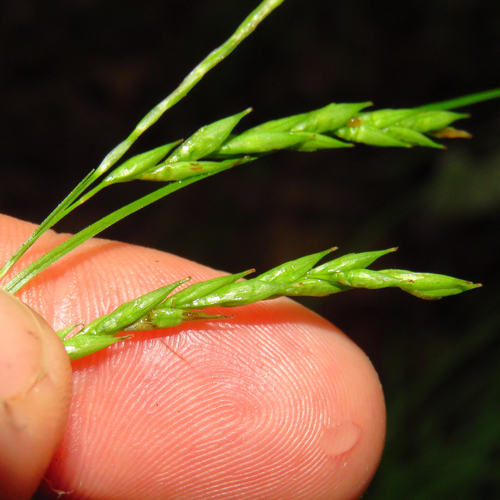
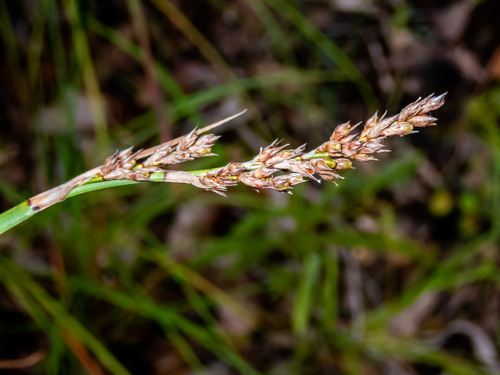
Lepidosperma laterale, commonly called the variable swordsedge, is a plant species occurring in south-eastern Australia, New Caledonia, and New Zealand. It does not grow in the more arid regions of Australia. It is most often found on sandy soils or rocky areas within wooded regions, and occurs across a wide range of other situations as well. It ranges widely across central and eastern New South Wales, reaching as far west as Lockhart. In Tasmania, it forms part of two distinct riparian scrub communities. Both communities contain a mix of ferns, sedges, and heaths; the first is dominated by Melaleuca squarrosa and Leptospermum lanigerum, while the second is dominated by Eucalyptus viminalis, E. globulus, E. obliqua, and E. amygdalina, with Beyeria viscosa and Exocarpos cupressiformis growing in the understory. This species can grow up to one metre in height. Its leaves may be glossy, measure 3 to 8 mm wide, and typically have an orange-reddish base. Flowers form in a panicle during spring and summer. The resulting panicle is 4 to 20 cm long, rarely reaching up to 38 cm; spikelets are not dense, and secondary inflorescence branches remain exposed. After flowering, it produces an oval-shaped nut as fruit: this nut is around 3 mm long and 1.8 mm in diameter, can be pale or dark brown, and has either a wrinkled or smooth shiny surface. Lepidosperma laterale is considered a somewhat indeterminate species, with multiple different varieties currently recognized, but no further formal formal division of the species has been established. Its specific epithet laterale comes from Latin, and refers to sides. This species first appeared in published scientific literature in 1810, in Robert Brown's Prodromus Florae Novae Hollandiae. Robert Brown was a prolific Scottish botanist. Many moth species from the genus Elachista lay their eggs on this plant, and the hatching caterpillars feed on its leaves.