About Lepidocolaptes squamatus (Lichtenstein, 1822)
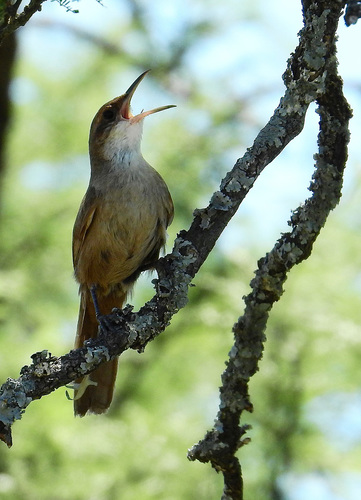
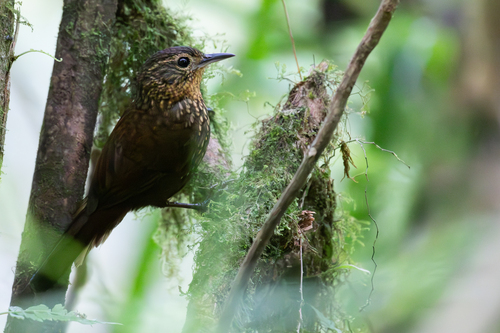
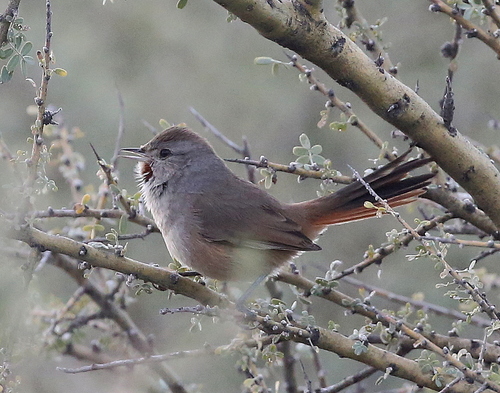
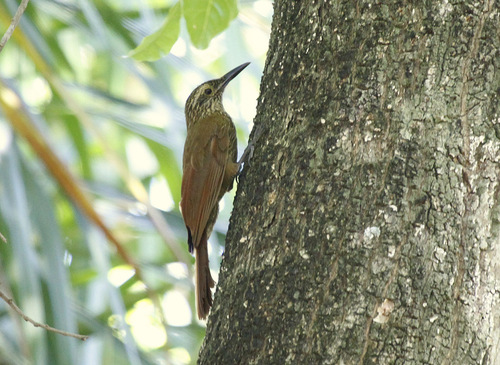
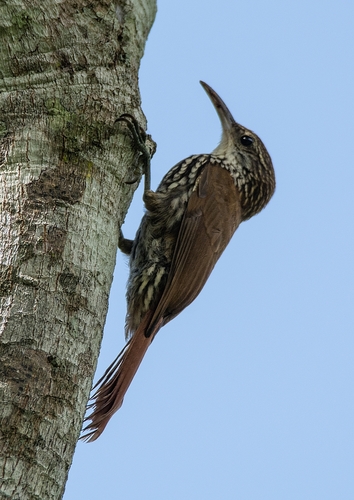
The scaled woodcreeper (Lepidocolaptes squamatus) measures 19 to 20 cm (7.5 to 7.9 in) in length and weighs approximately 27 g (0.95 oz). It is a medium-sized woodcreeper with a slim, slightly decurved bill. The sexes of this species have identical plumage. Adults of the nominate subspecies have a dusky face marked with whitish streaks, and an often broken whitish supercilium. Their crown is dark brown with light buff spotting, their back is bright reddish brown, and their rump, wings, and tail are cinnamon-rufous. Their throat is whitish, while their breast and belly are dusky brown with bold, black-edged whitish streaks. Their iris ranges from reddish brown to brown, their legs and feet range from olive-gray to blackish, and their bill is horn-colored to pinkish with a darker upper mandible (maxilla). The subspecies L. s. wagleri is slightly smaller than the nominate subspecies; it has brighter cinnamon-rufous upperparts, less contrast between the crown and back, and more brownish underparts with less distinct dark edges to its streaks. The nominate subspecies of the scaled woodcreeper occurs in eastern and southeastern Brazil, found south and east of the Rio São Francisco from central Bahia south to northern São Paulo. Subspecies L. s. wagleri is found in northeastern Brazil, north of the Rio São Francisco in southern Piauí, western Bahia, and northern Minas Gerais. The two subspecies of the scaled woodcreeper live in different types of landscapes. Nominate L. s. squamatus inhabits humid Atlantic Forest, especially montane evergreen forest and low elevation rainforest, and also occurs in gallery forest at the western edge of its range. Subspecies L. s. wagleri inhabits drier landscapes, including semi-deciduous and deciduous woodlands, caatinga, and gallery forest. Both subspecies are found in the edges and interior of primary forest and mature secondary forest. Most individuals of the species occur between sea level and 1,600 m (5,200 ft) in elevation, though occasional individuals are found as high as 2,000 m (6,600 ft).