Lepidium virginicum L. is a plant in the Brassicaceae family, order Brassicales, kingdom Plantae. Not known to be toxic.

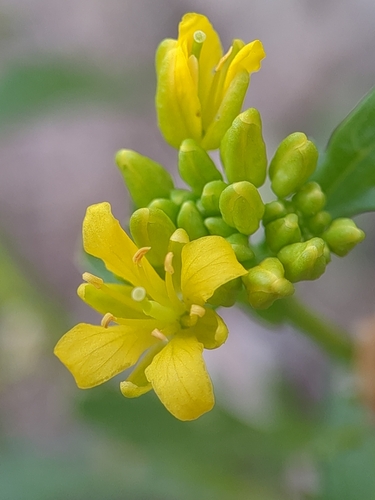
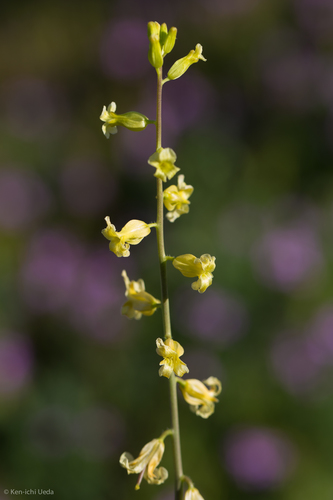
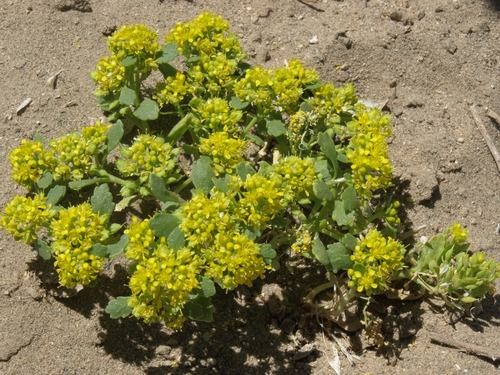
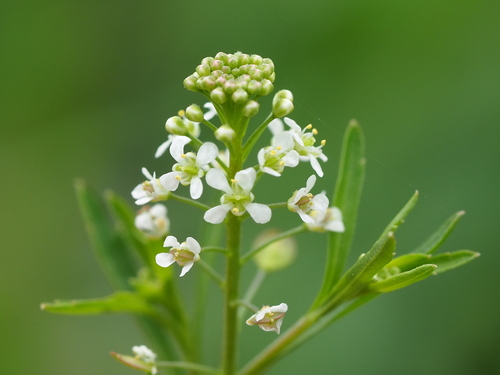
Photo of Lepidium virginicum L. (Lepidium virginicum L.)
🌿 Plantae

Lepidium virginicum L.

Lepidium virginicum L.

Lepidium virginicum is an edible herbaceous annual or biennial with a peppery taste, grown for edible leaves and seedpods.

Family
Genus
Lepidium
Order
Brassicales
Class
Magnoliopsida
⚠️ Toxicity Note

Insufficient toxicity evidence; avoid direct contact and ingestion.

About Lepidium virginicum L.

Lepidium virginicum, also called Virginia pepperweed, is an herbaceous plant that can be either annual or biennial. It typically grows between 10 and 50 centimeters (3.9 to 19.7 inches) in total height. Stem leaves of Virginia pepperweed are sessile (stalkless), shaped linear to lanceolate, and they grow larger as they get closer to the base of the plant. Like Lepidium campestre, the most identifiable feature of Virginia pepperweed is its raceme, which grows from the plant's highly branched stem. The racemes give the plant a bottlebrush-like appearance. First, small white flowers develop on the racemes, and greenish fruits grow later. All parts of this plant have a peppery taste. Lepidium virginicum is edible. Its young leaves can be eaten raw (for example in salads), cooked as a potherb, or sautéed. Its young seedpods can be used as a substitute for black pepper. The leaves contain protein, vitamin A, and vitamin C.
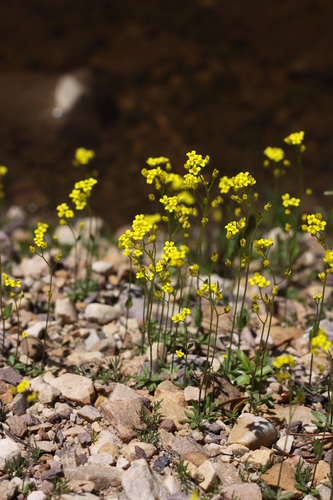
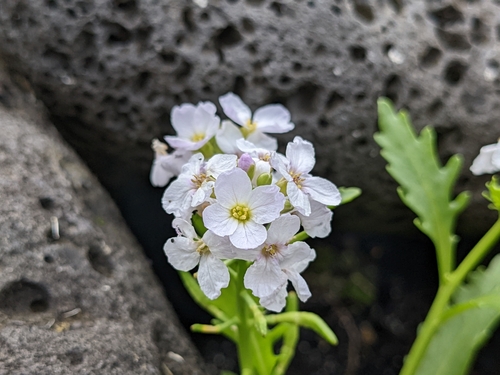
Photo: no rights reserved, uploaded by 葉子 · cc0

Taxonomy

Plantae Tracheophyta Magnoliopsida Brassicales Brassicaceae Lepidium

More from Brassicaceae

Sources: GBIF, iNaturalist, Wikipedia, NCBI Taxonomy · Disclaimer

Identify Lepidium virginicum L. instantly — even offline

iNature uses on-device AI to identify plants, animals, fungi and more. No internet needed.

Download iNature — Free

Start Exploring Nature Today

Download iNature for free. 10 identifications on us. No account needed. No credit card required.

Download Free on App Store