About Lepidium latifolium L.
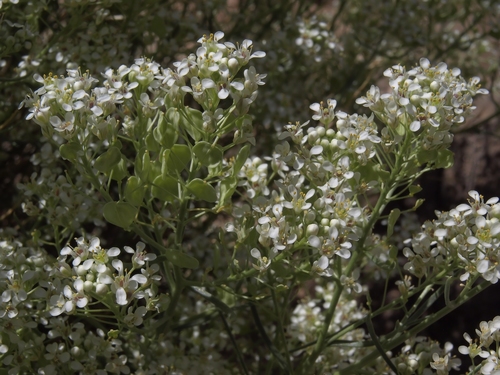
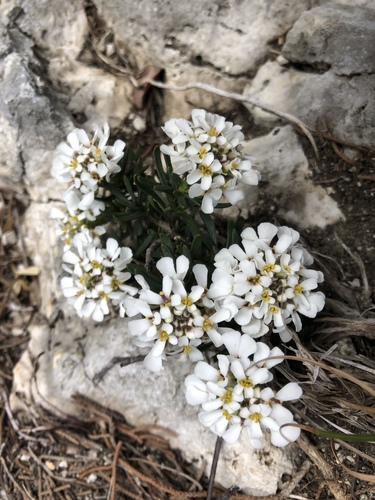
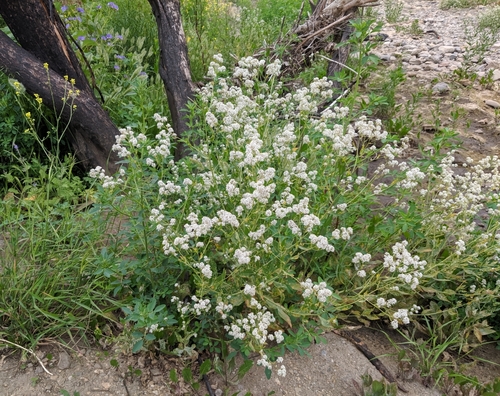
Lepidium latifolium L. typically reaches a height of 30–100 cm (12–39 in), and can grow as tall as 2 m (6.6 ft). This species produces numerous woody stems, alternating waxy leaves, and clusters of small white flowers. It bears small 1.6 mm fruits, each of which holds two reddish seeds. It has an extensive root system that can grow as deep as 2.7 m (9 ft), and roots make up 40% of the plant's total biomass.
This plant is native to southern Europe, Mediterranean countries, and Asia extending east to the Himalayas. It is an introduced species in Australia and North America, and grows throughout the United States and Mexico. It may have been introduced to the United States when its seeds contaminated a shipment of sugar beet seeds.
The leaves, shoots, and fruits of Lepidium latifolium L. are all edible. In Ladakh, located in the Himalayas, spring leaves of this plant are valued as a vegetable. To remove the peppery sharpness or bitterness, young shoots and leaves are first boiled, then soaked in water for two days. When cooked like spinach, it forms a nutritious vegetable. Dried stems of this plant are sometimes used in flower arrangements.