About Lepidium campestre (L.) W.T.Aiton
Lepidium campestre, commonly known as field pepperwort, field peppercress, field peppergrass, field pepperweed, or field cress, is a plant in the Brassicaceae (mustard) family. It is usually a biennial, though it can also grow as an annual. It is native to Europe, and is now commonly found as an invasive weed in North America.
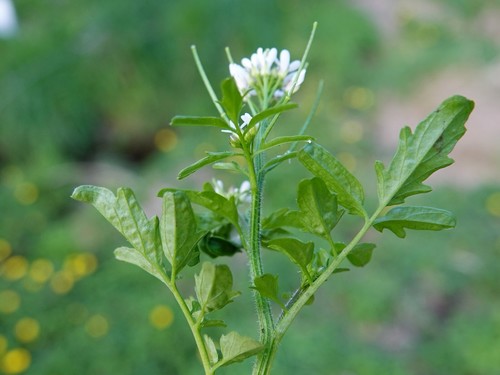
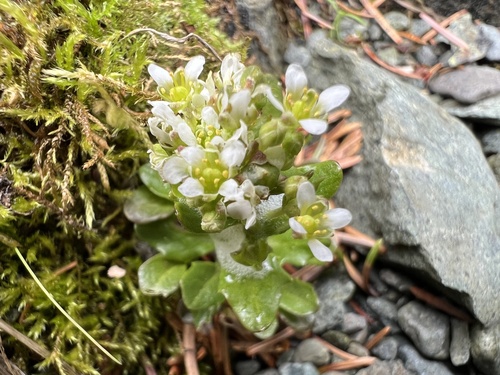
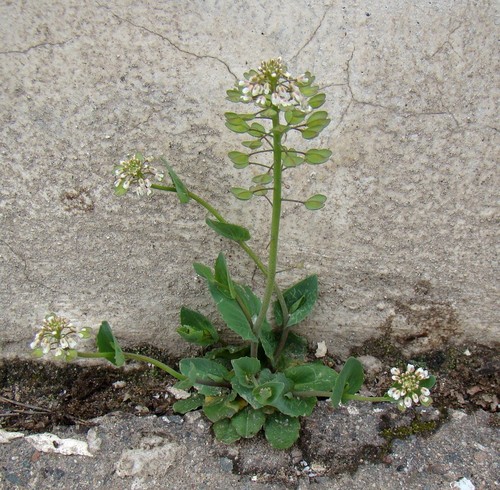
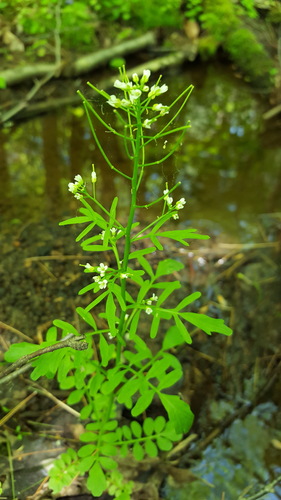
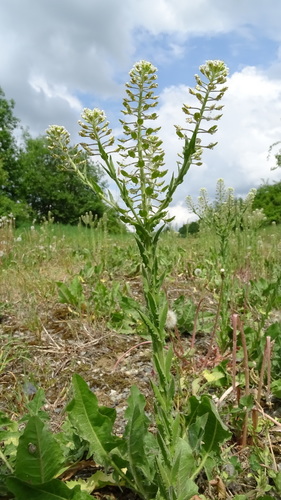
Its most distinctive feature is a branching flower raceme that grows off the main stem. This raceme first holds small white flowers, and later develops green, flat, oval seedpods. Each seedpod measures roughly 6 mm long and 4 mm wide, and contains two brown seeds that are 2.5 mm long.
The plant grows from a basal rosette of toothed leaves. Its upright main stem is covered in alternate, sessile, arrow-shaped leaves. The entire plant typically reaches 20 to 60 cm in height, and is covered in small hairs.
Field pepperweed grows in disturbed land, cultivated crop fields, and waste areas, and can tolerate most types of soil. It is edible. Young leaves can be eaten as greens, added raw to salads, or boiled for ten minutes. Young fruits and seeds can be used as a spice, with a flavor between black pepper and mustard. The leaves contain protein, vitamin A, and vitamin C.