About Lennoa madreporoides Lex.
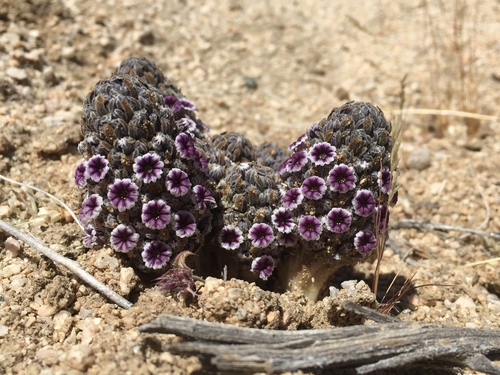
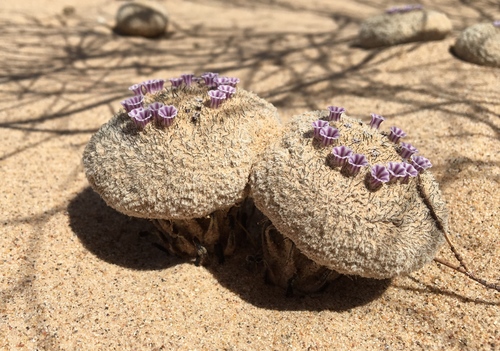
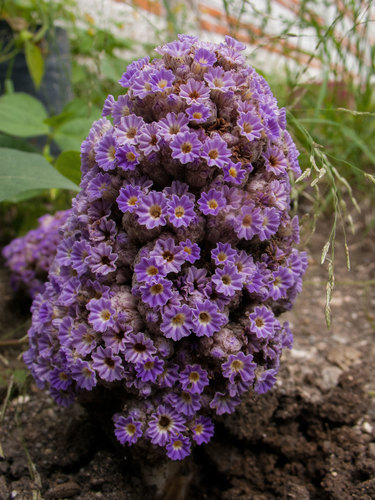
Lennoa is a monotypic genus of flowering plants in the family Lennoaceae; some classifications place it in a broadly defined Boraginaceae instead. Its only known species is Lennoa madreporoides Lex. The native range of this species extends from Mexico to Venezuela, and it occurs specifically in Colombia, Costa Rica, Guatemala, Mexico, Nicaragua, and Venezuela. It grows on hillsides at elevations between 1,000 and 1,350 metres (3,280 and 4,430 feet) above sea level. Its common name is flor de tierra, which translates to "flower of the earth". Lennoa madreporoides is a root parasite, most commonly found growing on the roots of the Mexican sunflower (genus Tithonia). It produces an oval, mushroom-like stem that grows 5 to 15 centimetres (2 to 6 inches) tall. When the plant reaches maturity, this stem is covered in small round or star-like flowers, which are lavender or violet with yellow throats. These flowers bloom in the autumn. The genus name Lennoa honours Joaquín Leño, a Mexican independence fighter. There is one known synonym for the genus: Corallophyllum Kunth. The species' Latin specific epithet madreporoides combines the name of the coral genus Madrepora (which means "mother of pores" in Latin) with the Greco-Roman suffix -oides, meaning "similar to". The epithet refers to the species' resemblance to corals of the genus Madrepora. Both the genus and the species were first described and published in 1824, in P. de La Llave & J.M. de Lexarza's Nov. Veg. Descr. Vol.1, on page 7.