About Lemna minuta Kunth
Lemna minuta Kunth, commonly called least duckweed, is the smallest species in the Lemna genus of duckweed. Its exact native range is not confirmed; it is considered native to some regions of the Americas and naturalized in other parts of the Americas, and it has also been introduced as a non-native species to other continents across the globe. The distribution of this species is continuously expanding. It has been actively spreading across Europe, and the first documented record of the species from Poland dates to 2007. Lemna minuta is classified as a noxious weed in many areas where it occurs, including Belgium.
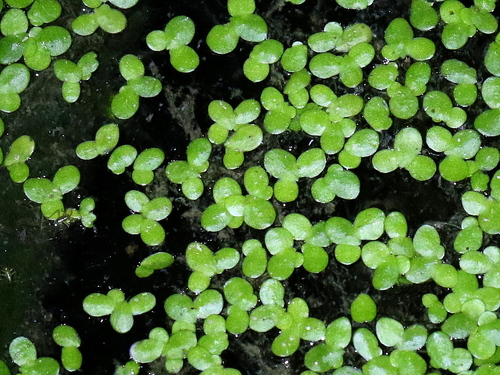
The tiny body of this plant changes shape based on its growth conditions. When grown in shade, it forms a single green translucent oval structure that is no longer than 2.5 millimeters. When grown in full sunlight, it typically grows in paired structures. The plant has a central vein that can usually be seen when viewed under magnification or a microscope. It produces a short-lived, membrane-bound flower.
This duckweed grows in slow-moving, calm, and stagnant freshwater habitats. When it grows, it forms dense mats on the water surface, altering local habitat ecology by reducing sunlight penetration into the water and limiting oxygen exchange.