About Leichhardtia suaveolens (R.Br.) P.I.Forst.
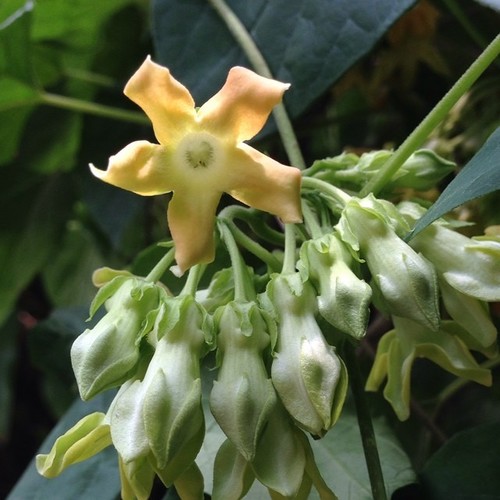
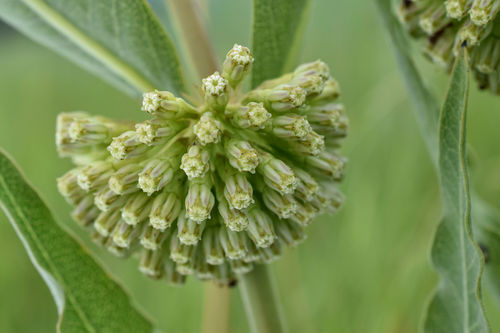
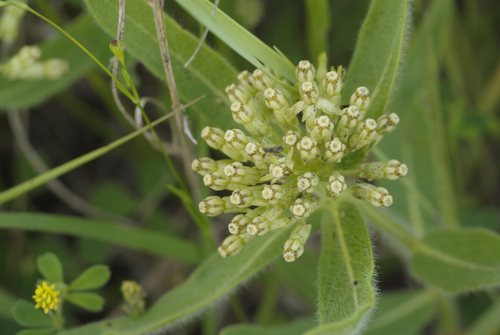
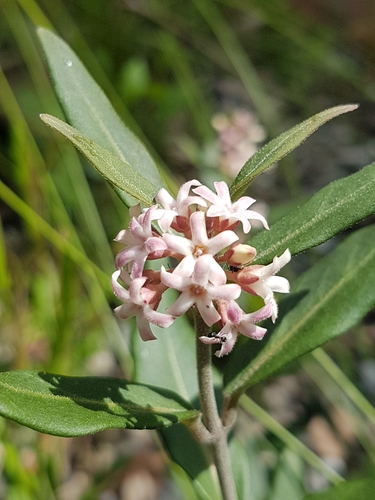
Leichhardtia suaveolens (R.Br.) P.I.Forst. grows as a vine in forest habitats, or as a small upright shrub in heathland, and reaches up to 1 metre (3 feet) high. Its stem grows to a maximum diameter of 3 millimetres (1/8 inch), and its internodes reach up to 17 centimetres (6 3/4 inches) in length. When cut or damaged, the plant releases a white milky sap. Leaves are arranged oppositely, growing in pairs from the stem. The leaves are dark green and spear-shaped, ranging from lanceolate to oblong-lanceolate, with rounded bases. They measure 2–7 centimetres (3/4–2 3/4 inches) long by 0.6–2.5 centimetres (1/4–1 inch) wide, and have margins that roll downwards. Cream-white flowers, 3–8 millimetres (1/8–3/8 inch) across and 3–5 millimetres (1/8–1/4 inch) long, develop from October to February, with peak abundance in December. Flowers are arranged in umbels, on peduncles that are 1–3.5 centimetres (3/8–1 3/8 inch) long. Fruiting occurs 2–3 months after flowering. The seed pods are narrow with a tapered tip, and measure 5–10 centimetres (2–4 inches) long by 0.8–1.4 centimetres (1/4–1/2 inch) wide. From August to January, the pods open to release feathery seeds, which are dispersed by wind. This species is distributed between Port Macquarie and Bega in eastern New South Wales. It grows in wet sclerophyll forest alongside turpentine (Syncarpia glomulifera), Sydney peppermint (Eucalyptus piperita), and blackbutt (E. pilularis), most commonly on sandy alluvial soils. It also occurs in dry sclerophyll forest with red bloodwood (Corymbia gummifera), stiff-leaf wattle (Acacia obtusifolia), and paperbark tea-tree (Leptospermum trinervium), and can be found in rainforest gullies. Its native habitats receive over 800 millimetres of rainfall per year. Ecologically, Leichhardtia suaveolens resprouts after bushfire, and has been recorded producing fruit just five months after a burn event. It is foraged by the caterpillars of the common crow butterfly (Euploea core). In cultivation, The Botanical Register recorded in 1820 that this species, then known by the synonym Marsdenia suaveolens, flowered at Colville Nursery in Chelsea, United Kingdom. Its floral fragrance was widely praised and compared to that of Heliotropium peruvianum, now classified as Heliotropium arborescens. It can be grown in gardens in well-drained soil, positioned in a partially sheltered spot.