About Leersia hexandra Sw.
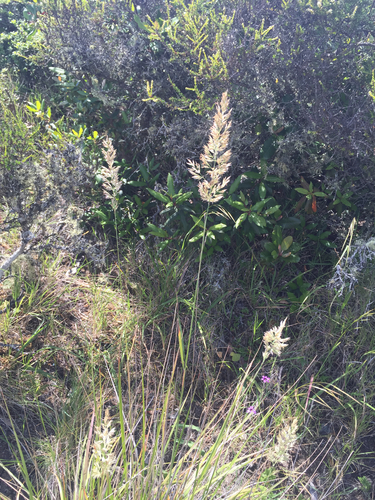
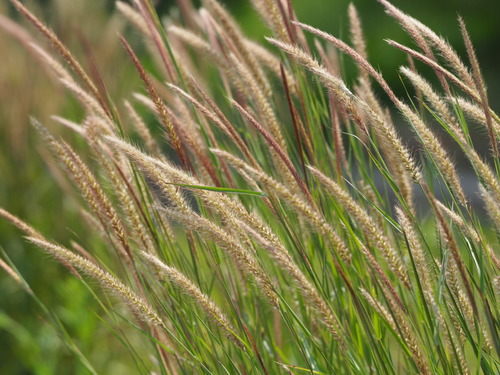
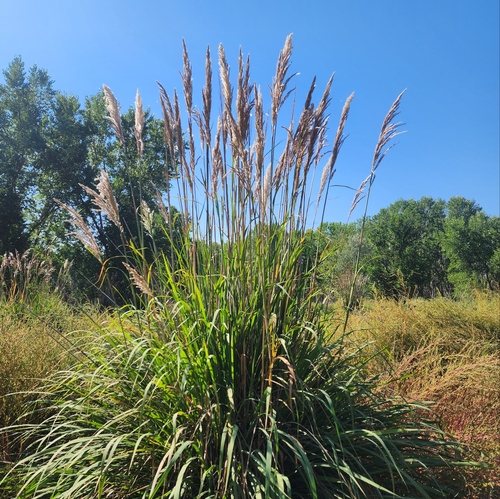
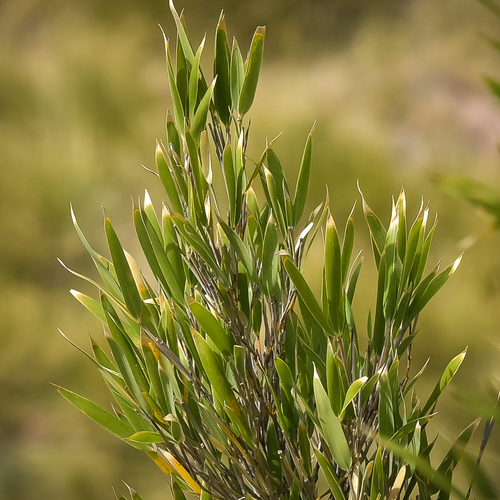
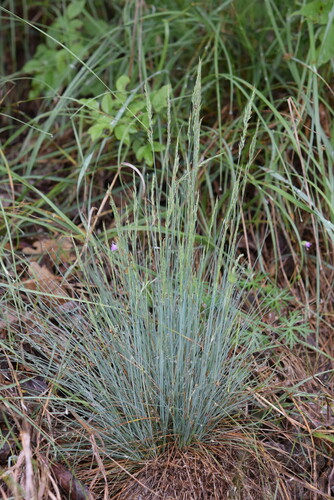
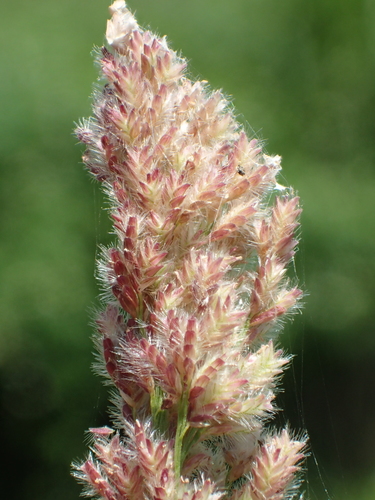
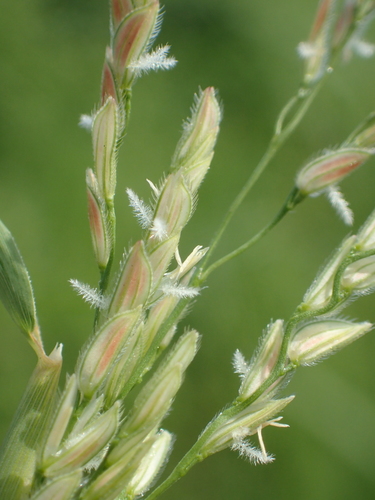
Leersia hexandra Sw. is a perennial grass that grows from rhizomes and stolons. Its hollow stems are decumbent and creeping, rooting easily when their nodes touch the substrate, and produce erect shoots that can grow over one meter tall. This is an aquatic or semi-aquatic grass; its erect stem sections may float in water. Stems can grow densely in aquatic habitats, matting together to form structures commonly called "carpets". The leaf sheath has a fleshy base covered in white hairs, and the ligule can be stiff and dry, developing a papery texture. The leaves have sharp-pointed blades up to 30 centimeters long, which are either flat or rolled; edges sometimes roll inward at night or when the blade dries out. Blades are sometimes hairless, but are usually covered in very rough hairs that make them unpleasant to handle. They also have very sharp edges, and the midrib has backward-facing spiny hairs that create a cutting edge. The retrorsely spinulose midrib of the leaf can cause very painful lacerations. The panicle is either narrow or spreading, and either erect or nodding, reaching up to around 12 centimeters long. Its branches are almost entirely lined with overlapping spikelets, each up to half a centimeter long. Spikelets may be greenish or purplish, and sometimes have an orange or brick red tinge. They are surrounded by white or purplish bracts that have characteristic comb-like hairs along their greenish nerves. Each flower has six stamens. After spikelets fall off, the panicle branches take on a zig-zag shape. Fertile seed is rarely produced, and this grass most commonly reproduces vegetatively by sprouting from rhizomes or stem nodes. Large stands of the grass are often made up entirely of clones. This grass closely resembles rice and other species in the genus Oryza. It is a member of the rice tribe Oryzeae, and sometimes grows in rice paddies. This plant grows in shallow freshwater habitats and on wet and moist land. It can be found in marshes, swamps, ponds, irrigation ditches, flooded rice fields, other moist agricultural lands, and floodplains. It occurs mostly in tropical regions, but can grow in some temperate climates, and can persist for some time in drier conditions during drought. The grass provides food and shelter for animals, and many water birds feed on it. In Tanzania, it is a dominant plant in the swamps where shoebills (Balaeniceps rex) and wattled cranes (Bugeranus carunculatus) build their nests. On the Llanos of Colombia and Venezuela, it is the second most important food for resident capybara (Hydrochoerus hydrochaeris) herds, making up as much as 29% of their diet. It is one of the two host plants of the brown planthopper (Nilaparvata lugens); the other host is cultivated rice. While the brown planthopper has been observed on many other plant species, it can only complete its full life cycle on cutgrass or rice. There are two strains of the planthopper: one that only lays eggs on rice, and one that favors cutgrass. The rice strain cannot reproduce effectively on cutgrass, and vice versa, even when the two strains live in the same area. While the two strains can be crossed during laboratory testing, they do not interbreed in the wild. Despite its sharp leaf edges, the grass is palatable to cattle. It is maintained as a pasture grass on swampy land, and cut for hay. This species is a heavy metal hyperaccumulator, with the ability to absorb large amounts of chromium, copper, and nickel from water and soil. Its ability to absorb chromium in particular has been described as extraordinary. It is considered a potential candidate for phytoremediation to clean up metal-contaminated soils and water, with target sites including industrial wastewater from facilities like electroplating factories, and contaminated soils surrounding these facilities.