About Leavenworthia exigua Rollins
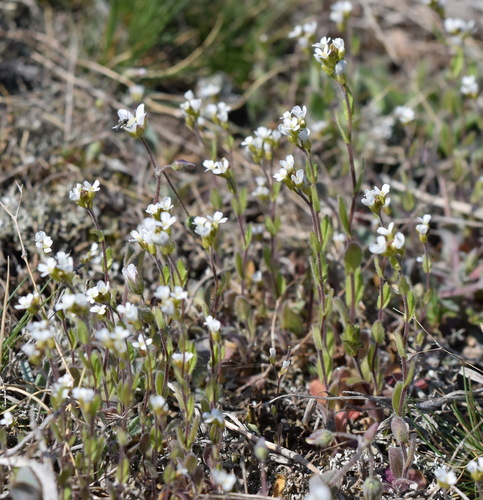
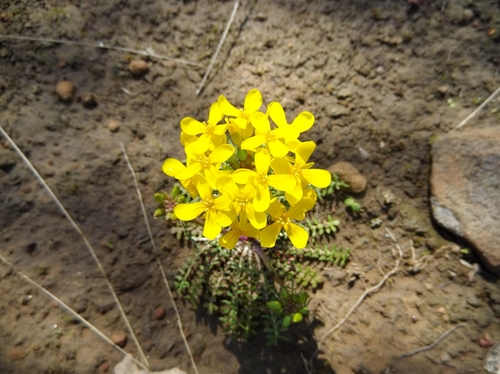
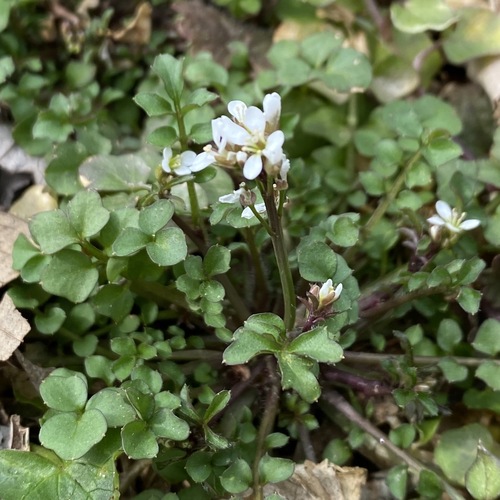
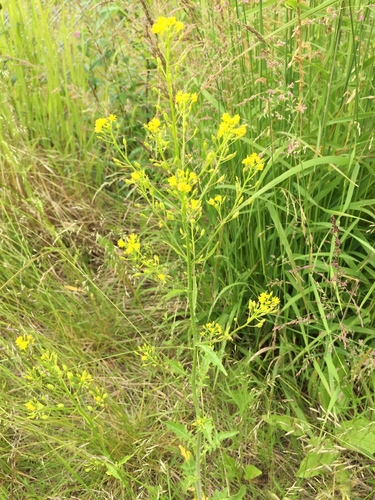
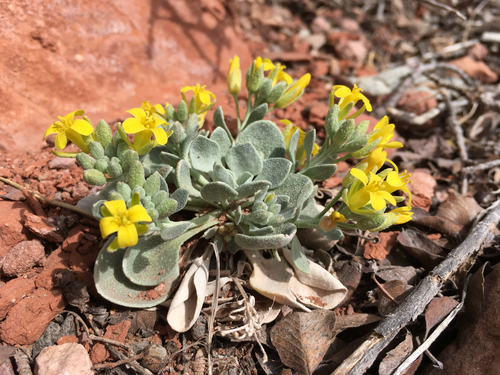
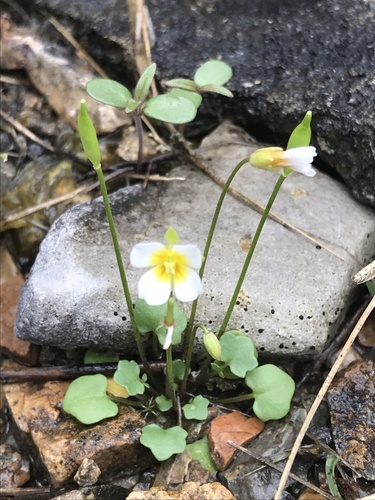
Leavenworthia exigua Rollins is a species in the genus Leavenworthia, which contains a total of eight species. Most members of this genus are native to the southern United States, including Kentucky and Tennessee. Leavenworthia exigua is an annual winter-spring plant whose seeds germinate in the fall. It grows in areas of limestone clades where soil stays damp through winter and spring. Three varieties of this species are found across four southern U.S. states: Alabama, Tennessee, Kentucky, and Georgia. Because it is a rare species, Leavenworthia exigua is protected in all four of these states. Mature Leavenworthia exigua reaches between 5 and 10 cm (2.0 to 3.9 inches) in height, and has a slender central stem. Its early leaves are simple, while mature leaves are lobed and often have a pointed or squared tip. All leaves grow in a small, whorled leaf rosette. This species produces small pale lilac flowers in spring. These flowers have four petals, and their sepals are green rather than lilac. Leavenworthia exigua occurs most often in limestone (cedar) glades with gravelly soil that holds ample moisture. Seeds germinate in fall, and the plant develops a small leaf rosette over winter. At this time, the thin glade soil is rich in nutrients and moisture, which provides ideal growing conditions for the species. Flowers and seeds develop in early spring, after which seeds remain dormant through the dry summer months.