About Lathyrus nissolia L.
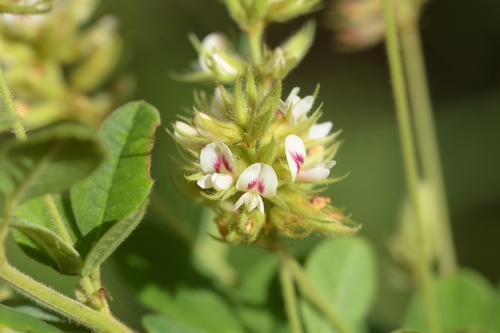
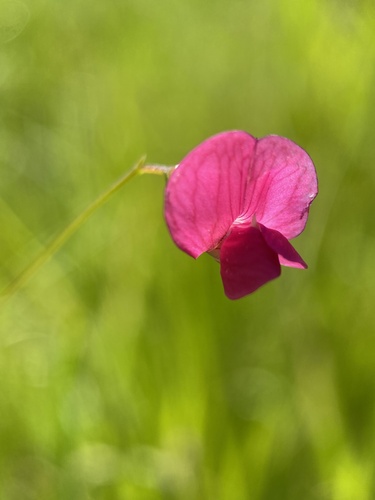
Grass vetchling (Lathyrus nissolia L.) is an annual plant with an erect stem that branches from its base, and grows up to 90 cm tall. It has no true leaves, leaflets, or tendrils at all. Instead, its leaf stalk is flattened into a structure that closely resembles a blade of grass, reaching up to 15 cm long and ending in a fine point. Stipules at the base of this structure further add to its grass-like appearance. The species produces small crimson flowers, 8 to 18 mm long, that bloom in June and July. Flowers grow singly or in pairs on very long stalks called peduncles, and they are capable of self-pollination. After flowering, grass vetchling develops long, slender, straight seed pods. The pods are very flat when young, but become cylindrical once the peas inside are fully mature. This plant grows in grassland, banks, and field margins, and prefers neutral to acid soil. It is native to most of Europe, the Maghreb, the Levant, and the Caucasus. In the United Kingdom, it is widespread across southern and central England and Wales, scarcer in northern England, and restricted to the Central Belt in Scotland where it occurs only locally. The species is currently spreading within the UK. It had not been recorded in Ireland by 2012, but had become established there as a neophyte by 2020.