About Lathyrus aphaca L.
Taxonomic Identification
Lathyrus aphaca L., commonly called yellow pea or yellow vetchling, is an annual plant species in the Fabaceae family, previously known as Leguminosae.
Mature Plant Height
Mature plants reach around 100 centimeters in height.
General Foliage and Stem Characteristics
Their foliage is pale green to glaucous, the plants are glabrous, and they have angled stems that do not have wings.
Leaf and Stipule Morphology
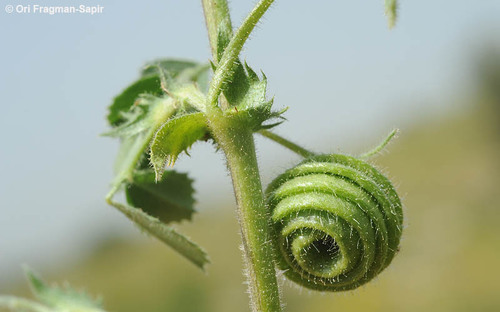
True leaves are reduced to simple unbranched tendrils, and the structures that appear leaf-like are actually stipules.
Stipule Size and Shape
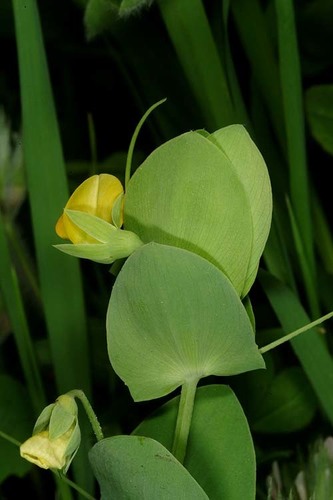
Stipules are ovate-hastate in shape and can grow up to 50 millimeters long.
Flower Appearance and Size
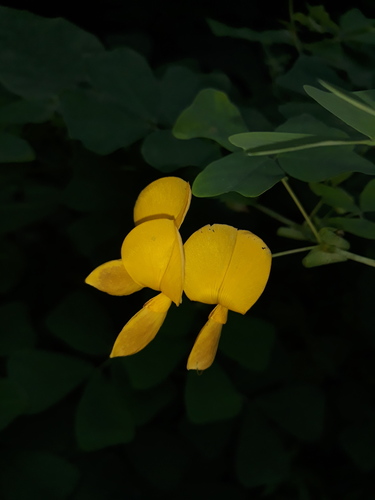
Flowers are typically solitary, yellow, often with violet streaks, and measure 10–13 millimeters long.
Flower Stalk Characteristics
They are held on long stalks, up to 50 millimeters, that branch from leaf axils.
Flower Reproductive Structures
The bisexual flowers have 10 stamens and one style.
Chromosome Count
Lathyrus aphaca is a diploid species with 14 chromosomes.
Evolutionary Origin
It is thought to have evolved in the Middle East, around Syria and Jordan, an area that is a center of diversity for many other legume species.
Adaptation to Human Disturbed Habitats
While edible pea species were first domesticated in the Fertile Crescent, weeds like L. aphaca are believed to have naturally adapted to arable or similar human-disturbed habitats between approximately 23,000 and 11,000 years ago.
Agricultural Benefits
As a farmland weed, L. aphaca has some benefits: it can fix nitrogen to help fertilize soil, and it is edible in small quantities when mixed with harvested grain.
Toxicity
However, it produces narcotic effects if consumed in larger amounts.
Native Habitat Type
The most likely native habitat of L. aphaca is dry limestone scrubland in the Middle East, a habitat type often called phrygana or garrigue.
Habitat Range in Origin Region
In its region of origin, it occurs in both wild and cultivated habitats.
Agricultural Weed Host Crops
It can be an aggressive agricultural weed, primarily infesting wheat, and it also invades other crops such as sugarcane in Pakistan.
Historic Range Expansion
The spread of farming over the last 10,000 years allowed L. aphaca to expand its range to southern Asia as far east as Bangladesh, and to southern Europe as far west as Portugal and even the Azores.
Archaeophyte Classification in Expanded Range
It is often considered native in these regions, but it is more likely an ancient introduction, called an archaeophyte, that has persisted in the wild by finding natural or semi-natural habitats similar to its native phrygana.
Portugal Distribution Status
In Portugal, it is classified as native only in the Calcareous Western Centre biome, though it occurs across the whole country as an agricultural weed; even here, it is most likely a well-established archaeophyte.
Northern Europe Habitat Suitability
In northern Europe, L. aphaca has generally not been able to find any semi-natural habitat that matches its native arid scrub habitat.
Poland Habitat Types
In Poland, it is recorded growing in a range of habitat types: in edge vegetation of forests belonging to the Trifolio-Geranietea sanguinei class, on dry lawns, along transport route edges especially railway lines, in orchards, in arable fields, and on fallow land.
Europe Wide Population Decline Cause
Since the early 20th century, L. aphaca has declined across all of Europe, driven by improved seed cleaning technologies, and it has been largely eradicated from cereal crops.
Regional Decline Examples
This decline mirrors patterns seen in the Netherlands, where it has decreased by 75–100% since 1950, as well as in Germany and Poland.
Non-Native Established Range
Despite this decline in Europe, it has become established as an agricultural weed in more distant regions including the United States, South Africa and Australia (GBIF, 2021).