About Laterallus jamaicensis (Gmelin, 1789)
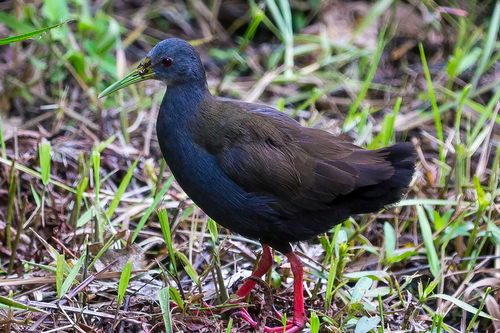
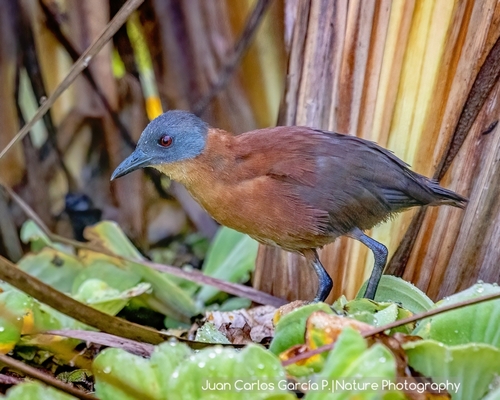
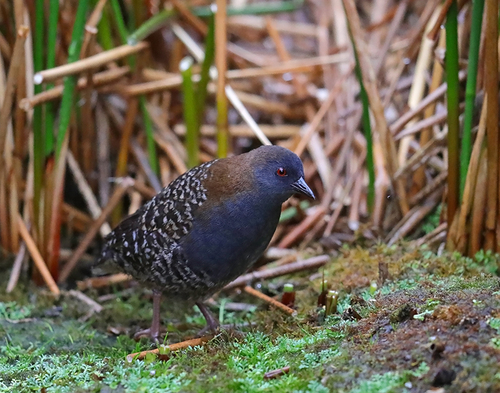
Laterallus jamaicensis, commonly known as the black rail, is the smallest rail species found in North America. This small bird has a short dark bill, dark legs, and a predominantly dark body covered with white speckles along its back and wings. Juvenile black rails have brown eyes, which gradually turn red by the time the birds reach approximately 3 months of age. Adult black rails weigh between 29 and 46 grams, measure 12 to 15 cm in total length, and have a wingspan ranging from 22 to 28 cm. Black rails typically announce their presence through vocalization, rather than being seen visually. In North America, the species produces a distinctive ki-ki-krr call, as well as an aggressive growl thought to serve a territorial purpose. These vocalizations are produced most often at night, when the birds are most vocal. The peak of vocal activity, along with breeding and courtship behaviors, occurs during the first two weeks of May. Subspecies of black rail native to South America have noticeably different vocalizations. The black rail is distributed across scattered regions of North America, the Caribbean, and South America. It most commonly inhabits coastal salt marshes, though it can also be found in some freshwater marshes. The species’ preferred habitat is high marsh, where it spends most of its time hidden in dense vegetation. This habitat preference is shaped by the black rail’s foraging and nesting needs: the species occupies the drier portions of the marsh, but positions these home ranges adjacent to low marsh areas that flood occasionally during spring tides. These periodically flooded low marsh regions act as critical foraging grounds where the black rail can access mud-dwelling invertebrates. The dry high marsh areas provide safe nesting locations that protect nests from flooding during high tides. High marsh habitats are defined by large expanses of grasses mixed with patches of open salt panne, which stay dry for most of the year and only flood during extreme spring tides. On the Florida Gulf Coast, marsh-hay cordgrass is one of the most common high marsh grass species, and it is favored by black rails. Due to habitat loss, the black rail is extinct or threatened across many of its former range. The largest remaining North American populations are located in Florida and California. Black rails are rarely observed by people, and they prefer to run through dense marsh vegetation for cover rather than fly. The species is an opportunistic feeder with a broad diet that includes seeds, insects, crustaceans, and mollusks. It forages along the water line after both high and low tide.