About Larinus minutus Gyllenhal, 1836
Larinus minutus Gyllenhal, 1836 is a species of true weevil called the lesser knapweed flower weevil. It is used as a biological pest control agent against noxious knapweeds, particularly diffuse knapweed (Centaurea diffusa) and spotted knapweed.
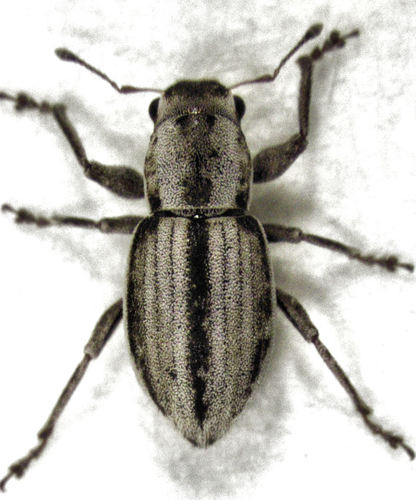
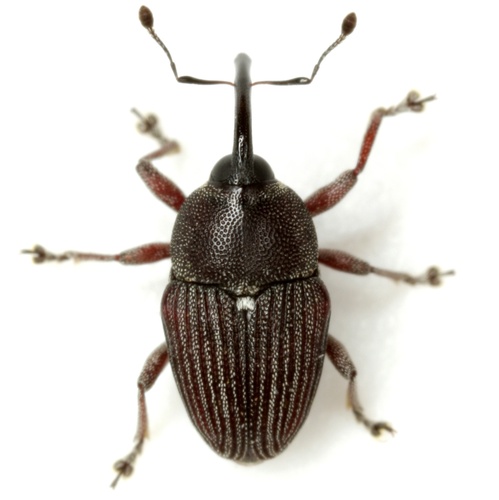
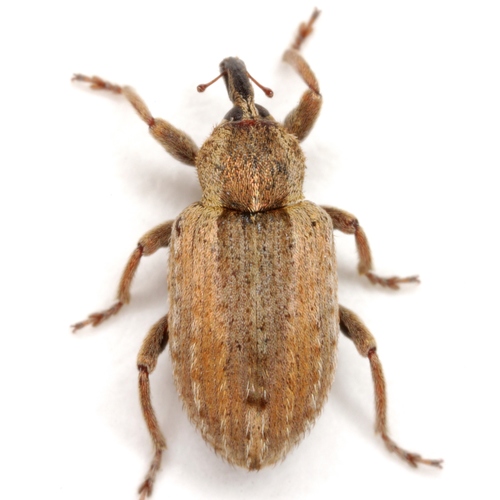
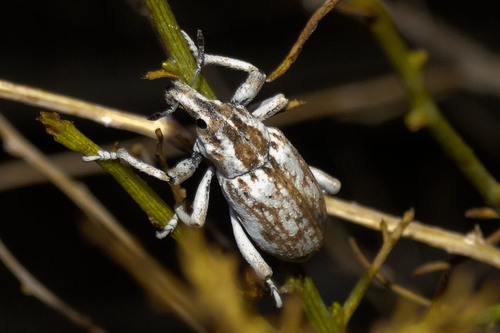
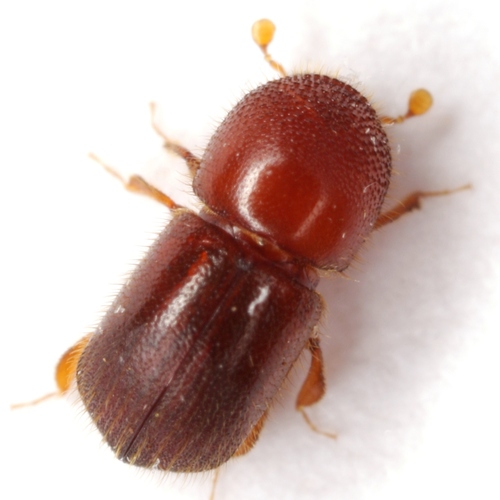
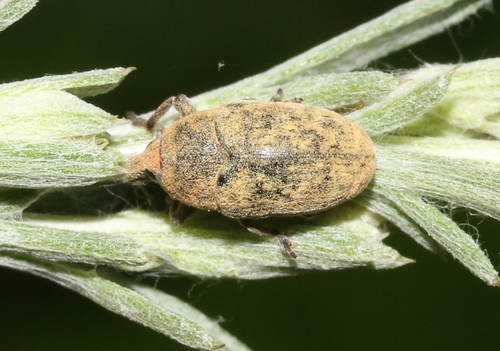
Adult weevils are dark mottled brown with a long snout, and reach a total length of 4 to 5 millimeters, or 0.16 to 0.20 inches. Adults are active throughout the entire summer, with a maximum adult lifespan of 14 weeks. During this period, females can lay up to 130 eggs, depositing each egg inside a knapweed flower head. When the larva emerges, it burrows into the flower head and feeds on the plant's developing seeds. Larval feeding reduces the plant's seed production, destroying all seeds of diffuse knapweed and 25 to 100% of seeds of spotted knapweed. Before the plant flowers, adult weevils damage the plant by defoliating it while feeding on its leaves; after flowering, adults switch to feeding on the flowers instead.
In populations of diffuse and spotted knapweed, L. minutus directly consumes another introduced knapweed biological control agent: the gall-forming tephritid flies Urophora affinis Frfld and Urophora quadrifasciata Meigen.
This weevil is native to southern Europe and the Mediterranean. It was first released for knapweed biocontrol in the United States in 1991, sourced from Greece. It is now established in knapweed populations across the western United States, particularly in warm, dry areas. The weevil feeds only on knapweeds, and prefers diffuse knapweed over other types of knapweed; there is no evidence that it attacks native North American plant species. L. minutus has been recorded reducing diffuse knapweed density at multiple study sites, but it has been less successful at controlling spotted knapweed.