About Larinioides sclopetarius (Clerck, 1757)
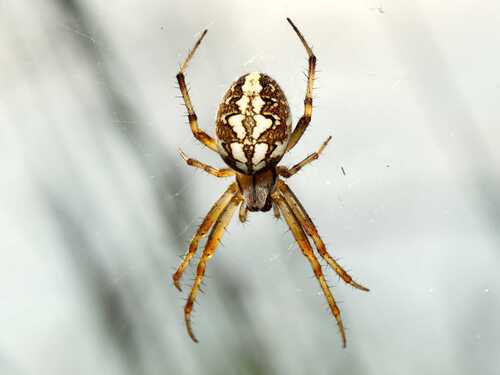
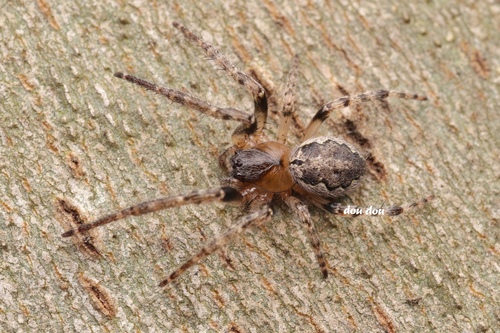
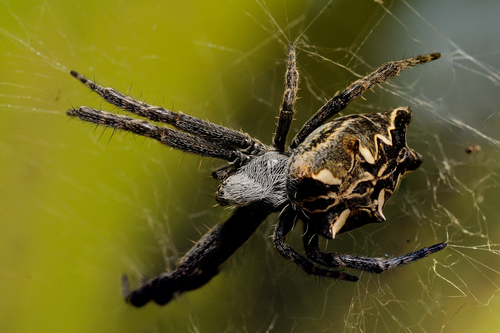
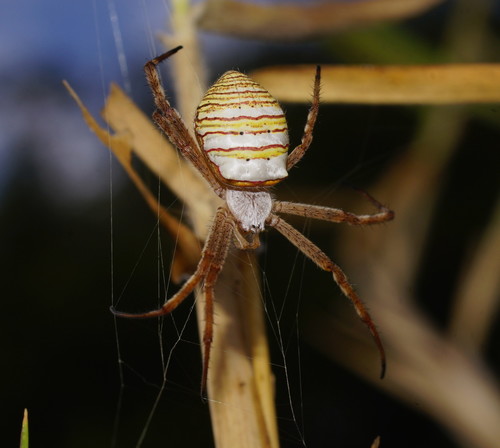
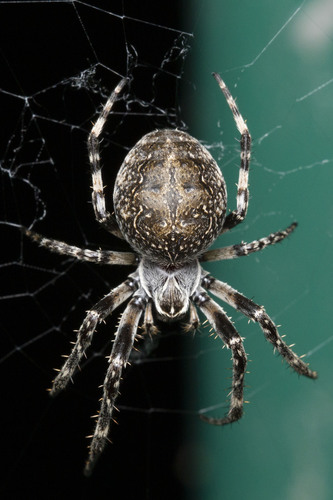
Larinioides sclopetarius shows slight sexual dimorphism. Females are heavier than males, with females typically weighing around 60 mg and males around 38 mg. Even so, males may be slightly larger in overall length than females. Female body length ranges from 4.5 to 6.25 mm, while male body length ranges from 4.25 to 7 mm. This species can be distinguished from its close relatives Larinioides patagiatus and Larinioides cornutus by a few key traits. Unlike those two species, L. sclopetarius has white hairs that form a silhouette around its head, and dark markings on its abdomen. In North America, L. sclopetarius is most common in the Great Lakes states, but can be found across the entire country. It is most often found near buildings. The species is also present in Central Europe, where it is often found near water. It is most commonly found near artificial light sources next to water bodies, such as on bridges and boats. These spiders frequently aggregate at high densities near light sources, because lights attract more insects and increase the spider’s rate of prey capture. Their light-seeking behavior may have some genetic basis. In these shared feeding locations, adult females tend to hold the best foraging areas. When competition is high, juveniles and immature spiders are pushed into lower-quality feeding areas, likely because juveniles cannot compete successfully for better territories. After maturing, these spiders typically seek out more highly illuminated areas to build their webs and lay their eggs. Under optimal conditions, L. sclopetarius lives for approximately 1.5 years. Females have above-average reproductive ability, and can produce up to 15 egg sacs. Males generally grow faster than females, and mature into adults up to one month earlier. Unlike many spider species, the development of L. sclopetarius does not depend on seasons. Adult spiders can reach maturity at any time of year, though the largest number of mature spiders occurs in late summer.