About Larentia clavaria (Haworth, 1809)
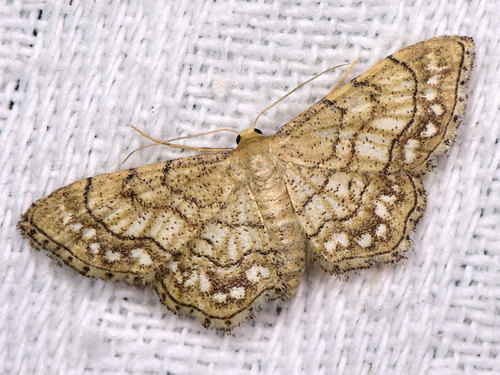
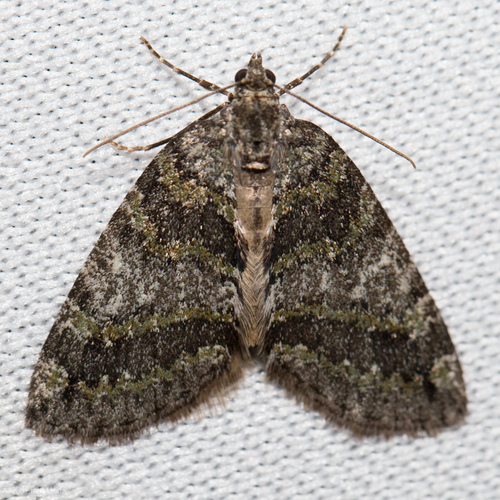
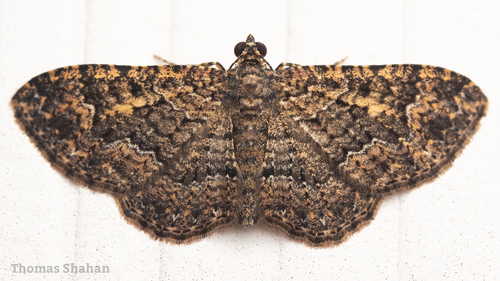
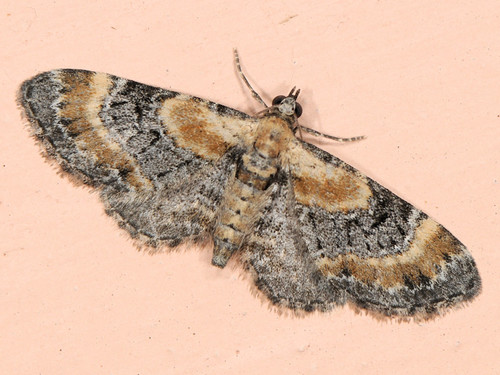
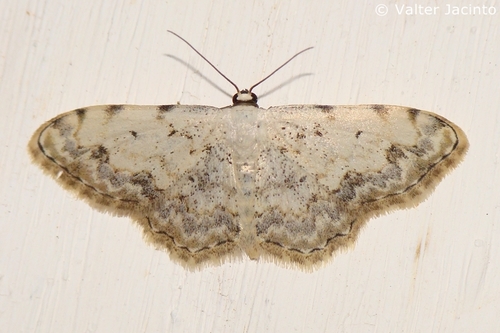
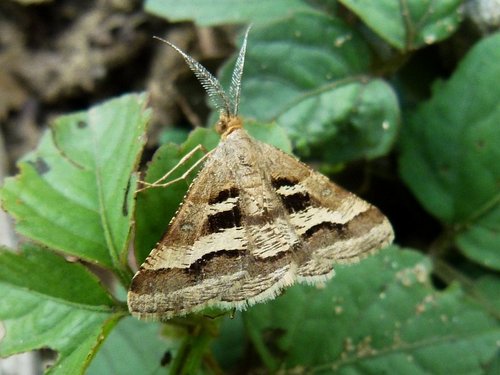
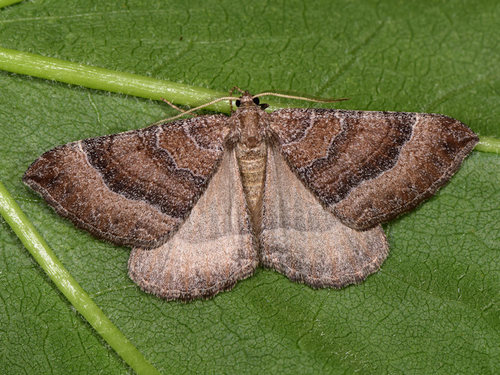
Larentia clavaria, commonly known as the mallow, is a species of moth in the family Geometridae. It was first described by Adrian Hardy Haworth in 1809. This moth species is distributed from the Altai Mountains of Siberia in the east, westward to the Iberian Peninsula, North Africa, and the British Isles. To the north, its range extends to the Caucasus, Tajikistan, and Fennoscandia. To the south, it can be found on western Mediterranean islands, as well as in Italy, the Balkans, and Asia Minor. It only occurs locally and is almost always considered rare. In the Alps, it can be found at elevations up to 1200 metres above sea level. The wingspan of adult Larentia clavaria measures 36–40 mm. Its forewings are fawn-coloured, with a browner basal patch, median band, and distal shade; all of these brown markings have fine, delicate white edges on their distal side. The median band also has a fine white line along its proximal side, which is sharply indented on the submedian fold and more shallowly indented in the cell. The hindwings are pale, turning browner toward the distal margin. The larvae are long and slender, and a uniform bright yellow-green in colour. Adult moths fly from August to November, with flight timing varying depending on location. The larvae feed on Althaea officinalis and species in the genus Malva.