About Lampropeltis rhombomaculata (Holbrook, 1840)
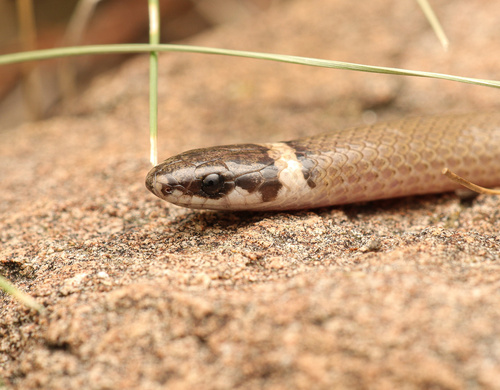
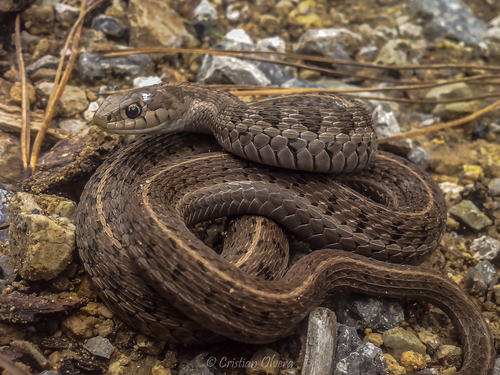
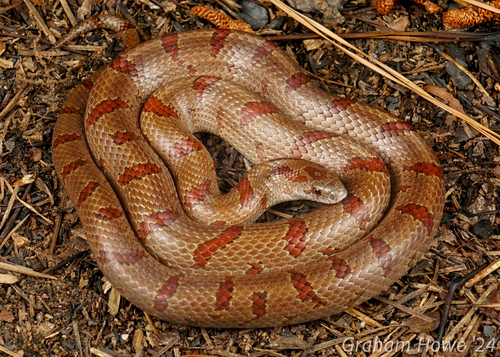
Lampropeltis rhombomaculata, commonly called the mole kingsnake, is typically light brown or gray, with dark brown, orange, or reddish-brown blotching running along the full length of its body. This species can reach a total length including tail of 30 to 40 inches, which equals 76.2 to 101.6 cm. It is easily confused with the milk snake and the venomous copperhead, since all three share the same habitat and can have similar markings. Some individual mole kingsnakes have faded markings that make the snake appear almost solid brown. Juveniles generally have more vivid markings and coloration, and have small reddish markings on the head. The mole kingsnake is native to the southeastern United States, but it is not found in the Appalachian Mountains. Its range extends from Maryland south to Florida, and west to Mississippi. The species prefers open fields with loose, dry soil, usually located at the edge of forested areas. Its diet is primarily made up of rodents, but it also eats lizards, frogs, and occasionally other snakes. It is nonvenomous and typically docile. Like most colubrids, it will rapidly vibrate its tail if it is harassed. This snake is very secretive, highly fossorial, and rarely seen above ground during the day, unless driven out by heavy rains. It is mainly nocturnal, and is commonly found on paved roads at night. This species has been observed swallowing prey whole and headfirst, even when prey has a diameter that exceeds 90% of the snake's own head diameter; this behavior is thought to be inherited. Male and female mole kingsnakes mate between late spring and early summer, around May to June. Females leave pheromone trails that males detect with their forked tongues. Individuals have been observed signaling to potential mates by flicking their tongues at up to one time per second, accompanied by body jerking. Mating events recorded in laboratory settings have lasted over two hours. Males have been observed biting females during copulation, most likely to keep their hemipene in place. After mating, females select nesting sites underground or inside rotting logs, and lay 10 to 12 eggs that hatch during the summer. The mother does not remain to care for her offspring, and usually leaves immediately after laying eggs. Hatchlings become fully independent approximately ten days after hatching. Both eggs and hatchlings of L. rhombomaculata have a smaller average size than those of L. calligaster.