About Lampropeltis holbrooki Stejneger, 1902
The speckled kingsnake, scientifically named Lampropeltis holbrooki Stejneger, 1902, typically reaches a total body length (including the tail) of up to 48 inches (120 cm). The maximum recorded total length for the species is 72 inches (180 cm).
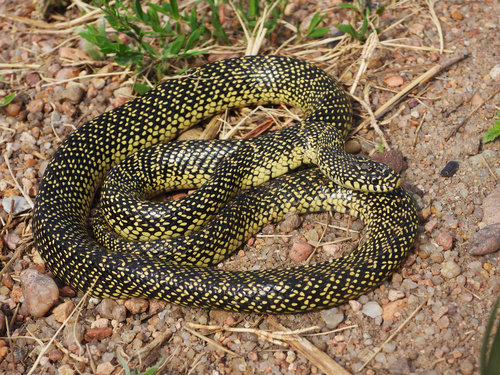
Its common name comes from its distinct scale pattern. The snake has a black base color, with one small yellow-white speck located at the center of almost every dorsal scale. Due to this pattern, it is also commonly called the "salt-and-pepper snake".
This species is native to the central and southern United States, where its range extends from southern Iowa down to the Gulf of Mexico. Its geographic range overlaps with the range of the desert kingsnake, Lampropeltis splendida, and the two species are known to intergrade.
Compared to other kingsnake species, the speckled kingsnake prefers wetter habitats, including swamps and rivers. However, it is also commonly found in drier areas such as woodlands and grassy fields.