About Lampropeltis alterna (Brown, 1901)
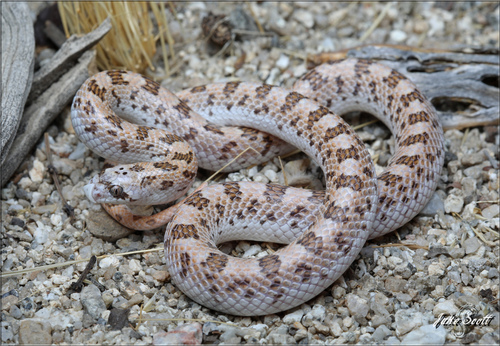
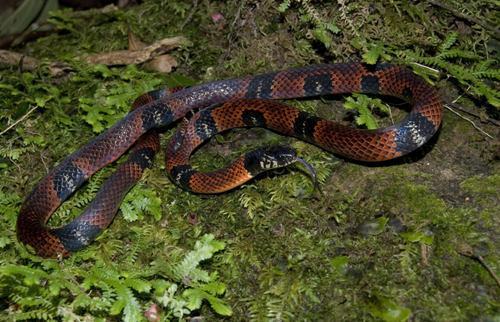
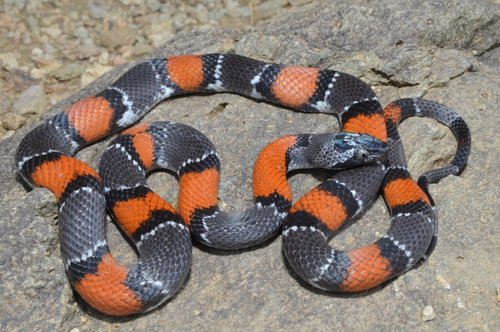
The gray-banded kingsnake, scientifically named Lampropeltis alterna (Brown, 1901), is a moderately sized snake. It reaches a maximum total length including tail of 4 feet (120 cm), and has an average total length of 3 feet (91 cm). Compared to other kingsnake species, it has a relatively wide head, large eyes, and round pupils. Coloration and patterning of L. alterna vary widely, but there are two main color morphs that were historically classified as separate subspecies. The "blairi" morph has wide red or orange banding, while the "alterna" morph has thinner red or orange banding. Both morphs typically have a gray base color, with white and/or black accent markings. Many additional variations on this basic body pattern exist in both wild and captive-bred populations, and some individual snakes lack orange or red banding entirely. This species is distributed across the Trans-Pecos/Chihuahuan Desert region, covering southwestern Texas, southern New Mexico, and northern Mexico. It is strongly associated with habitats that have limestone or volcanic substrates, steep slopes, and typical desert scrub. L. alterna is oviparous. It lays clutches of 3 to 13 eggs in early summer, and the eggs hatch after approximately 9 weeks. Newly hatched gray-banded kingsnakes measure around 10 inches (25 cm) in total length.