About Lama glama guanicoe (Müller, 1776)
Common Name and Taxon Identification
This text describes Lama glama guanicoe, commonly known as the llama.
Adult Height and Weight Range
A full-grown llama reaches a height of 1.7 to 1.8 m (5 ft 7 in to 5 ft 11 in) at the top of the head, and weighs between 130 and 272 kg (287 and 600 lb).
At maturity, males average 94.74 kg while females average 102.27 kg.
Cria Birth Weight
A baby llama, called a cria, weighs 9 to 14 kg (20 and 31 lb) at birth.
Lifespan
Llamas typically live 15 to 25 years, with some individuals living 30 years or longer.
Adult Dental Formula
Adult llamas have a total of 32 teeth, with the dental formula 1/3 incisors, 1/1 canines, 2/2 premolars, and 3/3 molars.
Upper Jaw Incisor and Canine Structure
In the upper jaw, a compressed, sharp, pointed laniariform incisor sits near the rear edge of the premaxilla.
At least in males, this is followed by a moderate-sized, pointed, curved true canine in the anterior part of the maxilla.
Upper Jaw Premolar and Molar Traits
The isolated canine-like premolar found in camels is not present in llamas.
The connected teeth of the molar series are made up of two very small premolars (the first is almost rudimentary) and three broad molars, which are generally structured like those of Camelus camels.
Lower Jaw Incisor and Canine Structure
In the lower jaw, the three incisors are long, spatulate, and procumbent; the outer incisors are the smallest.
Next to these is a curved, suberect canine, followed after a gap by an isolated, minute, often deciduous simple conical premolar.
Lower Jaw Molar Series Traits
Then comes a connected series of one premolar and three molars, which differ from Camelus molars in having a small accessory column at the anterior outer edge.
Skull Morphology Compared to Camels
The llama skull generally resembles that of Camelus, but has a larger brain cavity and eye sockets, with less developed cranial ridges due to the llama’s smaller overall size.
The nasal bones are shorter and broader, and are joined by the premaxilla.
Vertebrae Count
Llama vertebrae count as: 7 cervical, 12 dorsal, 7 lumbar, 4 sacral, and 15 to 20 caudal vertebrae.
Ear Shape
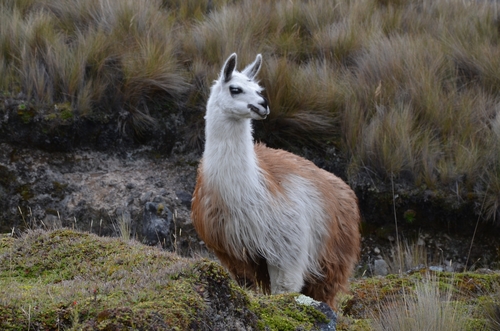
Llama ears are rather long, slightly curved inward, and are characteristically described as "banana" shaped.
Dorsal Hump Presence
Llamas have no dorsal hump.
Foot Structure
Their feet are narrow, with toes that are more separated than camel toes; each toe has a distinct plantar pad.
Tail and Fiber Traits
The llama tail is short, and its fiber is long, woolly, and soft.
Lama Genus Morphological Consistency
In core structural traits, as well as general appearance and habits, all animals in the Lama genus closely resemble each other.
Species Classification Controversy
This has led to ongoing controversy among naturalists over whether the group should be classified as one, two, or more separate species.
Classification Complications from Domestication
The classification question is complicated by the fact that most observed individuals are either fully or partially domesticated, and many are descended from already domesticated ancestors — a status that tends to produce more variation from the original wild type.
Recognized Lama Genus Forms
South American inhabitants commonly distinguish four forms that are often recognized as distinct species, though it remains difficult to define clear distinguishing traits for each.
These four forms are: the llama (Lama glama (Linnaeus)), the alpaca (Lama pacos (Linnaeus)), the guanaco (from Quechua huanaco, Lama guanicoe (Müller)), and the vicuña (Lama vicugna (Molina)).
Domesticated Lama Form Traits
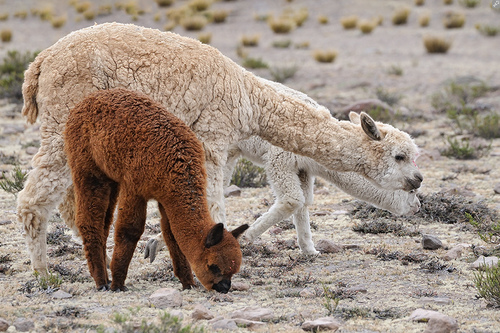
The llama and alpaca are only known in domesticated states, vary in size, and come in many colors, most often white, brown, or piebald; some are grey or black.
Wild Lama Form Status
The guanaco and vicuña are wild.
Guanaco Conservation Status and Coloration
The guanaco is endangered, has an almost uniform light-brown color that fades to white on its underside.
Guanaco and Vicuña Distinguishing Traits
The guanaco and vicuña are definitely distinct: the vicuña is smaller, more slender in proportions, and has a shorter head than the guanaco.
Vicuña Habitat
The vicuña lives in herds on bleak, high-elevation areas of mountain ranges bordering regions of perpetual snow, among rocks and cliffs.
It can be found throughout suitable habitats in Peru, southern Ecuador, and as far south as central Bolivia.
Vicuña Behavior
Its behavior closely resembles that of the European Alpine chamois: it is equally vigilant, wild, and timid.
Vicuña Fiber Value
Vicuña fiber is extremely delicate and soft, and highly valued for weaving, but each animal produces only a small amount of fiber.
Domestic Lama Species Ancestry
Genetic evidence indicates alpacas are primarily descended from wild vicuña ancestors, while domesticated llamas are primarily descended from wild guanaco ancestors, though a considerable amount of hybridization has occurred between the two species.
Llama and Alpaca Physical Differences
Key differences between llamas and alpacas include the llama’s larger size, longer head, and curved ears.
Llama and Alpaca Fiber and Color Differences
Alpaca fiber is generally more expensive, but not always more valuable.
Alpacas typically have a more consistent solid color across their entire body.
Llama and Camel Visible Difference
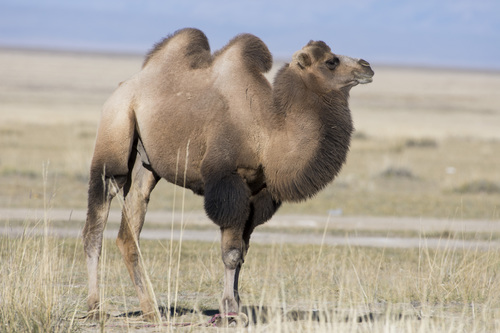
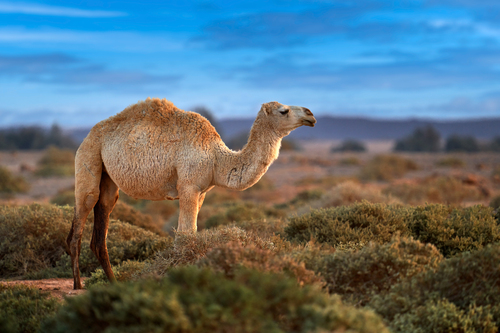
The clearest visible difference between llamas and camels is that camels have a hump or humps and llamas do not.
Llama Ruminant Classification Status
Llamas are not classified as ruminants, pseudo-ruminants, or modified ruminants.
Llama Stomach Structure and Function
They do have a complex three-compartment stomach that lets them digest lower-quality, high-cellulose foods.
The stomach compartments allow fermentation of hard-to-digest food, followed by regurgitation and re-chewing.
Llama Stomach Compartments Compared to Ruminants
Unlike ruminants such as cows, sheep, and goats which have four stomach compartments, llamas have just three: the rumen, omasum, and abomasum.
Llama Large Intestine Structure
In addition, llamas and other camelids have an extremely long and complex large intestine (colon).
Large Intestine Function
The large intestine’s role in digestion is to reabsorb water, vitamins, and electrolytes from passing food waste.
Arid Climate Adaptation from Colon Length
The length of the llama’s colon allows it to survive on much less water than many other animals, a major advantage in the arid climates where it lives.
Female Llama Reproductive Cycle
Llamas have an unusual reproductive cycle for a large animal.
Female llamas are induced ovulators: through the act of mating, the female releases an egg and is often fertilized on the first attempt, and female llamas do not go into estrus ("heat").
Llama Sexual Maturity Timing
Like humans, male and female llamas reach sexual maturity at different rates.
Females reach puberty at around 12 months old, while males do not become sexually mature until approximately three years of age.
Llama Antibody Medical Applications
Doctors and researchers have confirmed that llamas produce antibodies that are well-suited to treat certain diseases.
Scientists have studied how llamas may contribute to the fight against coronaviruses, including MERS and SARS-CoV-2, the virus that causes COVID-19.