About Lagostomus maximus (Desmarest, 1817)
Nomenclature and Taxonomy
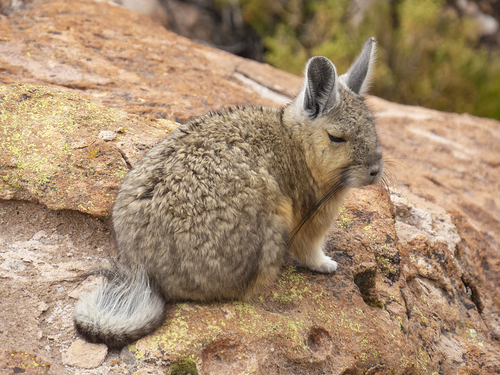
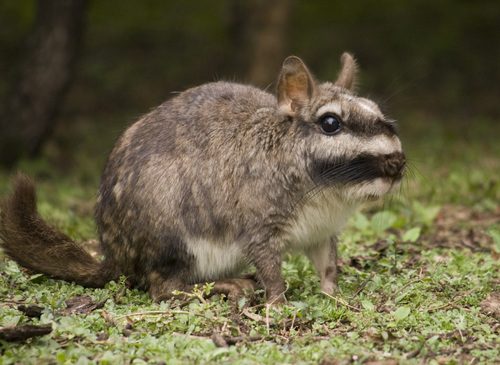
The plains viscacha, also spelled plains vizcacha, with the scientific name Lagostomus maximus, is a viscacha species and a rodent belonging to the family Chinchillidae. It is the only living species in the genus Lagostomus, and the largest species in its entire family.
Geographic Range
It is found in Argentina, Bolivia, and Paraguay.
Burrow Construction
This species constructs elaborate burrows that can house consecutive colonies for decades.
Taxonomic Distinction
It should not be confused with the plains viscacha rat.
Communal Living Arrangement
Plains viscachas live in communal burrow systems. Their social groups hold one or more males, multiple females, and immature individuals.
Activity Pattern
They forage in groups at night and cluster together underground during the day.
Burrow Use and Maintenance
All group members use burrows across the entire communal system and take part in digging the burrows.
Alarm Call Production
Alarm calls are primarily produced by adult males.
Core Social Unit
The long-term social unit of plains viscacha is the female group. Resident males leave the group each year, and new males join the female groups.
Colony Size Variation
Colonies of plains viscacha can range in size from just a few individuals to hundreds of individuals.
Vocal Communication
To support social communication within the colony, the species has developed an impressive range of vocalizations that it uses during social interactions.
Female Social Dynamics
No dominance hierarchy exists among females.
Foraging Range
Members of a social group share a common foraging area surrounding their communal burrow system.
Natural Diet
They feed on a wide variety of grasses and forbs, and will occasionally graze on low shrubs.
Burrow Entrance Covering
They collect branches and heavy objects to cover their burrow entrances.
Hoarding of Human-Made Objects
When plains viscachas live near human settlements, they tend to hoard a wide range of human-made objects including brooms, tables, garden tools, firewood, trinkets, and pieces of concrete to cover their burrows.