About Lagerstroemia indica L.
Bark Features
This species has thin bark, about 2 mm (1⁄16 in) thick; it is smooth, pinkish-gray, mottled, and sheds annually.
Leaf Cycles
Its leaves are shed every winter after turning striking autumn colors, and bare branches produce new leaves early in spring.
Leaf Characteristics
The leaves are small, smooth-edged, circular or oval-shaped, and dark green, changing to yellow, orange, and red in autumn.
Flower Traits
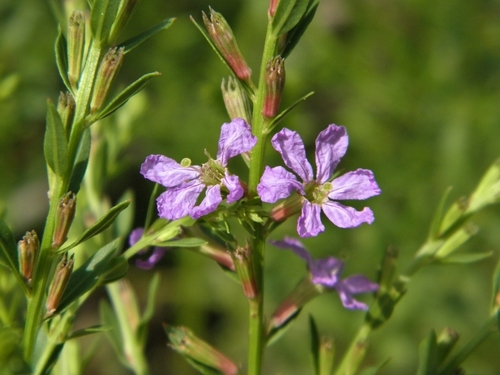
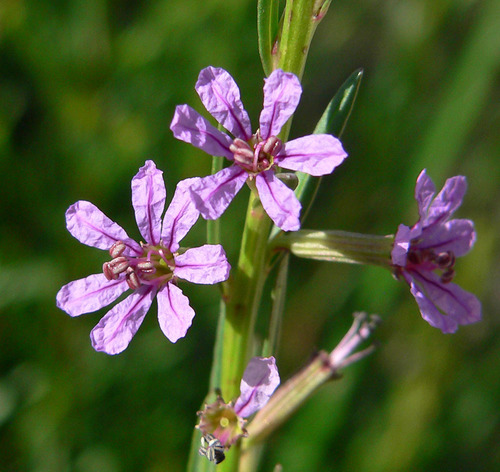
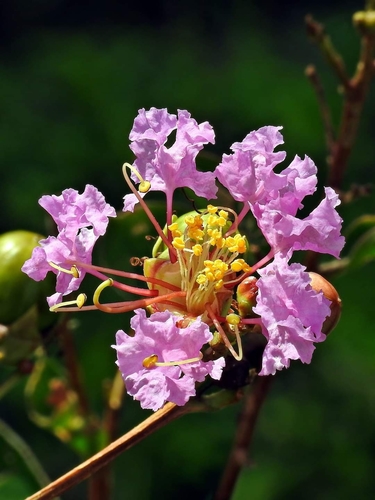
Flowers on individual trees come in white, pink, mauve, purple, or carmine, with crimped petals, and grow in panicles up to 9 cm (3+1⁄2 in) long.
Fruit Characteristics
After flowering, the plant produces brown, dehiscent fruits with six capsules.
Native Range
Lagerstroemia indica is native to subtropical regions of Asia, specifically the Himalayan subtropical broadleaf forests of Nepal, India, Bhutan, and Bangladesh, as well as southern China, mainland Southeast Asia, Taiwan, the Philippines, and Japan.
US Cultivation Range
It is commonly planted in the South Atlantic States of the United States, and is becoming an increasingly common shrub in Mid-Atlantic states, ranging north through the coastal areas of Massachusetts.
Global Cultivation Range
It also grows well in the Mediterranean and Desert climates of Southern California, Arizona, and Nevada, and is planted as a street tree in Australia.
US Popularity
In the United States, Lagerstroemia indica is a very popular flowering shrub or small tree in mild-winter states (USDA Zones 6–10).
Municipal Planting Use
Its low maintenance requirements make it a common municipal planting in parks, along sidewalks, on highway medians, and in parking lots.
Southern Symbol Status
Like southern magnolia, crape myrtle (the common name of this species) has become a symbol of the American South, due to its extensive planting and ability to thrive in hot, humid summer climates with regular precipitation.
Bloom Period Benefit
It is one of the few trees or shrubs that produces bright, showy color from late summer through autumn, when many other flowering plants have already finished blooming.
Arid Climate Requirements
In arid climates, it needs supplemental watering and some shade in the hottest locations.
Heat Requirement for Flowering
The plant requires hot summers to flower successfully; without this heat, it produces weak blooms and is more susceptible to fungal diseases.
Zone 5 Hardiness
L. indica is often root hardy to Zone 5 (−23 °C or −10 °F), meaning top growth will be killed back during harsh winters, but the plant will regrow from its roots and flower in summer.
Northern Gardening Use
Because of this, Northern gardeners grow it more like a perennial than a tree or shrub.
Cold Hardiness Risks
Excess watering and over-fertilizing can reduce cold hardiness, as these practices stimulate late-season new growth that does not have time to harden off before cold weather.
Growth Parameters
Lagerstroemia indica is frost tolerant, prefers full sun, and will grow to 6 m (20 ft) tall with an equal spread of 6 m (20 ft).
Soil Requirements
It is not particular about soil type, but requires good drainage to thrive.
Drought Tolerance
Once established, it is quite drought hardy, though it benefits from occasional deep watering during summer months.
Hybrid Cultivars
The US National Arboretum has developed 15 hybrid cultivars between L. indica and L. fauriei, selected for improved cold hardiness and disease resistance; all of these cultivars are named after Native American tribes.
Dwarf Cultivars
Dwarf cultivars exist for both L. indica itself and indica × fauriei hybrids, which grow to between 0.6–1.5 m (2–5 ft) in height.