About Lagenorhynchus albirostris (Gray, 1846)
Taxonomy and Physical Build
The white-beaked dolphin, scientifically named Lagenorhynchus albirostris (Gray, 1846), is a robust dolphin species with a short beak.
Adult Size and Weight
Adults grow to between 2.3 and 3.1 meters (7 feet 7 inches to 10 feet 2 inches) long, and weigh between 180 and 354 kilograms (397 to 780 pounds).
Calf Size and Weight
At birth, calves measure 1.1 to 1.2 meters (3 feet 7 inches to 3 feet 11 inches) long, and are estimated to weigh around 40 kilograms (88 pounds).
Body Coloration
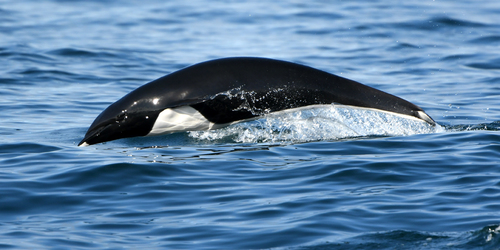
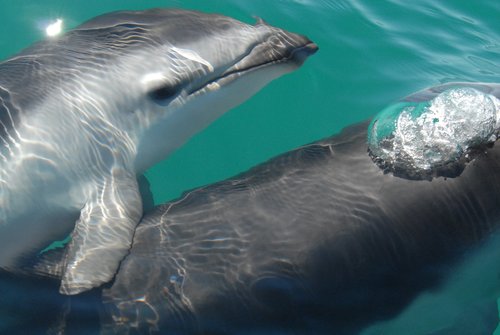
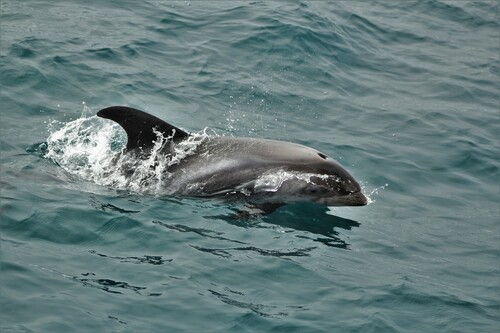
The upper body and flanks are dark grey with light grey patches, including a distinctive 'saddle' behind the dorsal fin, while the underside ranges from light grey to almost white.
Appendage Coloration
The flippers, fluke, and the tall, falcate dorsal fin are all a darker grey than the rest of the body.
Beak Coloration
As the common name suggests, the beak is typically white, but some older individuals may have a dark ashy grey beak.
Dental Characteristics
White-beaked dolphins have 25 to 28 teeth in each jaw, though the three teeth closest to the front of the mouth often do not erupt from the gums and are not visible.
Vertebral Count
They can have up to 92 vertebrae, more than any other oceanic dolphin species.
Hair Presence
Although calves are born with two to four whiskers on each side of the upper lip, these whiskers disappear as they mature, and adults are completely hairless, like other odontocetes.
Lateralized Flipper Anatomy
Recorded measurements show the humerus of the right flipper is longer and more robust than that of the left flipper, indicating this species has some degree of lateralized behavior.
Habitat Range and Depth
The white-beaked dolphin is endemic to cold temperate and subarctic waters of the North Atlantic Ocean, and is most common in seas less than 1,000 meters (3,300 feet) deep.
Geographical Distribution
Its range forms a band across the ocean: it extends from Cape Cod, the mouth of the St. Lawrence River, and southern Greenland in the west, through Iceland at the center, to northern France and Svalbard in the east.
Predation Vulnerability
The species is not well adapted to true Arctic conditions, which makes it more vulnerable to predators, most notably polar bears.
Core Population Areas
Within its overall range, white-beaked dolphins are most commonly found in four areas: the Labrador Shelf near southwestern Greenland, waters around Iceland, waters off the northern and eastern coasts of Britain, and waters off the coast of Norway.
Hunting Threat
In the Faroe Islands, located between Iceland and the United Kingdom, white-beaked dolphins are at risk of being hunted during drive hunts for long-finned pilot whales.
Bycatch Threat
They may also become accidentally trapped in local purse-seine and trawl nets.
Subspecies Status
No subspecies of the white-beaked dolphin are currently recognized.
Similar Species Distinction
White-beaked dolphins can easily be misidentified as Atlantic white-sided dolphins, but white-beaked dolphins generally range further north, are typically larger, and lack the yellow streaks on the side that Atlantic white-sided dolphins have.