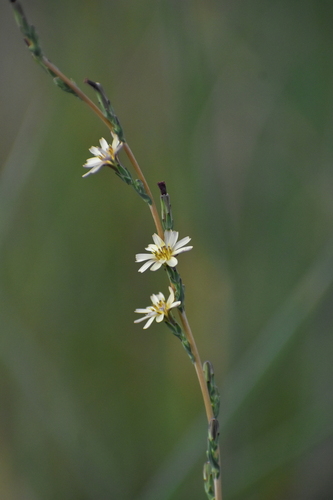
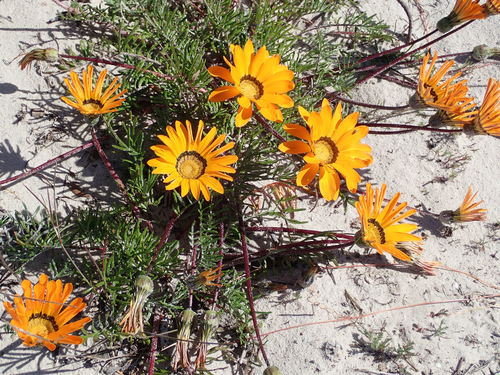
About Lactuca quercina L.
Lactuca quercina L., commonly called oak-leaved wild lettuce, is a species of wild lettuce native to Europe and Asia. It is an annual or biennial herb in the tribe Cichorieae of the family Asteraceae, growing from a taproot to a maximum height of 50–200 cm (19.5–78.5 in), and sometimes taller. This plant contains lactucarium, the white milky latex sap that flows through its stems, leaves, and roots. After being harvested and dried following exposure to air, it is used as a medicinal herb. It is valued for its documented anodyne, antispasmodic, digestive, diuretic, hypnotic, narcotic, and sedative properties, for both internal and external medicinal use. Concentrations of lactucarium are low in young plants, but increase as the plant ages, reaching their highest levels when the plant is in bloom. When applied directly to the skin, the sap can be used to treat external warts. While the standard definition of lactucarium specifies that it is produced from Lactuca virosa, it is also recognized that smaller quantities of lactucarium can be produced in the same way from Lactuca sativa and Lactuca canadensis var. elongata. Additionally, the lettuce-opium derived from Lactuca serriola and Lactuca quercina is considered to be of superior quality.