About Lactarius controversus Pers.
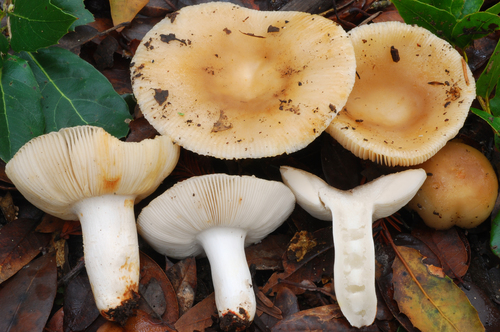
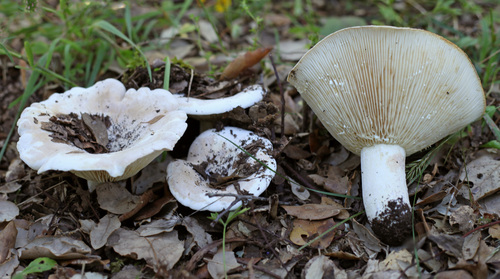
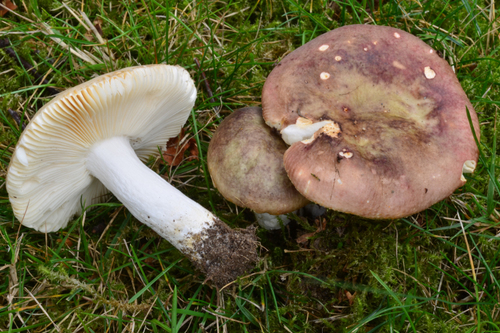
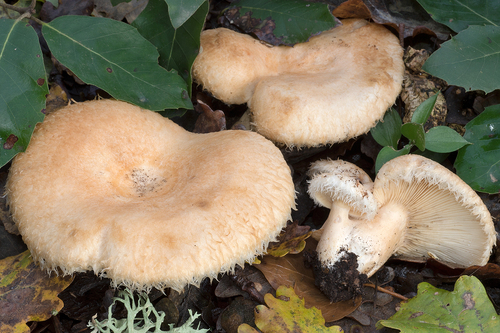
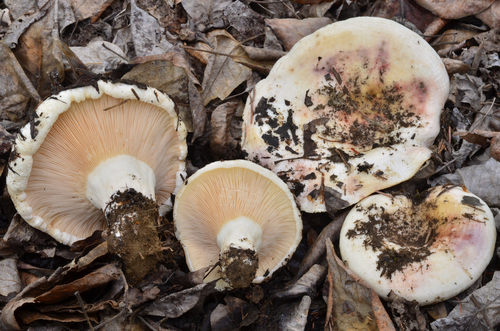
Lactarius controversus Pers. can be primarily distinguished by rosy markings on the upper surface of its cap. These markings are often arranged in concentric rings, and the fungus has pinkish-buff gills. Like other species in the genus Lactarius, its flesh is crumbly rather than fibrous. When the flesh is broken, the fungus releases a white milky latex. Mature specimens have a funnel shape, with decurrent gills and a concave cap that ranges from 5 to 20 centimetres (2 to 8 inches) in diameter. The stipe can grow up to 7 centimetres long. Its flesh is firm, and its spore print ranges from creamy to pinkish in color. In distribution and habitat, this fungus is found in Europe, including Britain. It is an uncommon species that usually grows in association with Salix species (including goat willow and creeping willow) on heaths and moors. It is widespread across North America, where it grows in association with aspen, poplar, and willow. It has been found in aspen forests of the Sierra Nevada, and has also been recorded in New Mexico.