About Krigia biflora (Walter) S.F.Blake
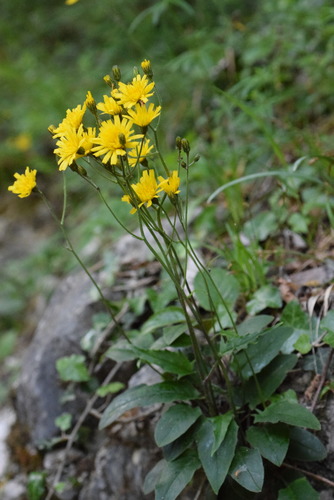
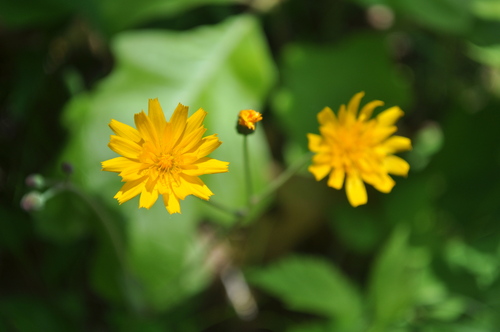
Krigia biflora (Walter) S.F.Blake, commonly called two-flower cynthia or two-flower dwarf dandelion, is a plant species belonging to the Asteraceae family. It is native to North America, occurring in central Canada (specifically Manitoba and Ontario) as well as the eastern, central, and southwestern regions of the United States. In Connecticut, this species is rare and holds a status as a species of special concern. Krigia biflora is an erect perennial that grows to a height of 450–800 mm (18–31 in). A single individual can produce 20 or more flower heads, very often with two flower heads per flower stalk. Each flower head measures 25–40 mm (1–1+1⁄2 in) across and holds 25–60 yellow to orange-yellow ray flowers; there are no disc flowers present. This species can grow as an aggressively spreading plant. It blooms from late spring to late summer, and can grow in a wide range of habitats and soil types. Its known habitats include streamsides, meadows, and moist prairies. The species' scientific name is constructed from two parts: the genus name Krigia honors David Krieg, the German physician who first collected this plant in Maryland, while the specific epithet biflora translates to two-flowered, referring to the characteristic pair of flower heads per stalk.