About Krascheninnikovia lanata (Pursh) A.Meeuse & Smit
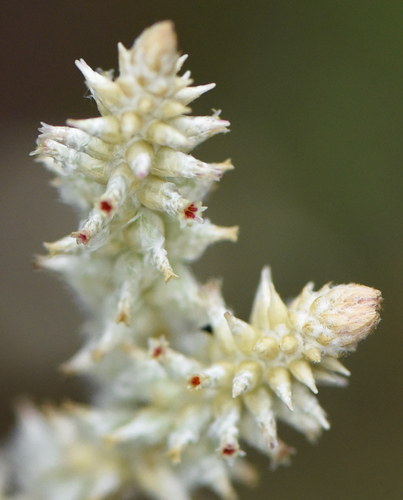
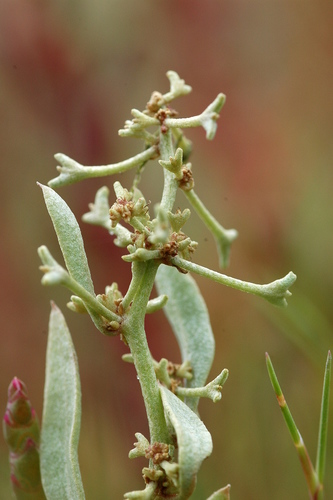
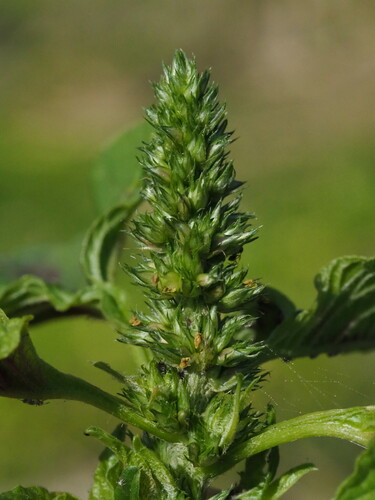
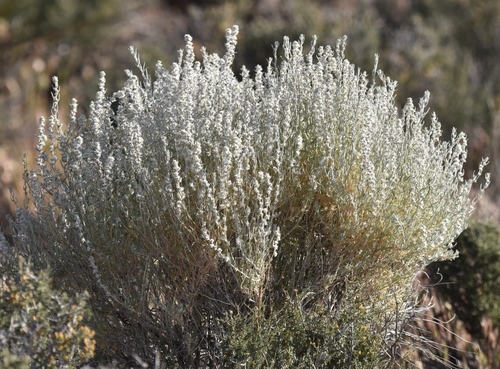
Krascheninnikovia lanata, commonly called winterfat, is a small shrub that grows erect branching stems reaching 0.5 to 1 metre (1.6 to 3.3 ft) tall. It produces flat, lance-shaped leaves that grow up to 3 centimeters long. Its stems and gray foliage are covered in woolly white hairs that turn reddish as they age. These woolly hairs begin developing in late fall, and their density gradually decreases over the winter season. From March to June, abundant spike-shaped inflorescences form at the tips of the stem branches. This shrub is generally monoecious: each upright inflorescence holds mostly staminate (male) flowers, with a small number of pistillate (female) flowers clustered near the base of the inflorescence. Staminate flowers have large, woolly, leaf-like bracts, while pistillate flowers have smaller bracts and develop tiny white fruits. Silky hairs on the fruits enable wind dispersal of the seeds. Winterfat grows in a wide variety of habitats at elevations ranging from 100 to 2,700 metres (330 to 8,860 ft), from grassland plains and xeric scrublands to rain shadow slopes of montane areas. It is a halophyte that grows well in salty soils, such as those found on alkali flats in the Great Basin, Central Valley, Great Plains, and Mojave Desert. Krascheninnikovia lanata is sold through specialty plant nurseries, cultivated as an ornamental for xeriscapes, wildlife gardens, and native plant natural landscapes. Its light gray foliage creates a distinctive visual feature in garden designs, and the plants are very long-lived. It is also sometimes grown in xeriscape or native plant gardens specifically for its striking white woolly foliage, and is especially valued for adding visual interest to gardens during the fall and winter. Small plants can be transplanted easily. Winterfat is an important winter forage source for livestock and wildlife, because its evergreen leaves are high in protein — this nutritional quality is the origin of its common name. It was used as a traditional medicinal plant by many Native American tribes across its North American range, to treat a wide variety of ailments. The Zuni people apply a poultice of ground root wrapped in cotton cloth to treat burns.