Plants — 23,508 Species
Top Families in Plants
All Plants Species
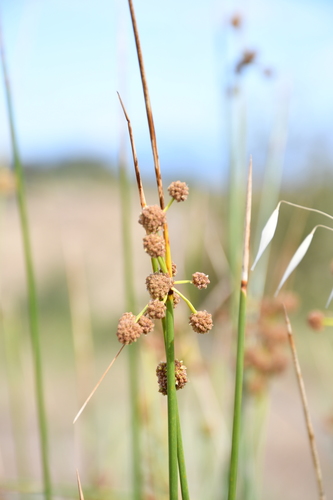
Round-headed Clubrush
Scirpoides holoschoenus (L.) Soják
Scirpoides holoschoenus, the roundhead bulrush, is a perennial Cyperaceae sedge that grows in freshwater habitats up to 0.75 m tall.
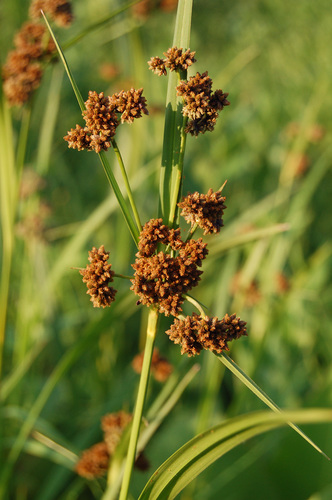
dark green bulrush
Scirpus atrovirens Willd.
Scirpus atrovirens (dark-green bulrush) is a perennial wetland sedge native to eastern North America.
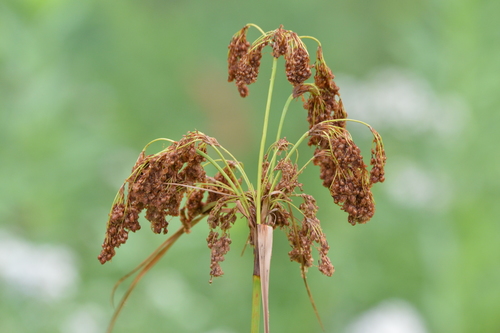
woolgrass
Scirpus cyperinus (L.) Kunth
Scirpus cyperinus, or woolgrass, is a native North American wetland sedge used historically by Native Americans for crafts and bedding.
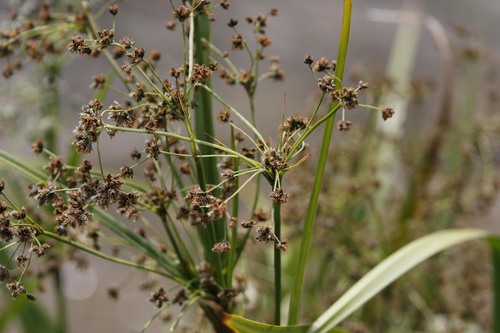
Panicled Bulrush
Scirpus microcarpus J.Presl & C.Presl
Scirpus microcarpus is a North American native perennial sedge that grows in moist and wet habitats.
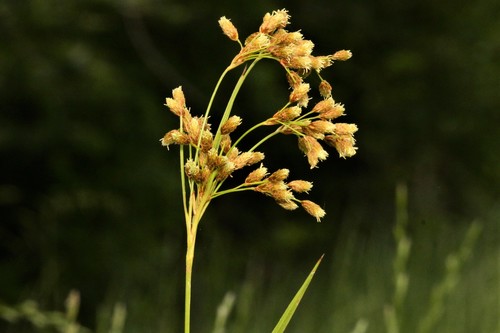
nodding bulrush
Scirpus pendulus Muhl.
Scirpus pendulus, also called pendulous bulrush, is a perennial sedge native to North America and introduced to Australia.
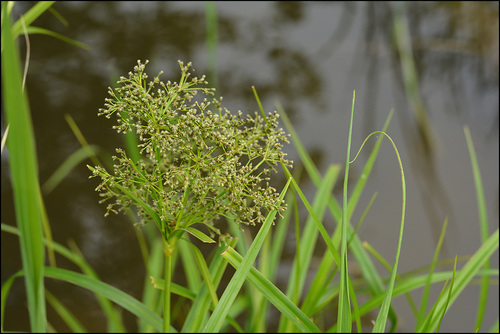
Creeping Club-rush
Scirpus radicans Schkuhr
Scirpus radicans Schkuhr is a perennial herb with a detailed morphological description and a known chromosome count of 2n=56.
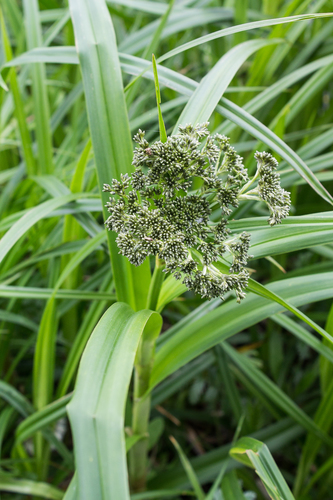
Wood Club-rush
Scirpus sylvaticus L.
Wood clubrush (Scirpus sylvaticus) is a perennial wetland sedge widespread in Eurasia, that is an important food source for waterfowl.
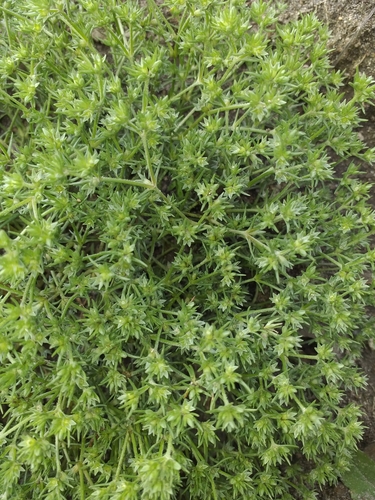
Annual Knawel
Scleranthus annuus L.
Scleranthus annuus L. is an annual or biennial low-growing herb with three life strategies, most often self-pollinated, growing in open, rocky or disturbed habitats.
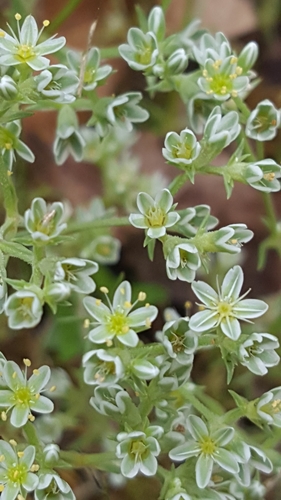
Perennial Knawel
Scleranthus perennis L.
Scleranthus perennis is a small perennial herb in Caryophyllaceae, historically the main host of the economically important Polish cochineal.
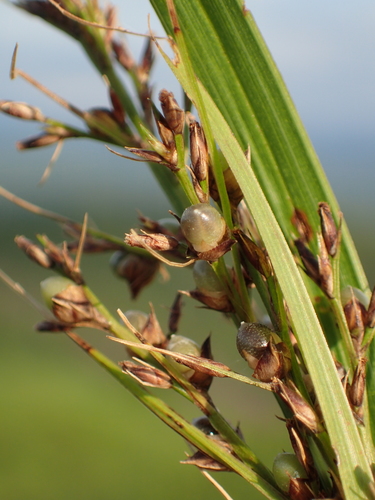
Scleria terrestris (L.) Fassett
Scleria terrestris (L.) Fassett
Scleria terrestris is a rhizomatous perennial sedge native to much of Asia and Australia, growing in varied wet and dry habitats.
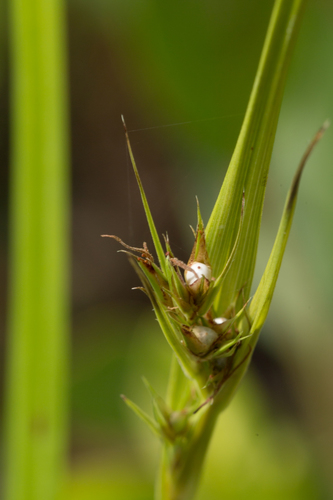
Whip Nutrush
Scleria triglomerata Michx.
Scleria triglomerata (whip nutrush) is a Cyperaceae plant found in the US and Canada across multiple habitats.
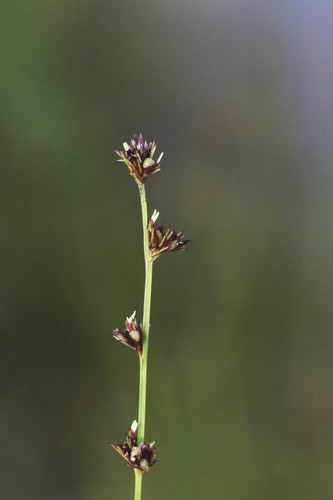
Low Nutrush
Scleria verticillata Muhl. ex Willd.
Scleria verticillata, low or whorled nutrush, is a Cyperaceae plant native to Canada, the US, The Bahamas, and Cuba.
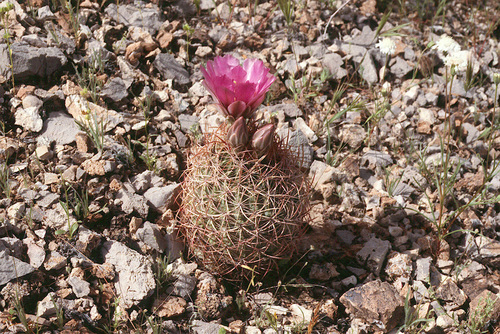
Johnson's Beehive Cactus
Sclerocactus johnsonii (Parry ex Engelm.) N.P.Taylor
Sclerocactus johnsonii is a small cactus species native to the southwestern US and northwestern Mexico, found in desert scrub habitat.
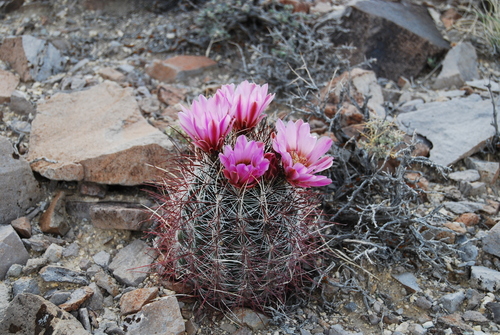
Mojave Fishhook Cactus
Sclerocactus polyancistrus (Engelm. & J.M.Bigelow) Britton & Rose
Sclerocactus polyancistrus is a clustered, spiny cactus native to the Mojave Desert that produces fragrant pink to red-violet flowers.
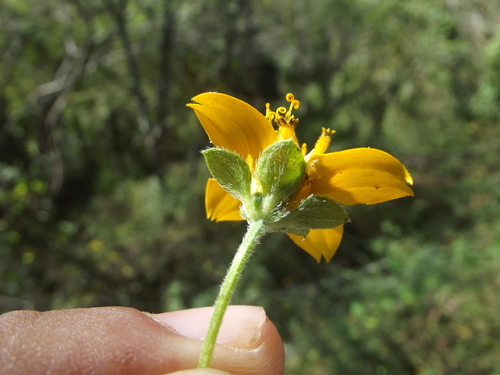
Tropical Bonebract
Sclerocarpus divaricatus (Benth.) Benth. & Hook.fil. ex Hemsl.
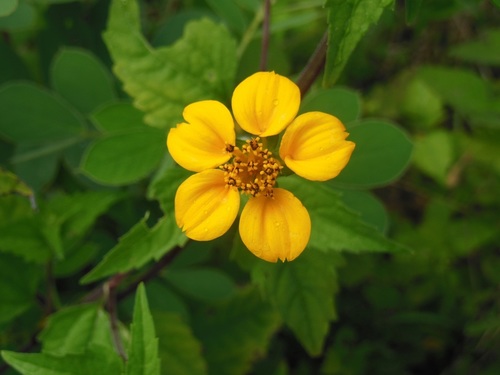
Mexican bonebract
Sclerocarpus uniserialis (Hook.) Benth. & Hook.fil. ex Hemsl.
Sclerocarpus uniserialis is an Asteraceae species native from southern US to Central America, that can act as a common crop weed.
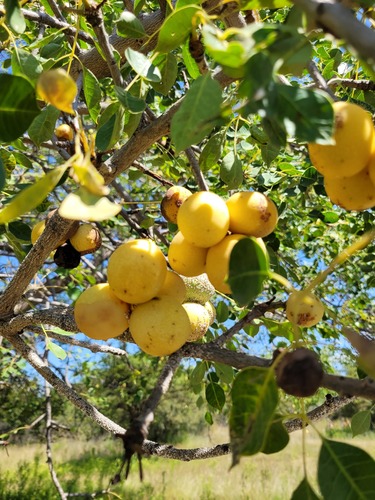
marula
Sclerocarya birrea (A.Rich.) Hochst.
Sclerocarya birrea (marula) is an African dioecious tree valued for its edible fruit, with traditional and commercial human uses.
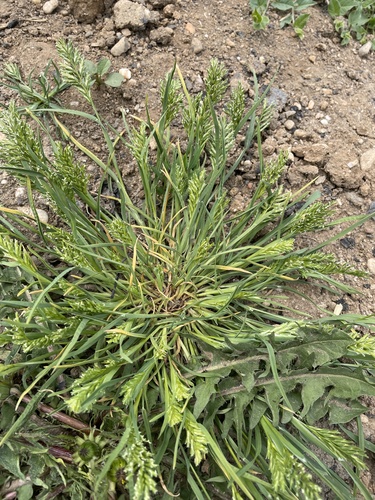
hardgrass
Sclerochloa dura (L.) P.Beauv.
Sclerochloa dura is an annual grass species native to Eurasia, introduced as a common weed in North America and Australia.
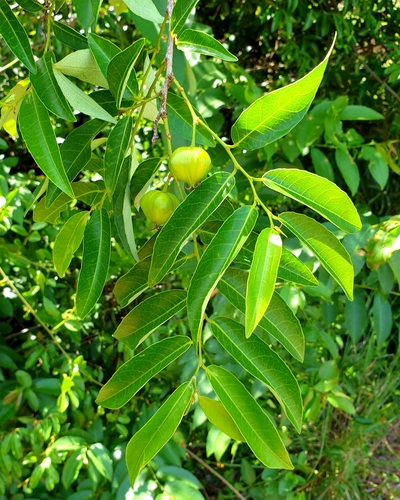
Duiker-berry
Sclerocroton integerrimus Hochst.
Sclerocroton integerrimus is a southern African tree with traditional medicinal, craft, and timber uses.
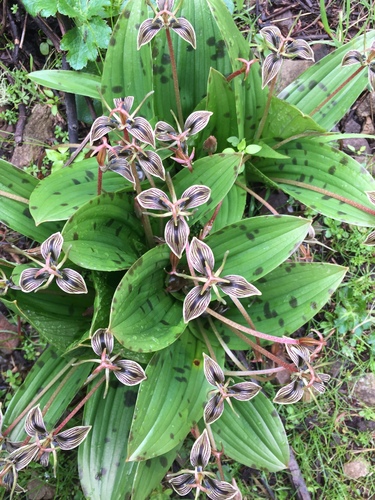
California fetid adderstongue
Scoliopus bigelovii Torr.
Scoliopus bigelovii is a California coastal understory herb pollinated by fungus gnats, sensitive to logging.
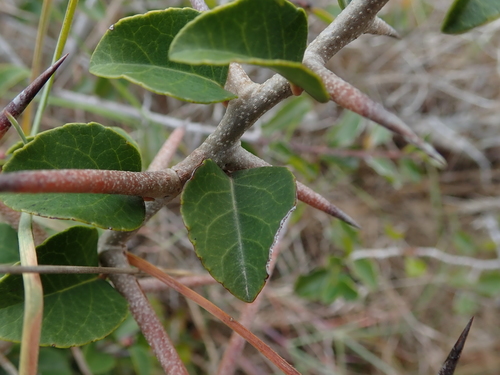
Thorn Pear
Scolopia zeyheri (Nees) Szyszyl.
Scolopia zeyheri is an evergreen much-branched shrub or tree named after German naturalist Carl Zeyher.
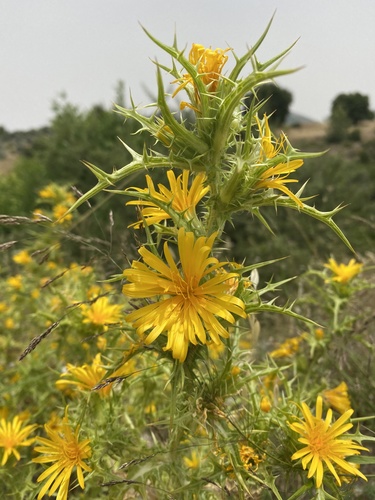
common golden thistle
Scolymus hispanicus L.
Scolymus hispanicus is an edible flowering thistle native to Europe, with a long history of medicinal and culinary use.
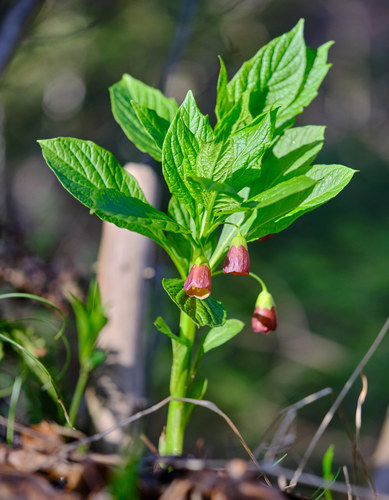
European scopolia
Scopolia carniolica Jacq.
Scopolia carniolica is a poisonous nightshade species native to Central and Southeastern Europe, containing toxic tropane alkaloids.
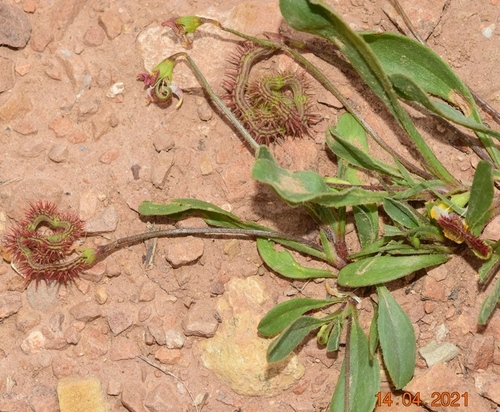
Caterpillar-plant
Scorpiurus muricatus L.
Scorpiurus muricatus is an annual legume native to Southern Europe and Syria, grown as garden groundcover and sometimes used in salads.
Start Exploring Nature Today
Download iNature for free. 10 identifications on us. No account needed. No credit card required.
Scan with iPhone camera
Scan with Android camera


