Plants — 23,508 Species
Top Families in Plants
All Plants Species
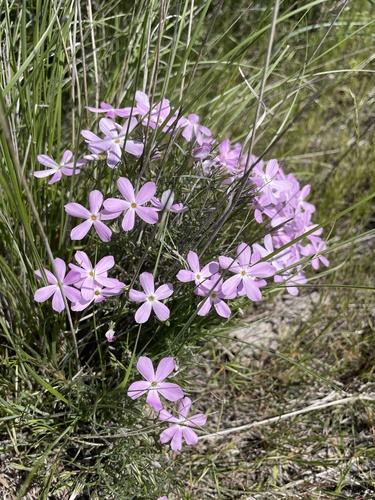
Longleaf Phlox
Phlox longifolia Nutt.
Longleaf phlox (Phlox longifolia) is a flowering perennial subshrub native to western North America, growing in dry open habitats.
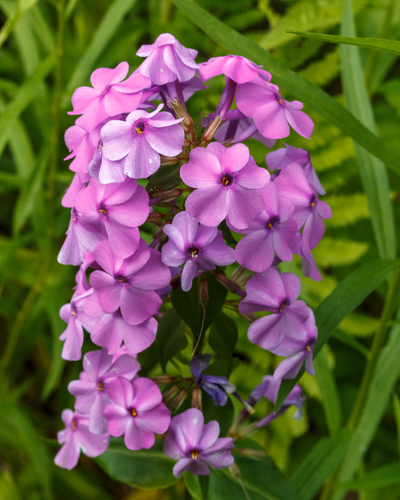
wild sweetwilliam
Phlox maculata L.
Phlox maculata is a fragrant summer-flowering Polemoniaceae perennial native to eastern US, grown in gardens.
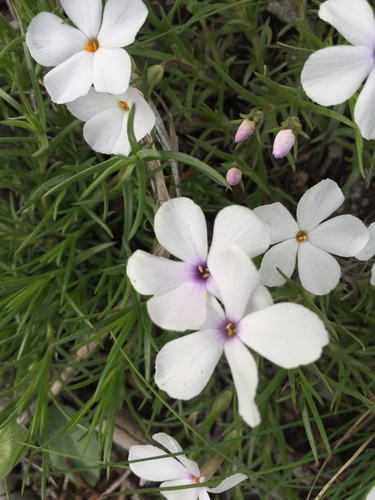
flowery phlox
Phlox multiflora A.Nelson
Phlox multiflora A.Nelson (Rocky Mountain phlox) is a low flowering perennial native to eight western US states, with traditional and garden uses.
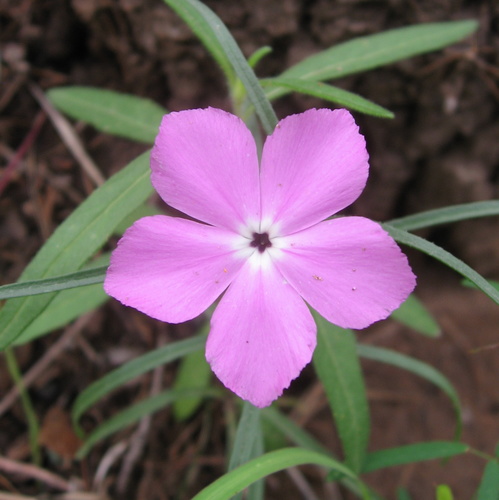
Santa Fe phlox
Phlox nana Nutt.
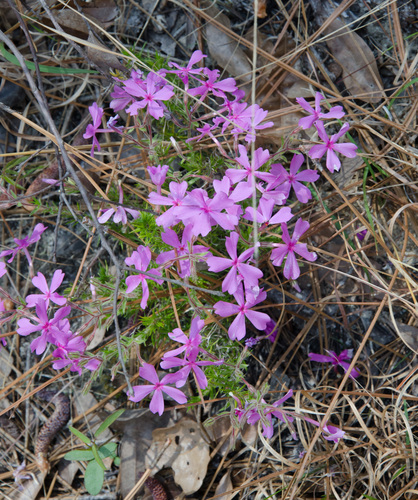
trailing phlox
Phlox nivalis G.Lodd. ex Sweet
Phlox nivalis is a flowering plant native to parts of the US, with one rare endangered subspecies endemic to Texas.
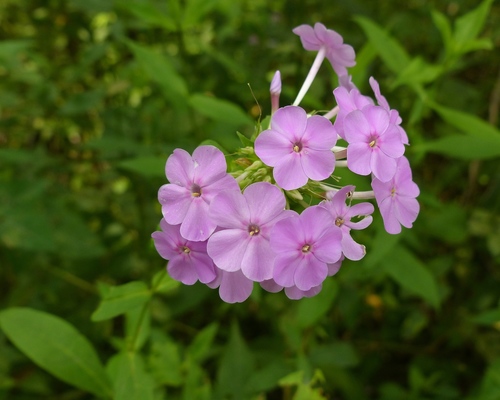
fall phlox
Phlox paniculata L.
Phlox paniculata L. is a herbaceous perennial flowering plant native to central and eastern US, widely cultivated for its fragrant flowers.
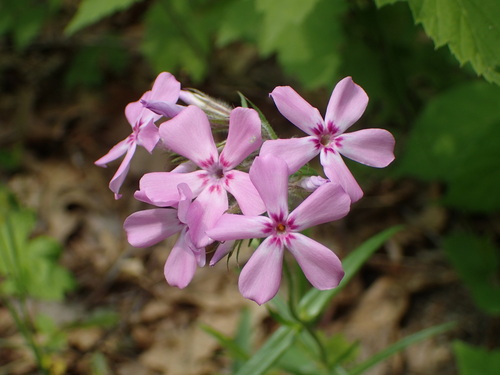
prairie phlox
Phlox pilosa L.
Downy phlox (Phlox pilosa L.) is a hairy perennial with clustered pink-lavender flowers adapted to pollination by long-tongued pollinators.
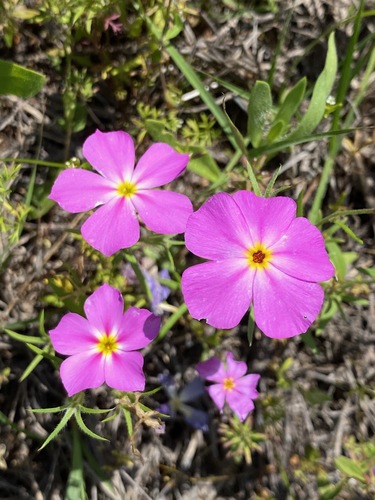
goldeneye phlox
Phlox roemeriana Scheele
Goldeneye phlox (Phlox roemeriana) is an annual pink-flowered Polemoniaceae native to Texas limestone soils.
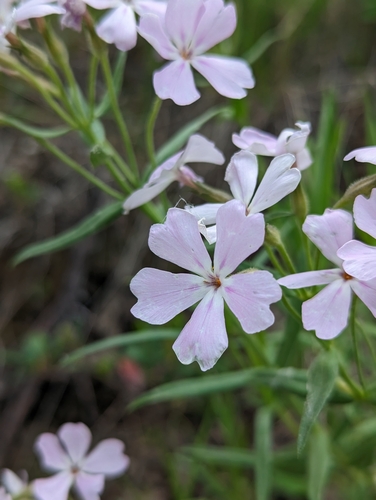
showy phlox
Phlox speciosa Pursh
Phlox speciosa is a flowering phlox widespread across western US serpentine sites, with pink to white lobed flowers.
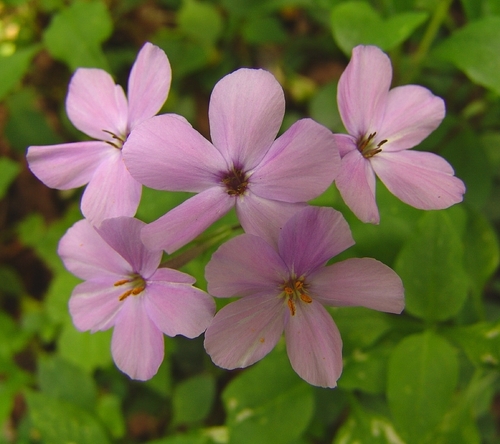
creeping phlox
Phlox stolonifera Sims
Phlox stolonifera (creeping phlox) is a flowering plant widely used as a weed-suppressing, erosion-preventing groundcover.
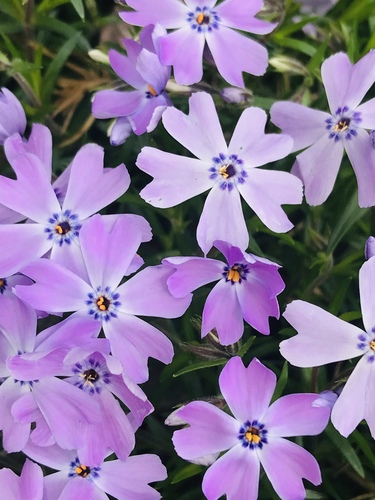
moss phlox
Phlox subulata L.
Phlox subulata L. is a low-growing evergreen perennial cultivated for use as groundcover in gardens.
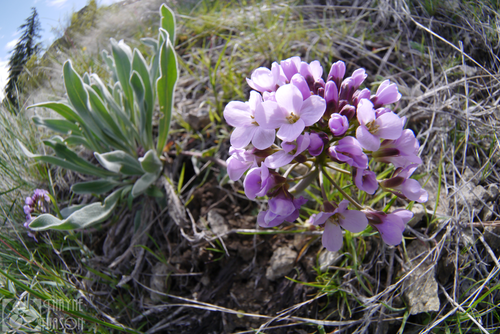
daggerpod
Phoenicaulis cheiranthoides Nutt.
Phoenicaulis cheiranthoides Nutt., or daggerpod, is a perennial herb with dagger-shaped fruits that grows in rocky habitats across many elevations.
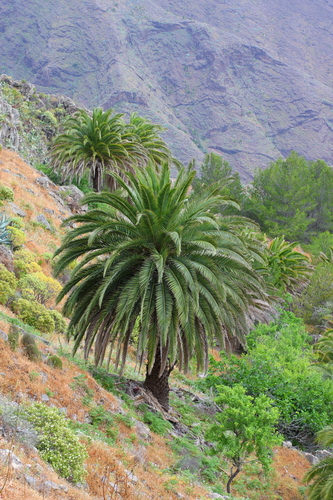
Canary Island palm
Phoenix canariensis H.Wildpret
Phoenix canariensis is the large Canary Island date palm, widely grown as an ornamental landscape palm with some local traditional uses.
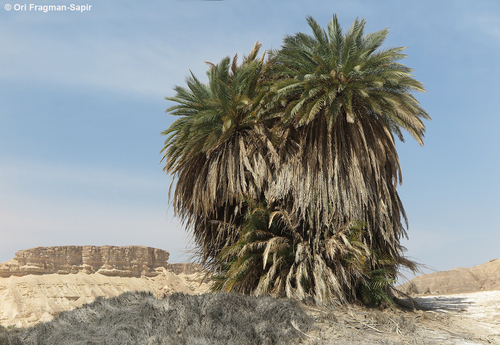
Date Palm
Phoenix dactylifera L.
Phoenix dactylifera L. (date palm) is a slow-growing dioecious palm cultivated for its edible date fruit across arid warm regions.
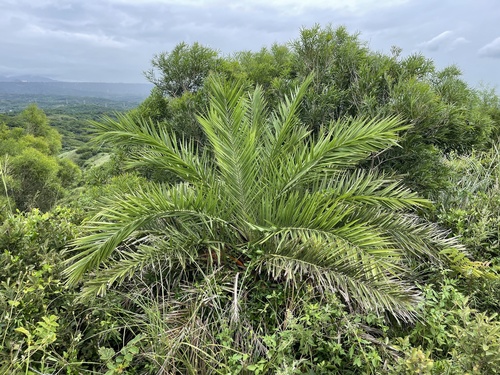
Spiny Date Palm
Phoenix loureiroi Kunth
Phoenix loureiroi Kunth is a variable palm species noted for its stiff plumose leaves and bluish-black single-seeded drupes.
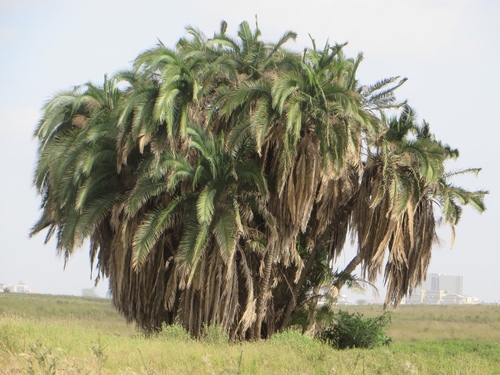
Reclining Date Palm
Phoenix reclinata Jacq.
Phoenix reclinata is a wild African clumping palm with edible fruit and multiple uses for humans.
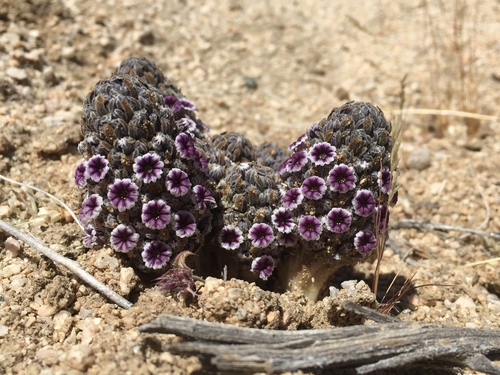
desert Christmas tree
Pholisma arenarium Nutt.
Pholisma arenarium is a root-parasitic, non-chlorophyllous flowering plant native to northwestern Mexico and the southwestern US, with an edible root portion.
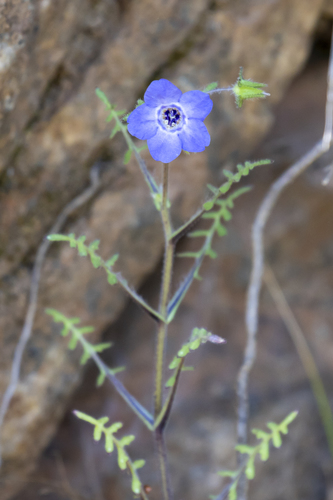
Fiesta Flower
Pholistoma auritum (Lindl.) Lilja ex Lindl.
Pholistoma auritum, also called Arizona fiestaflower, is an annual hairy herb native to western US open habitats with bell-shaped blue-purple flowers.
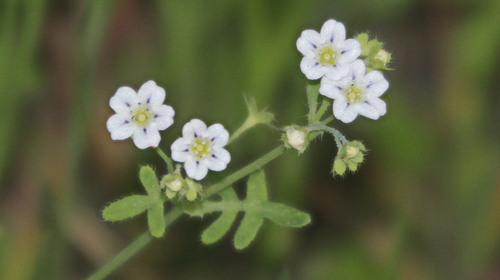
white fiesta flower
Pholistoma membranaceum (Benth.) Constance
Pholistoma membranaceum is an annual hairy herb with white, often purple-marked flowers, growing up to 90 cm long.
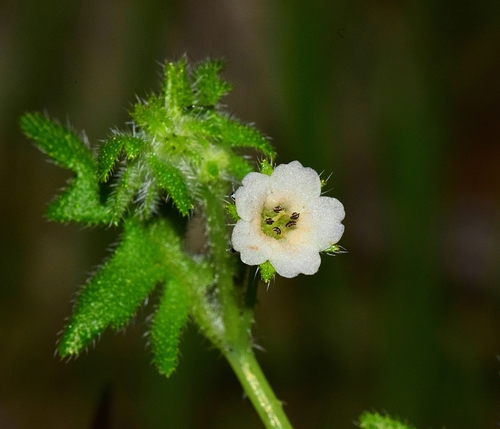
Racemed Fiestaflower
Pholistoma racemosum (Nutt. ex A.Gray) Constance
Pholistoma racemosum is an annual flowering herb native to coastal California and Baja California, with white-to-blue flowers.
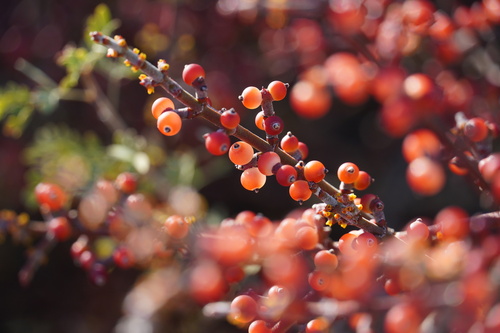
Mesquite Mistletoe
Phoradendron californicum Nutt.
Phoradendron californicum, the desert mistletoe, is a hemiparasitic plant native to the southwestern US and northwestern Mexico with edible fruit and toxic foliage.
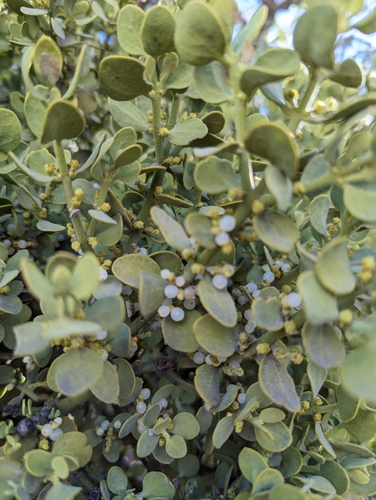
Cory's Mistletoe
Phoradendron coryae Trel.
Phoradendron coryae is a hemiparasitic mistletoe native to southwestern US and northern Mexico, that commonly grows on oaks.
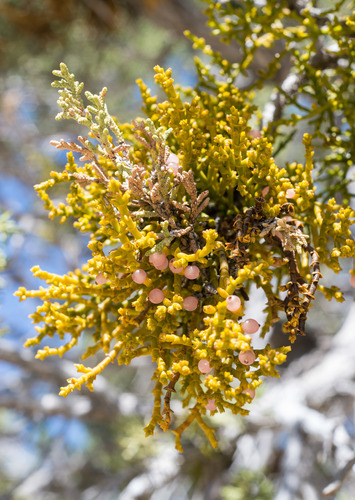
Juniper Mistletoe
Phoradendron juniperinum Engelm. ex A.Gray
Phoradendron juniperinum, commonly juniper mistletoe, is a hemiparasitic flowering shrub native to western North America that parasitizes junipers.
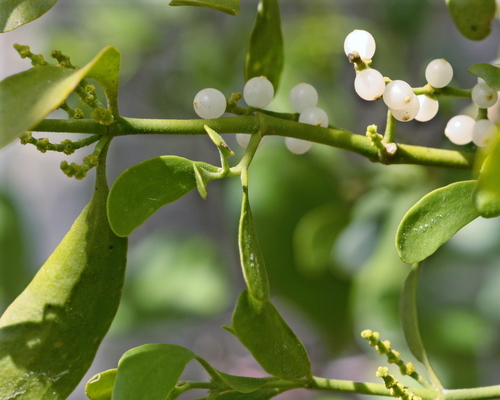
American Mistletoe
Phoradendron leucarpum (Raf.) Reveal & M.C.Johnst.
Phoradendron leucarpum, or American mistletoe, is a hemiparasitic mistletoe native to the US and Mexico that grows on tree branches.
Start Exploring Nature Today
Download iNature for free. 10 identifications on us. No account needed. No credit card required.
Scan with iPhone camera
Scan with Android camera


