Plants — 23,508 Species
Top Families in Plants
All Plants Species
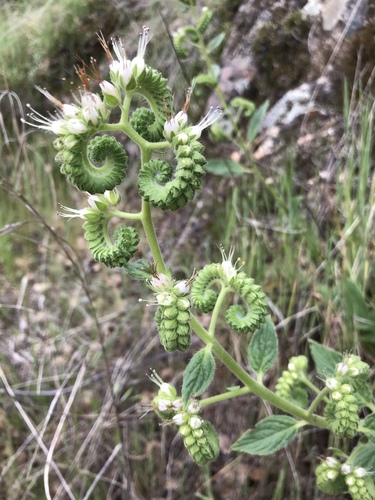
Mountain Phacelia
Phacelia imbricata Greene
Phacelia imbricata is a glandular, hairy perennial herb with bell-shaped white to pale purple flowers.
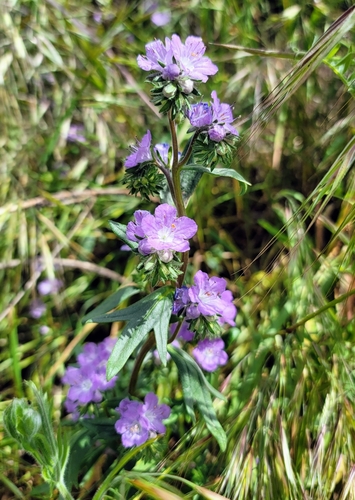
Linearleaf Phacelia
Phacelia linearis (Pursh) Holz.
Phacelia linearis is an annual herb native to western North America that produces light purple bell-shaped flowers from April to June.
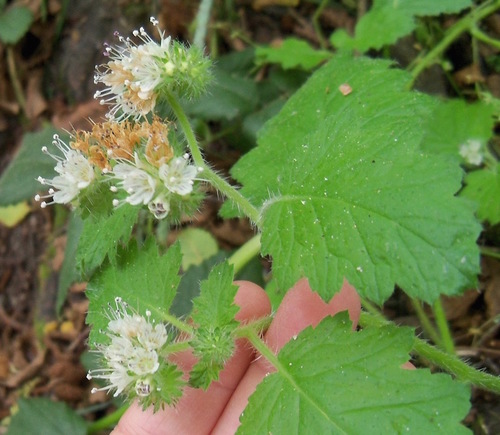
stinging phacelia
Phacelia malvifolia Cham. & Schltdl.
Phacelia malvifolia is an annual stinging-haired herb with whitish bell-shaped flowers that grows up to one meter tall.
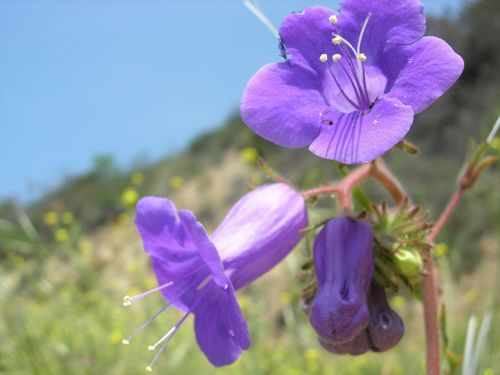
wild canterbury bells
Phacelia minor (Harv.) Thell.
Phacelia minor is an annual flowering herb reported to cause contact dermatitis in some people via secreted glandular hair oils.
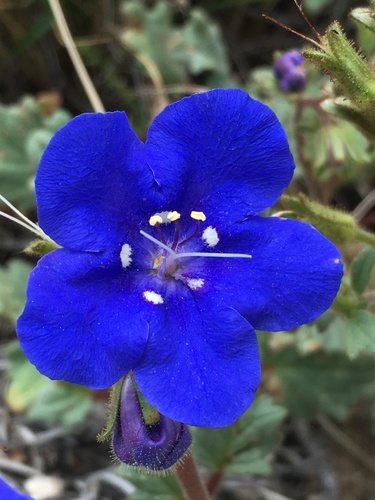
Charlotte's phacelia
Phacelia nashiana Jeps.
Phacelia nashiana is a small annual hairy herb that bears bright deep blue bell-shaped flowers.
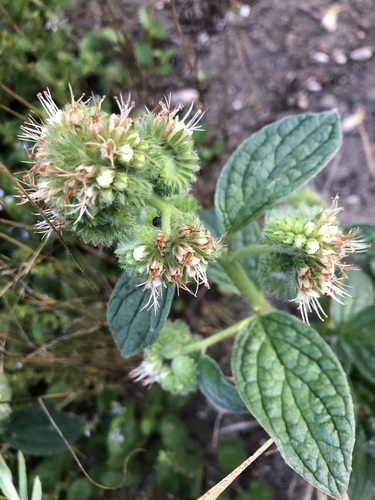
shade phacelia
Phacelia nemoralis Greene
Phacelia nemoralis, shade phacelia, is a US west coast native perennial herb with two recognized subspecies.
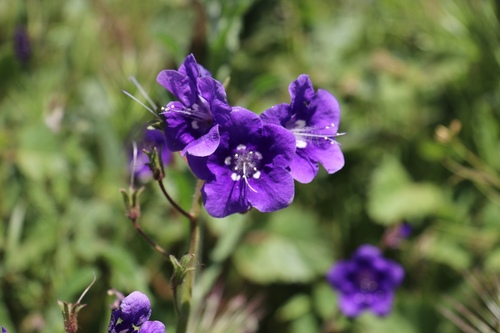
Parry's phacelia
Phacelia parryi Torr.
Phacelia parryi is an annual herb native to southern California and Baja California, with purple bell-shaped flowers.
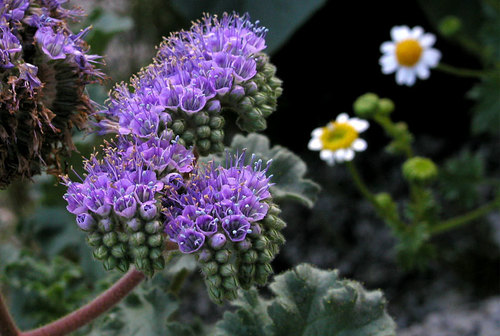
pedicellate phacelia
Phacelia pedicellata A.Gray
Phacelia pedicellata, or specter phacelia, is an annual flowering herb native to southwestern North America that can cause contact dermatitis.
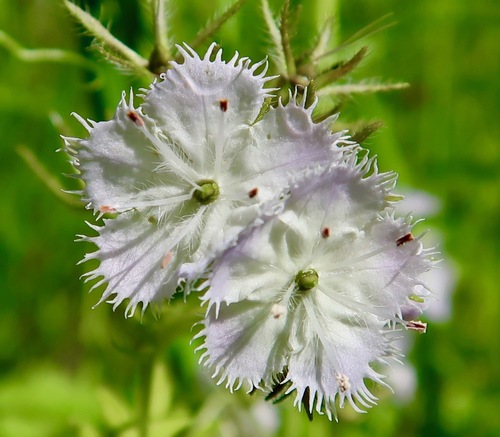
Miami Mist
Phacelia purshii Buckley
Phacelia purshii is a delicate spring-blooming native North American plant with varied flower color, growing in eastern and mid-central North American forest habitats.
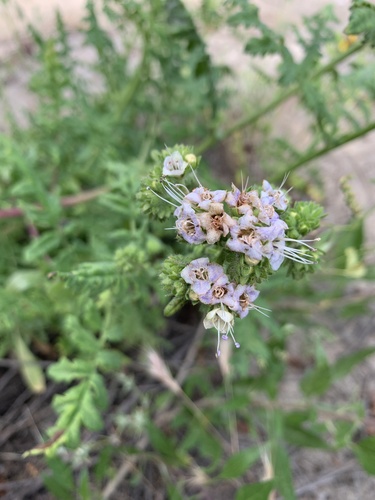
branching phacelia
Phacelia ramosissima Douglas ex Lehm.
Phacelia ramosissima, or branching phacelia, is a variable perennial flowering plant native to western North America.
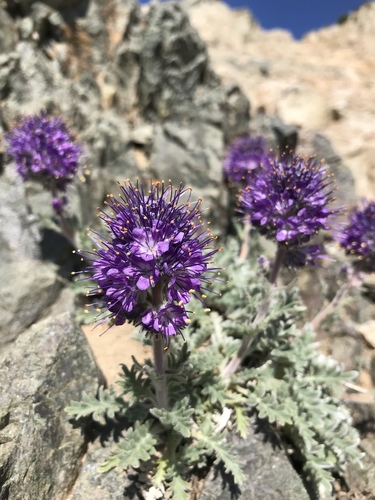
Silky Phacelia
Phacelia sericea (Graham) A.Gray
Phacelia sericea is a silvery-haired subalpine-alpine flowering plant native to western North America, suitable for Colorado roadside landscaping but may irritate skin.
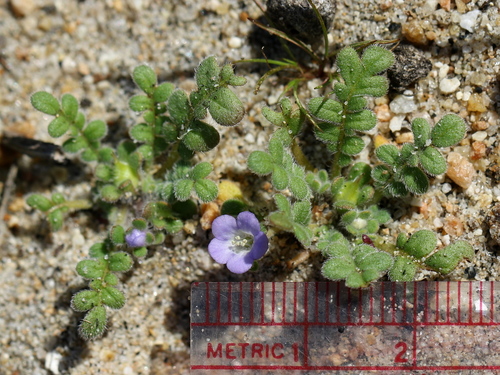
Brand's star phacelia
Phacelia stellaris Brand
Phacelia stellaris is an endangered candidate annual herb native to developed coastal southern California and Baja California.
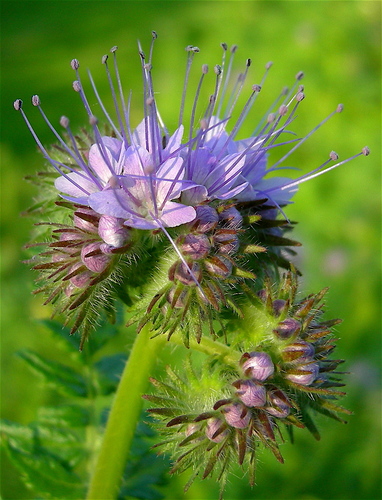
Lacy phacelia
Phacelia tanacetifolia Benth.
Phacelia tanacetifolia Benth. is an annual flowering plant whose photodormant seeds only germinate in darkness.
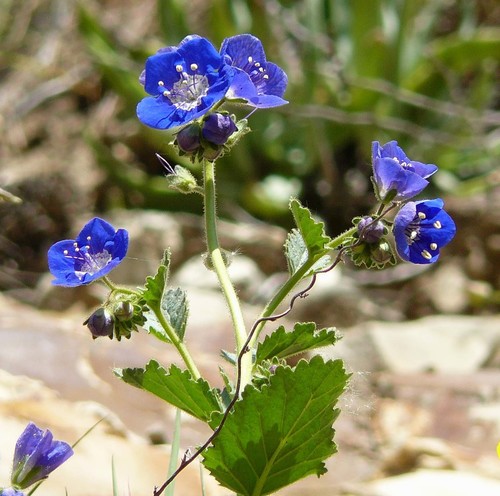
Sticky Phacelia
Phacelia viscida (Benth. ex Lindl.) Torr.
Phacelia viscida is an annual sticky glandular herb that produces five-lobed flowers in a range of blue to white hues.
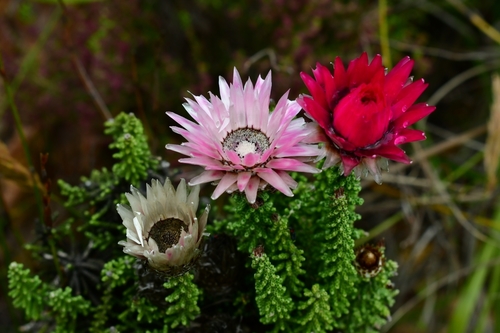
Cape everlasting
Phaenocoma prolifera (L.) D.Don
Phaenocoma prolifera is an everlasting flowering shrub with long-lasting dry papery flowers often used for ornamentals.
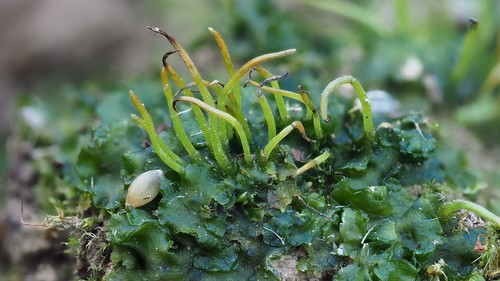
Carolina hornwort
Phaeoceros carolinianus (Michx.) Prosk.
Phaeoceros carolinianus is a subcosmopolitan hornwort widely used as a model for plant evolutionary and cell biology research.
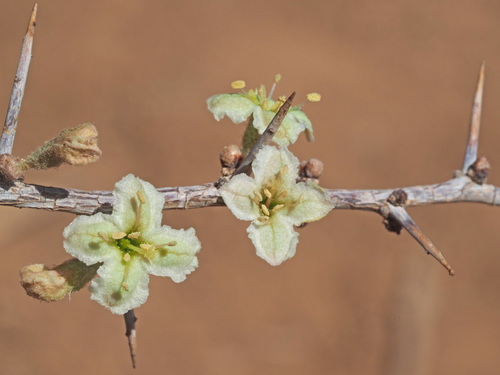
brittle thorn
Phaeoptilum spinosum Radlk.
Phaeoptilum spinosum is the only species in genus Phaeoptilum, a drought-resistant fodder shrub found in central Namibia.
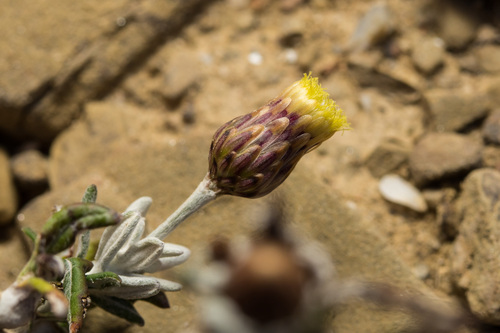
rock phagnalon
Phagnalon rupestre (L.) DC.
Phagnalon rupestre, rock phagnalon, is a 0.25m tall Asteraceae shrub native to Mediterranean and nearby regions.
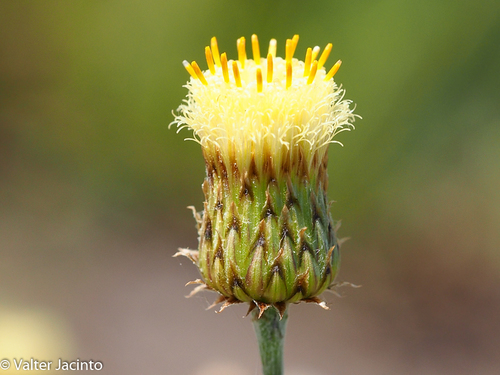
Mediterranean Phagnalon
Phagnalon saxatile (L.) Cass.
Phagnalon saxatile, the Mediterranean phagnalon, is a plant that grows up to 50 cm (20 in) tall.
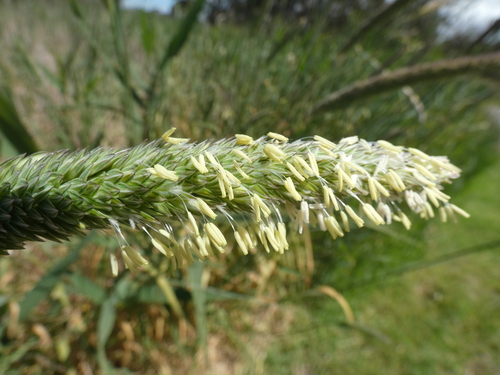
harding grass
Phalaris aquatica L.
Phalaris aquatica L. is a perennial bunch grass originating from Southern Europe and the Caucasus, with some reported toxicity to grazing animals.
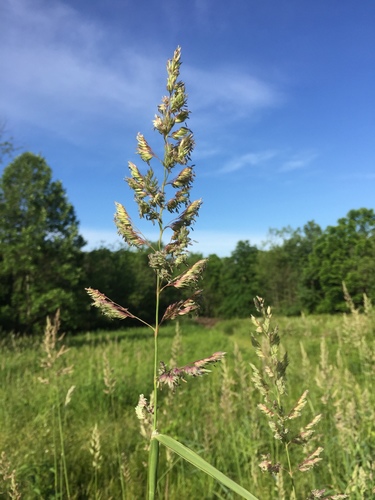
reed canary grass
Phalaris arundinacea L.
Phalaris arundinacea, or reed canary grass, is a perennial grass that can be invasive and has multiple ornamental and practical uses.
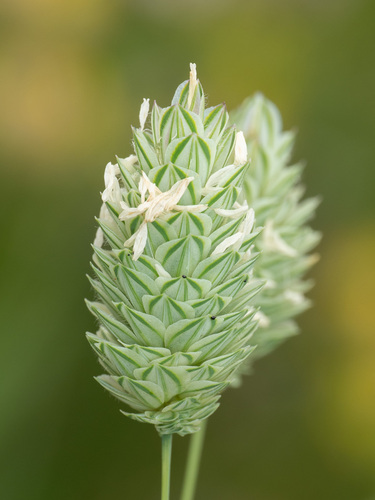
canary grass
Phalaris canariensis L.
Phalaris canariensis L. is a coarse grass that resembles reed canary grass, with distinct morphological features and a specific flowering period.
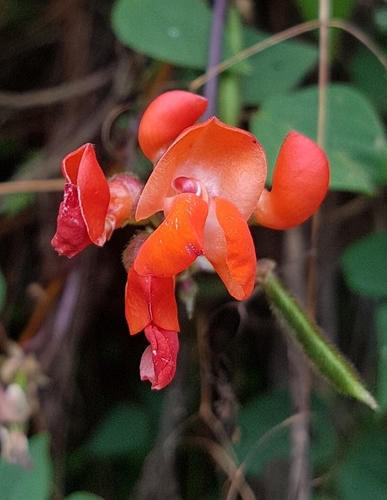
Runner bean
Phaseolus coccineus L.
Phaseolus coccineus L., or runner bean, is a bean species grown both as an ornamental and edible crop with many cultivars and culinary uses across the world.
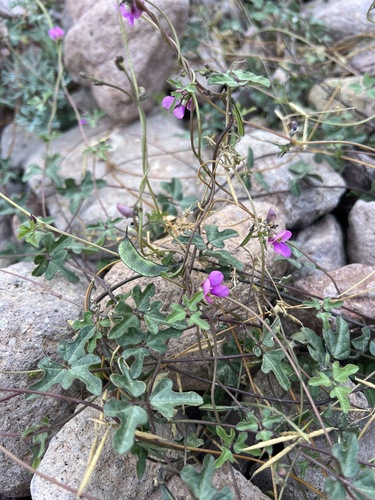
slimjim bean
Phaseolus filiformis Benth.
Phaseolus filiformis is a wild bean species native to the southwestern US and northern Mexico, with common common names and distinct physical traits.
Start Exploring Nature Today
Download iNature for free. 10 identifications on us. No account needed. No credit card required.
Scan with iPhone camera
Scan with Android camera


