Plants — 23,508 Species
Top Families in Plants
All Plants Species
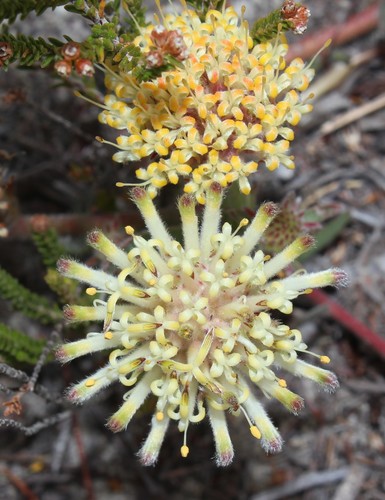
White-trailing Pincushion
Leucospermum pedunculatum Klotzsch ex Krauss
Leucospermum pedunculatum is a low mat-forming South African shrub with sweet-scented changing-color flower heads, pollinated by rodents.
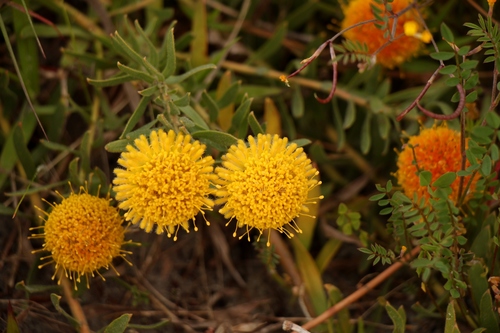
Yellow-trailing Pincushion
Leucospermum prostratum (Thunb.) Stapf
Leucospermum prostratum, the yellow-trailing pincushion, is a low creeping fynbos shrub native to South Africa's southern coast.
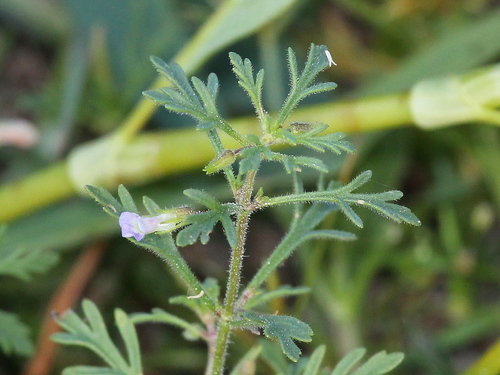
Obi-Wan conobea
Leucospora multifida (Michx.) Nutt.
Leucospora multifida is a small North American wetland plant with deeply dissected leaves and pale lavender 5-lobed flowers.
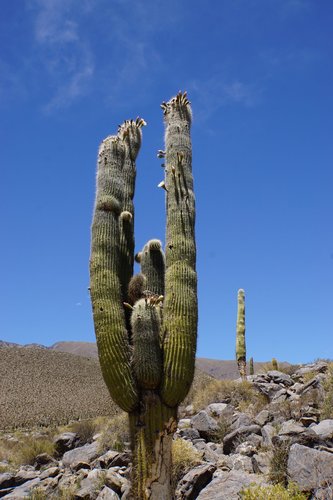
Leucostele atacamensis (Phil.) Schlumpb.
Leucostele atacamensis (Phil.) Schlumpb.
Leucostele atacamensis is a tall treelike cactus with edible dark green fruits, found across parts of Chile, Bolivia, and Argentina.
Leucostele chiloensis (Colla) Schlumpb.
Leucostele chiloensis (Colla) Schlumpb.
Leucostele chiloensis is a tree-like Chilean cactus with white daytime flowers and edible green fruits.
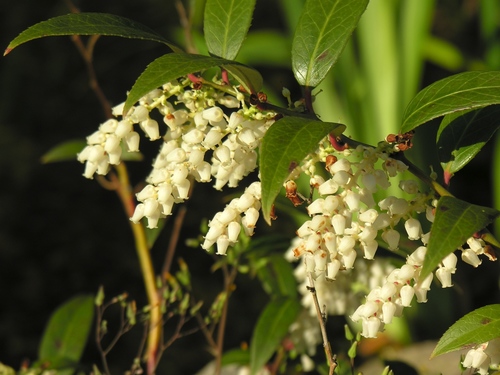
Swamp Dog-laurel
Leucothoe axillaris (Lam.) D.Don
Leucothoe axillaris is a southeastern US native shrub, and its cultivar Scarletta has won the Royal Horticultural Society's Award of Garden Merit.
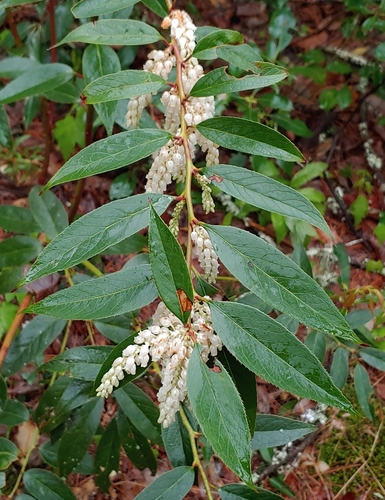
mountain doghobble
Leucothoe fontanesiana (Steud.) Sleumer
Leucothoe fontanesiana is an evergreen flowering shrub native to the southeastern US, grown as a pollinator-friendly garden plant.
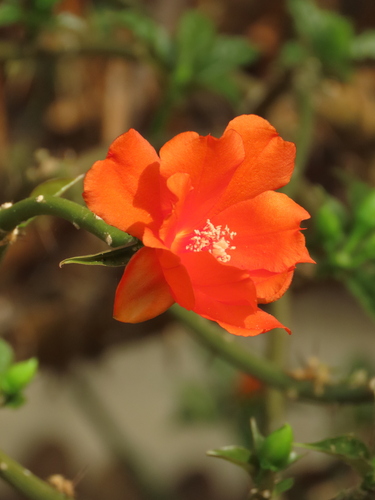
Rose Cactus
Leuenbergeria bleo (Kunth) Lodé
Leuenbergeria bleo is a flowering shrub or small tree found in Panama and Colombia, currently classified as Least Concern by the IUCN.
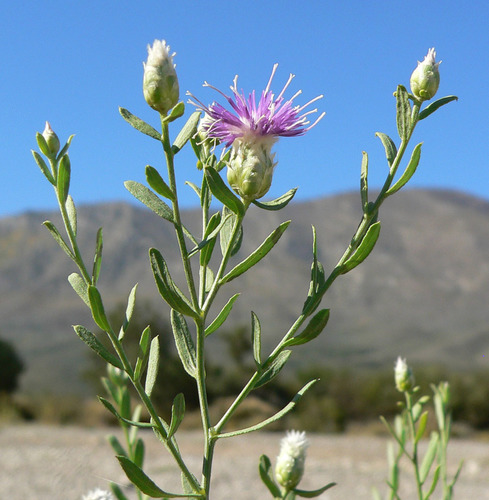
Russian knapweed
Leuzea repens (L.) D.J.N.Hind
Leuzea repens (Russian knapweed) is a long-lived Eurasian perennial that is toxic to horses and widespread in most of North America.
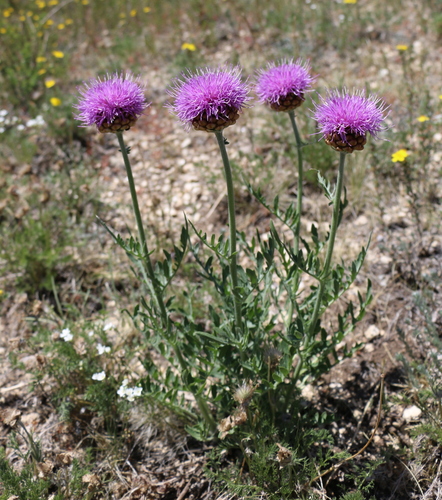
uniflower swisscentaury
Leuzea uniflora (L.) Holub
Leuzea uniflora (L.) Holub, its former genus Rhaponticum has differing acceptance between botanical databases as of 2023.
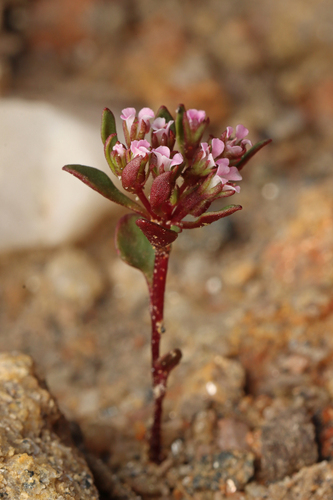
Tiny Stylewort
Levenhookia pusilla R.Br.
Levenhookia pusilla, the midget or tiny stylewort, is an endemic ephemeral annual dicot from southwestern WA and SA, with pink to white flowers.
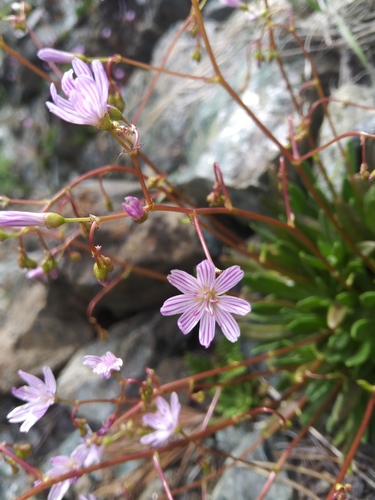
Columbian lewisia
Lewisia columbiana (Howell ex A.Gray) B.L.Rob.
Lewisia columbiana is a herbaceous perennial flowering plant that grows in rocky, sunny habitats, including on serpentine rock.

cliff maids
Lewisia cotyledon (S.Watson) B.L.Rob.
Lewisia cotyledon is an evergreen perennial with fleshy leaves and varied-color flowers that bloom from spring to summer.
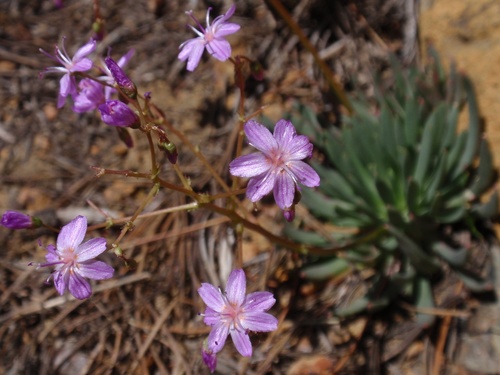
Quill-leaf Lewisia
Lewisia leeana (Porter) B.L.Rob.
Lewisia leeana, or quill-leaf lewisia, is a Montiaceae perennial flowering plant native to mountain areas of California and Oregon.
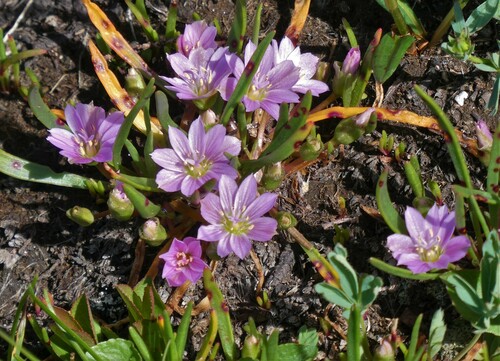
dwarf lewisia
Lewisia pygmaea (A.Gray) B.L.Rob.
Lewisia pygmaea is a variable petite perennial herb that grows in rocky and gravelly open habitats across western North America.
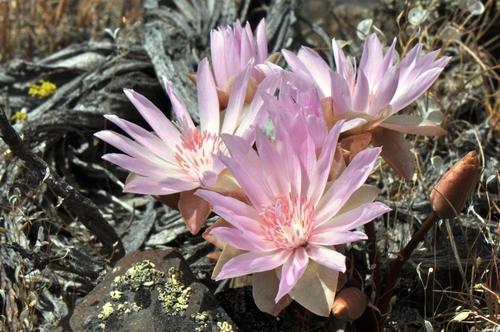
Bitterroot
Lewisia rediviva Pursh
Lewisia rediviva (bitterroot) is a low-growing North American perennial with edible roots harvested early in spring.
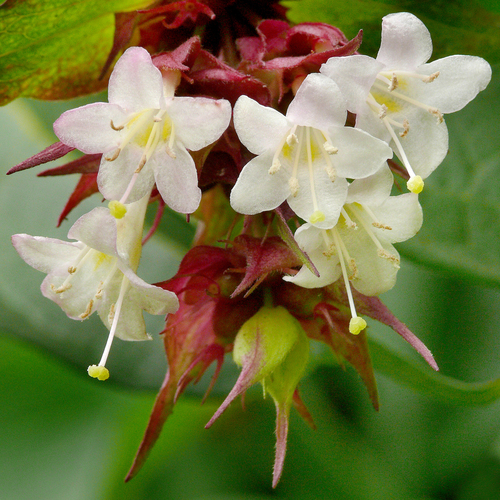
Himalayan honeysuckle
Leycesteria formosa Wall.
Leycesteria formosa Wall. is a deciduous shrub native to Himalayan regions and China, with known edible berries and medicinal uses.
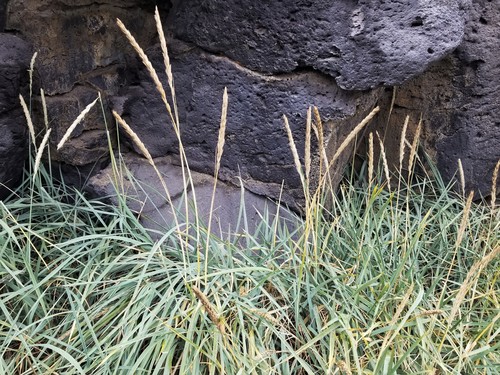
lyme grass
Leymus arenarius (L.) Hochst.
Leymus arenarius is a sand-loving European coastal grass used for thatching, sand stabilization, and historically as food.
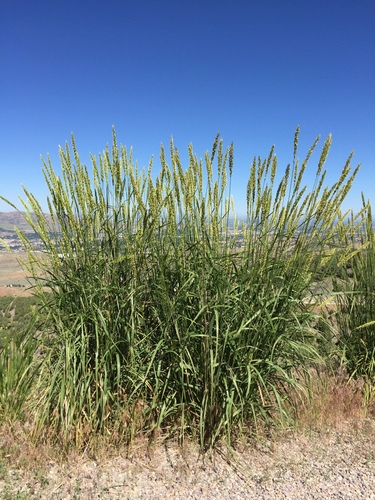
Great Basin Wildrye
Leymus cinereus (Scribn. & Merr.) Á.Löve
Leymus cinereus is a perennial bunchgrass native to western North America with traditional uses and cultivars for land management.
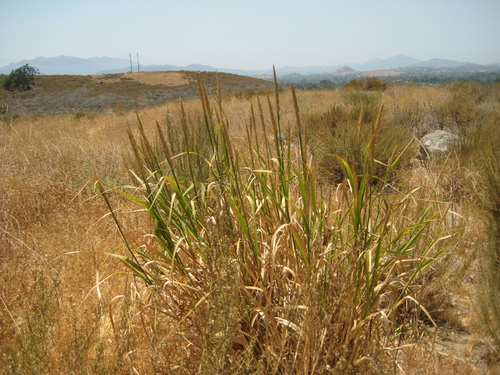
giant wild rye
Leymus condensatus (J.Presl) Á.Löve
Leymus condensatus, or Canyon Prince, is a drought-tolerant perennial bunchgrass wild rye from western North America in the grass family.
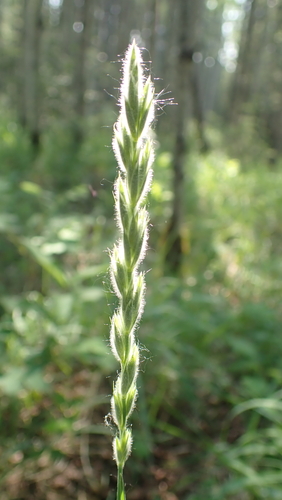
Northwestern Wildrye
Leymus innovatus (Beal) Pilg.
Leymus innovatus is a perennial rhizomatous grass that is often a dominant understory species in lodgepole pine forests.
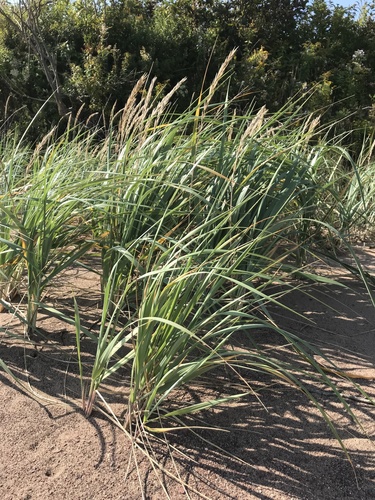
American lyme grass
Leymus mollis (Trin.) Pilg.
Leymus mollis is a coastal dune grass native to Northern Asia and North America, used for dune stabilization and traditional crafts and medicine.
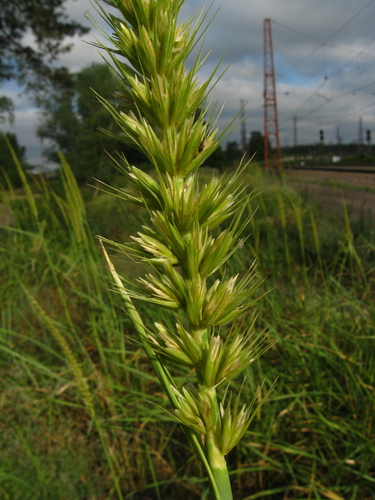
Siberian Lyme Grass
Leymus racemosus (Lam.) Tzvelev
Leymus racemosus, or mammoth wild rye, is a perennial wild rye that provides useful stress-resistance genes for improving wheat cultivation.
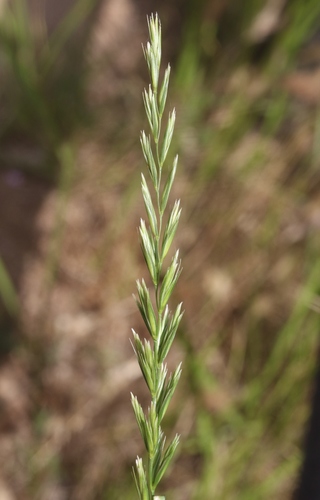
Creeping wild rye
Leymus triticoides (Buckley) Pilg.
Leymus triticoides is a rhizomatous perennial North American grass used for grazing, erosion control, and habitat restoration.
Start Exploring Nature Today
Download iNature for free. 10 identifications on us. No account needed. No credit card required.
Scan with iPhone camera
Scan with Android camera


