Fungi — 1,980 Species
Top Families in Fungi
All Fungi Species
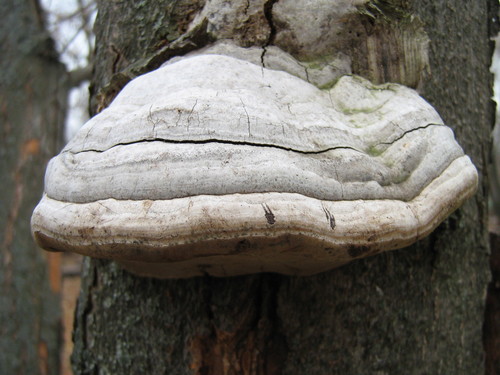
Fomes fomentarius (L.) Fr.
Fomes fomentarius (L.) Fr.
Fomes fomentarius is a common circumboreal wood-decay bracket fungus that grows mostly on hardwoods.
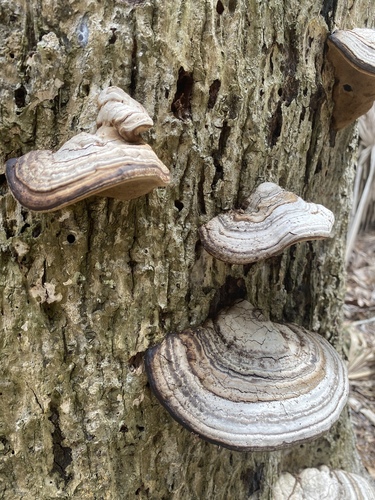
Fomes fasciatus (Sw.) Cooke
Fomes fasciatus (Sw.) Cooke
Fomes fasciatus is a wood-decay bracket fungus that causes loss of commercially viable hardwood, found mostly in warm regions.
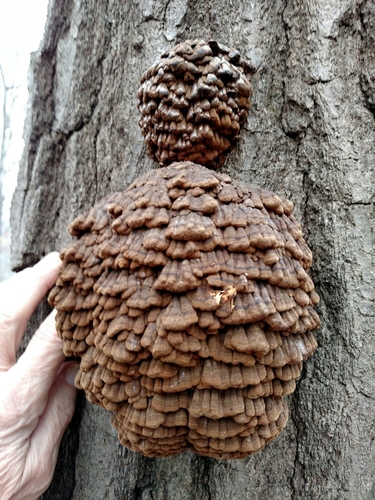
Globifomes graveolens (Schwein.) Murrill
Globifomes graveolens (Schwein.) Murrill
Globifomes graveolens is a wood-rotting polypore fungus that grows on living and dead broadleaf trees, especially oak.
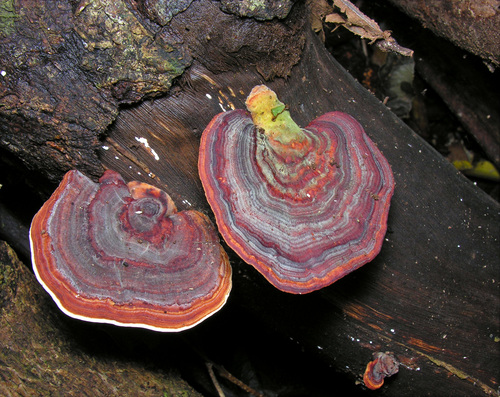
Microporus affinis (Blume & T.Nees) Kuntze
Microporus affinis (Blume & T.Nees) Kuntze
Microporus affinis is a widespread common polypore fungus in Polyporaceae found across tropical and subtropical regions of both hemispheres.
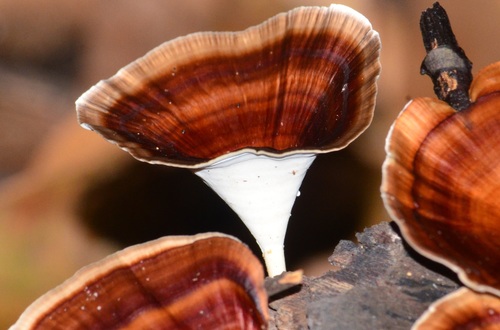
Microporus xanthopus (Fr.) Kuntze
Microporus xanthopus (Fr.) Kuntze
Microporus xanthopus is an inedible wood-decaying fungus native to tropical areas.
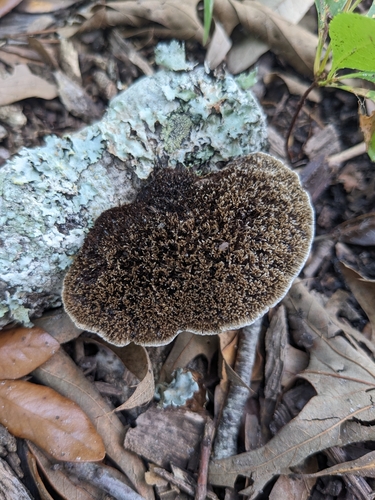
Cerrena hydnoides (Sw.) Zmitr.
Cerrena hydnoides (Sw.) Zmitr.
Cerrena hydnoides is a saprobic white rot polypore fungus used in traditional medicine across tropical regions.
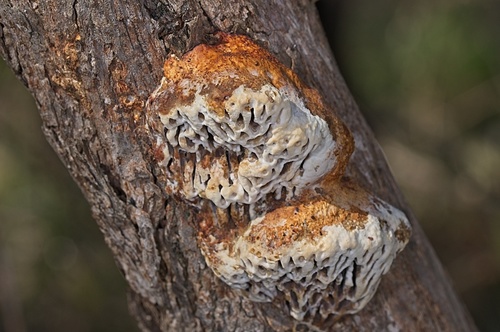
Hexagonia vesparia (Berk.) Ryvarden
Hexagonia vesparia (Berk.) Ryvarden
Hexagonia vesparia, the wasp nest polypore, is a saprophytic Australian bracket fungus found across multiple Australian regions.
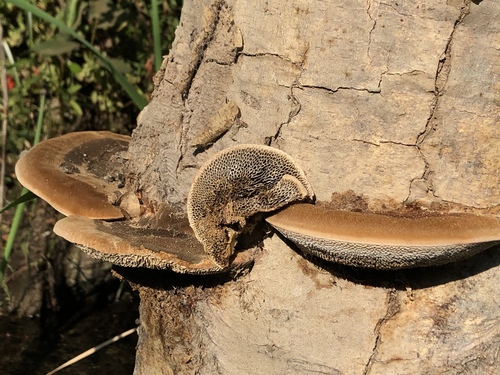
Coriolopsis gallica (Fr.) Ryvarden
Coriolopsis gallica (Fr.) Ryvarden
Coriolopsis gallica is a non-pathogenic white-rot fungus that preferentially degrades lignin, with useful biotechnological applications.

Trametes trogii Berk.
Trametes trogii Berk.
Trametes trogii Berk. is an almost cosmopolitan fungus species in the Polyporaceae family, with the synonym Funalia trogii.
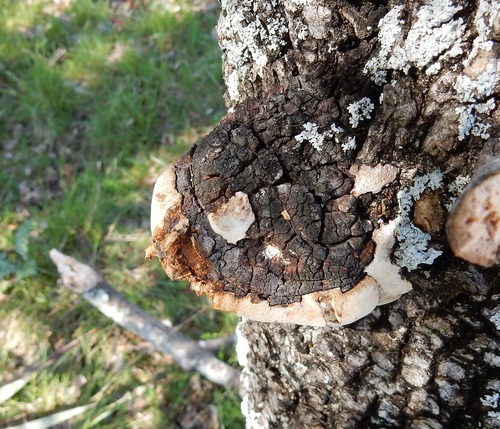
Perenniporia fraxinophila (Peck) Ryvarden
Perenniporia fraxinophila (Peck) Ryvarden
Perenniporia fraxinophila is a Polyporaceae fungus species that acts as a plant pathogen infecting ash trees.
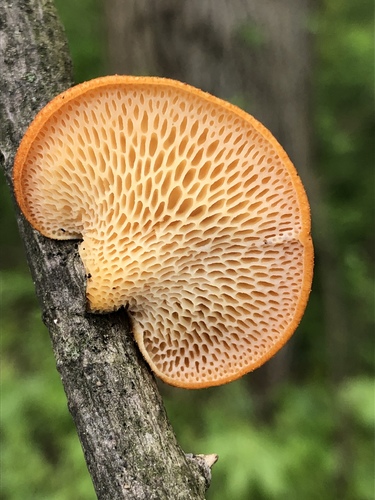
Neofavolus alveolaris (DC.) Sotome & T.Hatt.
Neofavolus alveolaris (DC.) Sotome & T.Hatt.
Neofavolus alveolaris is a polypore fungus growing on dead hardwoods, with an antifungal polypeptide isolated from its fruit bodies.
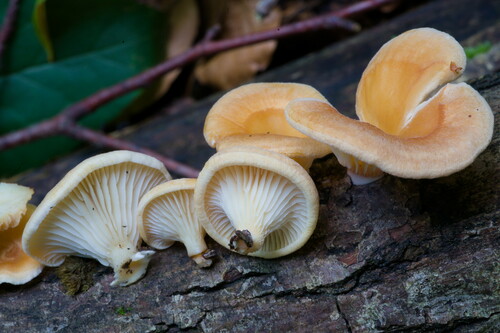
Neofavolus suavissimus (Fr.) Seelan, Justo & Hibbett
Neofavolus suavissimus (Fr.) Seelan, Justo & Hibbett
Neofavolus suavissimus is a fungus species in the Polyporaceae family, with Panus suavissimus as a known synonym.
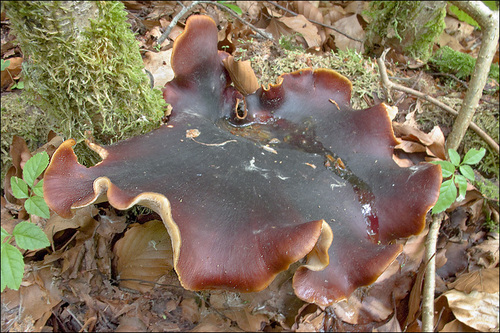
Picipes badius (Pers.) Zmitr. & Kovalenko
Picipes badius (Pers.) Zmitr. & Kovalenko
Picipes badius is a tough inedible polypore fungus that causes white rot on hardwoods in temperate regions of Asia, Europe, and North America.
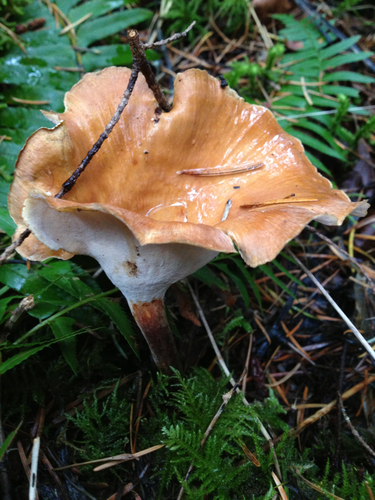
Picipes melanopus (Pers.) Zmitr. & Kovalenko
Picipes melanopus (Pers.) Zmitr. & Kovalenko
Picipes melanopus is an inedible polypore fungus with a brown velvety depressed cap and a black felt-covered stipe.
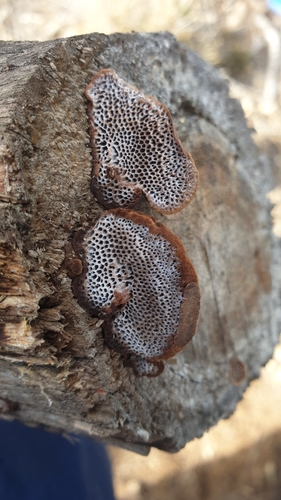
Phaeotrametes decipiens (Berk.) J.E.Wright
Phaeotrametes decipiens (Berk.) J.E.Wright
Phaeotrametes decipiens is a fungus defined by specific physical traits and the characteristic growth of chlamydosporic alongside normal fruit bodies.
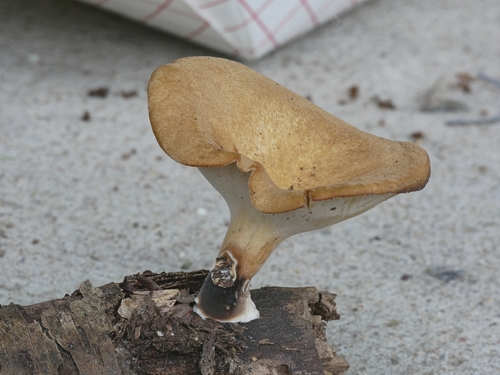
Cerioporus varius (Pers.) Zmitr. & Kovalenko
Cerioporus varius (Pers.) Zmitr. & Kovalenko
Cerioporus is a distinct Polyporaceae genus with former Polyporus species and reported antioxidant and antimicrobial mushroom activity.
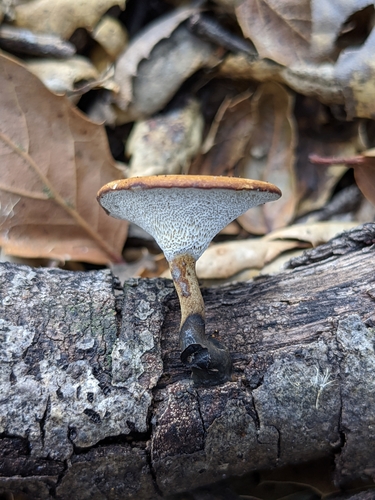
Cerioporus leptocephalus (Jacq.) Zmitr.
Cerioporus leptocephalus (Jacq.) Zmitr.
Cerioporus leptocephalus is a North American fungus that typically grows on hardwood twigs and branches.
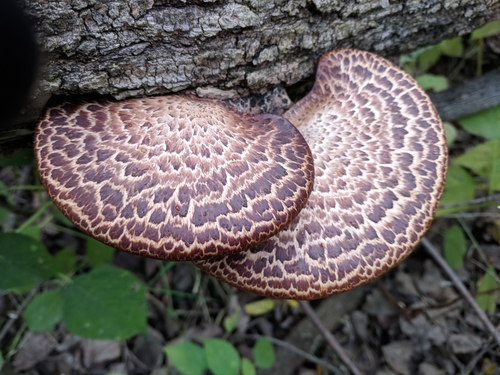
Cerioporus squamosus (Huds.) Quél.
Cerioporus squamosus (Huds.) Quél.
Cerioporus squamosus, or Dryad's saddle, is an edible annual polypore mushroom that grows on hardwoods worldwide.
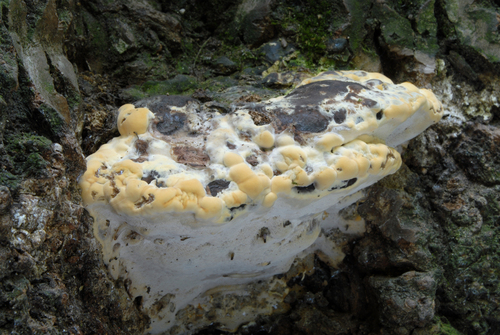
Vanderbylia fraxinea (Bull.) D.A.Reid
Vanderbylia fraxinea (Bull.) D.A.Reid
Vanderbylia fraxinea is a poroid pathogenic fungus in Polyporaceae that infects ash trees.
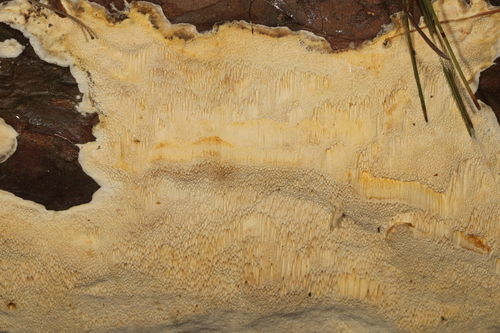
Poriella subacida (Peck) C.L.Zhao
Poriella subacida (Peck) C.L.Zhao
Poriella subacida is a pathogenic poroid fungus in Polyporaceae that infects Douglas firs, first described in 1885 by C.H. Peck.
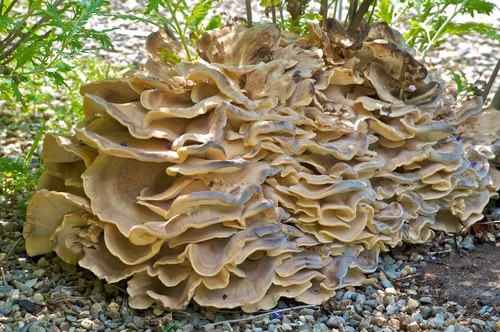
Meripilus sumstinei (Murrill) M.J.Larsen & Lombard
Meripilus sumstinei (Murrill) M.J.Larsen & Lombard
Meripilus sumstinei is an edible North American polypore that grows in large clumps near hardwood tree structures.
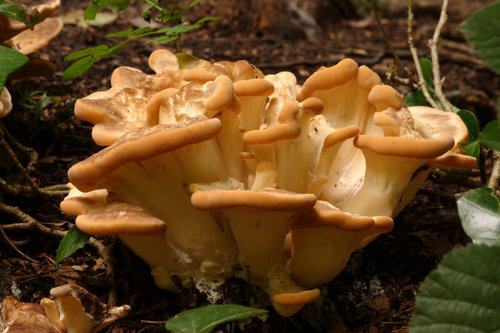
Meripilus giganteus (Pers.) P.Karst.
Meripilus giganteus (Pers.) P.Karst.
Meripilus giganteus is a large northern hemisphere polypore fungus that causes root rot in broadleaf trees.
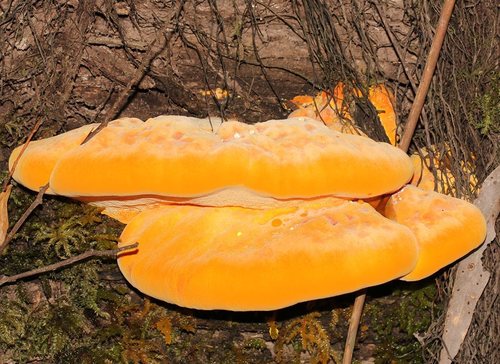
Polyporus australiensis Wakef.
Polyporus australiensis Wakef.
Polyporus australiensis is a bracket fungus with a strong persistent curry smell when old or dry, found growing on fire-charred logs.
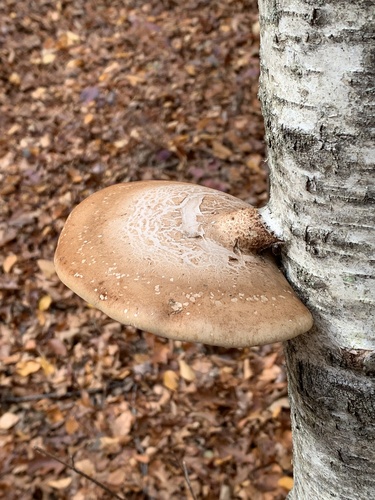
Fomitopsis betulina (Bull.) B.K.Cui, M.L.Han & Y.C.Dai
Fomitopsis betulina (Bull.) B.K.Cui, M.L.Han & Y.C.Dai
Fomitopsis betulina is a common Northern Hemisphere birch brown rot fungus with traditional uses, considered mostly inedible.
Start Exploring Nature Today
Download iNature for free. 10 identifications on us. No account needed. No credit card required.
Download Free on App Store
