Animals — 36,937 Species
Top Families in Animals
All Animals Species
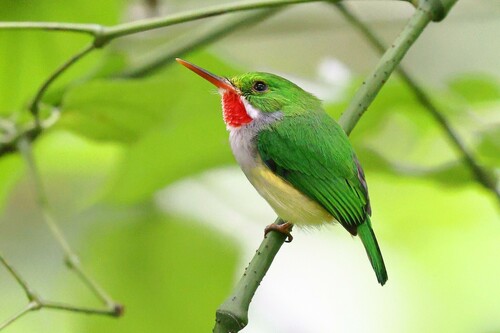
Todus mexicanus R.Lesson, 1838
Todus mexicanus R.Lesson, 1838
Todus mexicanus, the Puerto Rican tody, is a tiny distinctive forest bird endemic to the main island of Puerto Rico.
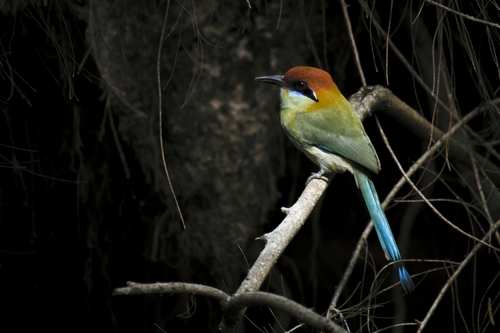
Momotus mexicanus Swainson, 1827
Momotus mexicanus Swainson, 1827
Momotus mexicanus, the russet-crowned motmot, is a small bird found in western Mexico and Guatemala with defined breeding behaviors.
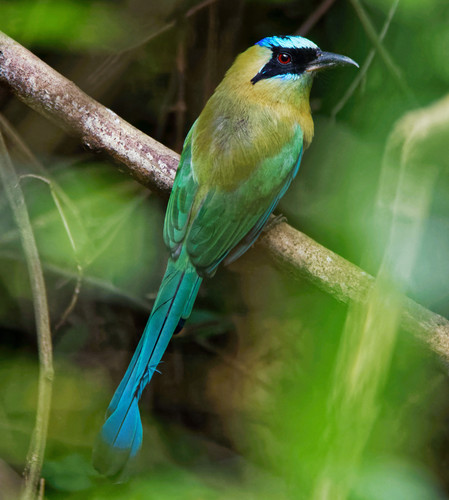
Momotus subrufescens P.L.Sclater, 1853
Momotus subrufescens P.L.Sclater, 1853
Momotus subrufescens (whooping motmot) is a colorful motmot with four subspecies found in northwestern South America and Panama.
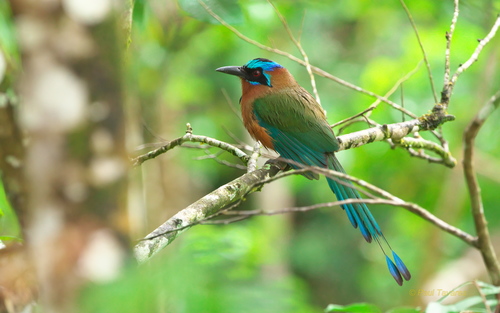
Momotus bahamensis (Swainson, 1838)
Momotus bahamensis (Swainson, 1838)
The Trinidad motmot is a nonmigratory bird endemic only to Trinidad and Tobago with distinct plumage and a currently stable population.
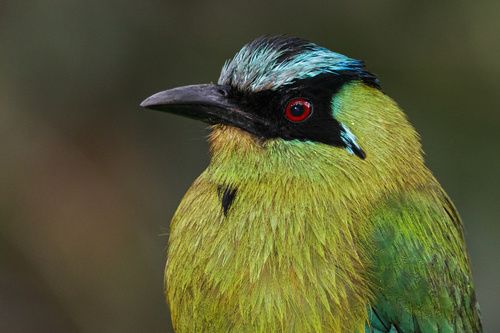
Momotus aequatorialis Gould, 1858
Momotus aequatorialis Gould, 1858
The Andean (highland) motmot is a colorful near-passerine bird resident in Andean forests from Colombia to Bolivia.
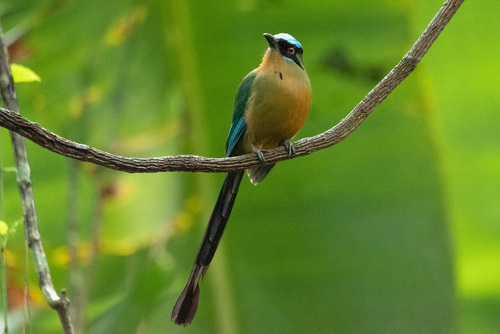
Momotus momota (Linnaeus, 1766)
Momotus momota (Linnaeus, 1766)
Momotus momota, the Amazonian motmot, is a green-plumaged South American bird with nine recognized subspecies that inhabits humid lowland forests.
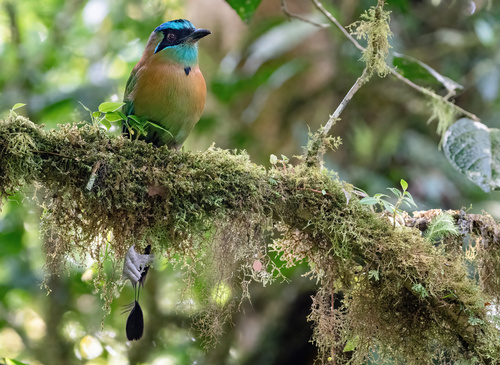
Momotus lessonii R.Lesson, 1842
Momotus lessonii R.Lesson, 1842
Momotus lessonii R.Lesson, 1842 is a forest bird with distinct plumage markings that nests in bank tunnels and eats both prey and fruit.
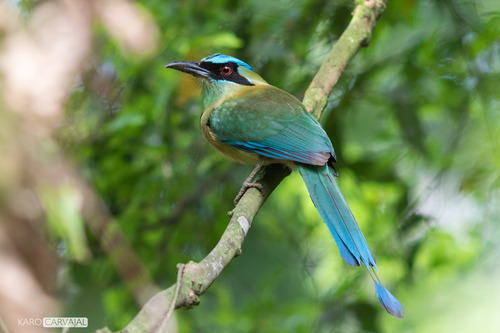
Momotus coeruliceps (Gould, 1836)
Momotus coeruliceps (Gould, 1836)
The blue-capped motmot is a colorful near-passerine bird native to forests and woodlands of eastern Mexico.
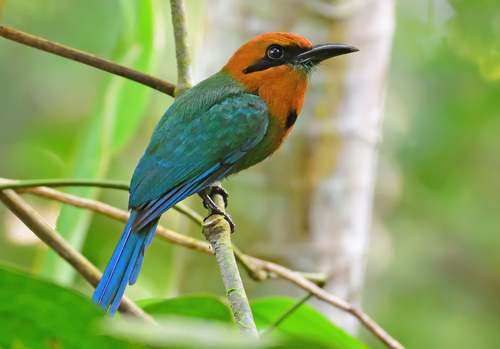
Electron platyrhynchum (Leadbeater, 1829)
Electron platyrhynchum (Leadbeater, 1829)
This is a summary of the description, range, habitat, and reproduction of the small Momotidae bird the broad-billed motmot.
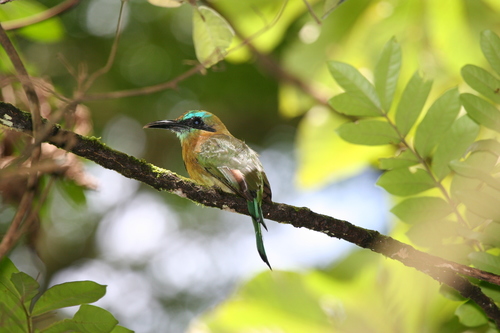
Electron carinatum (Du Bus de Gisignies, 1847)
Electron carinatum (Du Bus de Gisignies, 1847)
The keel-billed motmot is a smallish Central American motmot with a distinctive ridged bill and disjunct Caribbean-slope range.
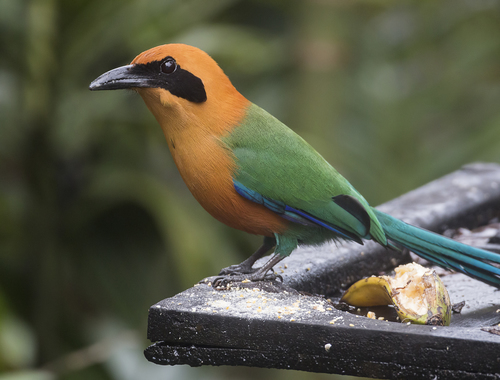
Baryphthengus martii (Spix, 1824)
Baryphthengus martii (Spix, 1824)
Baryphthengus martii, the rufous motmot, is a large neotropical bird with two geographically separated subspecies.
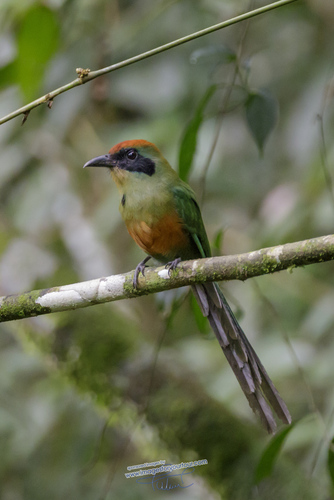
Baryphthengus ruficapillus (Vieillot, 1818)
Baryphthengus ruficapillus (Vieillot, 1818)
Baryphthengus ruficapillus, the rufous-capped motmot, is a bird found in eastern South American forests from near sea level to 1200 m.
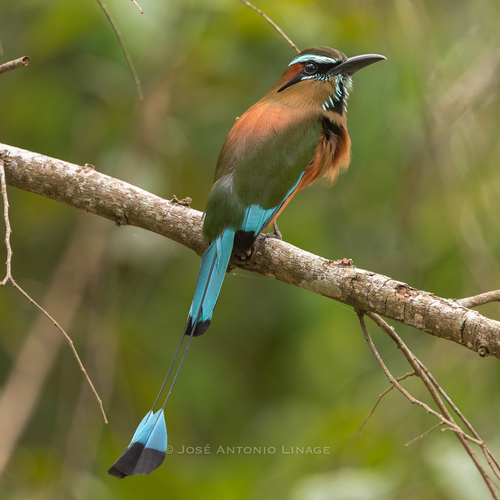
Eumomota superciliosa (Sandbach, 1837)
Eumomota superciliosa (Sandbach, 1837)
The turquoise-browed motmot (Eumomota superciliosa) is a colourful Central American bird, national bird of El Salvador and Nicaragua.
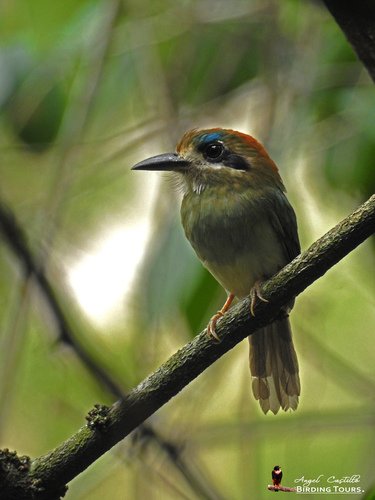
Hylomanes momotula M.H.K.Lichtenstein, 1839
Hylomanes momotula M.H.K.Lichtenstein, 1839
The tody motmot, Hylomanes momotula, is the smallest motmot, found in humid forests from southern Mexico to Colombia.
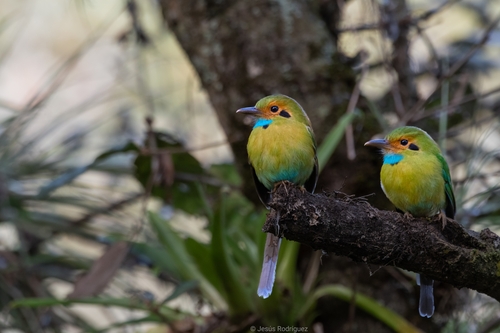
Aspatha gularis (Lafresnaye, 1840)
Aspatha gularis (Lafresnaye, 1840)
Aspatha gularis, the blue-throated motmot, is a distinctive non-racquet-tailed motmot found in Central American mountain forests.
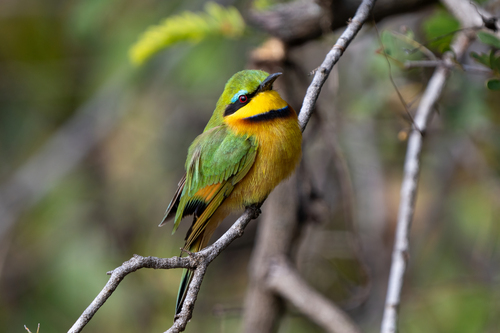
Merops pusillus P.L.S.Müller, 1776
Merops pusillus P.L.S.Müller, 1776
Merops pusillus, the little bee-eater, is the smallest African bee-eater, a brightly colored slender bird that predominantly eats stinging flying insects.
Merops apiaster Linnaeus, 1758
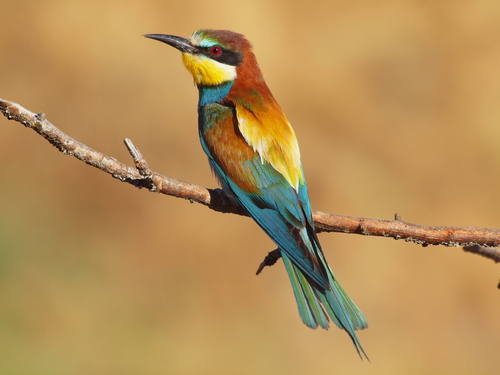
Merops apiaster Linnaeus, 1758
Merops apiaster is a slender, richly colored bee-eater with specific plumage traits and a predictable moulting schedule.
Merops variegatus Vieillot, 1817
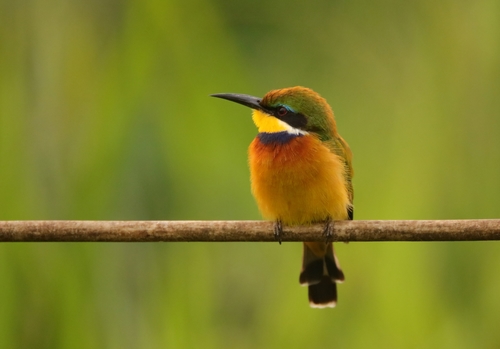
Merops variegatus Vieillot, 1817
Merops variegatus, the blue-breasted bee-eater, is a central African bird with bright plumage, nesting in tunnel burrows as a solitary monogamous breeder.
Merops malimbicus Shaw, 1806
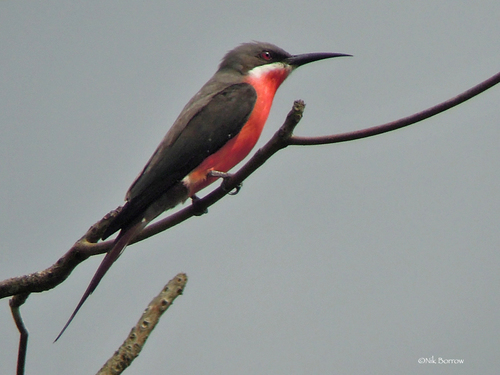
Merops malimbicus Shaw, 1806
Merops malimbicus is a distinctively colored bee-eater that preys on flying insects and nests in large colonies on river sandbars.
Merops hirundineus A.A.H.Lichtenstein, 1793
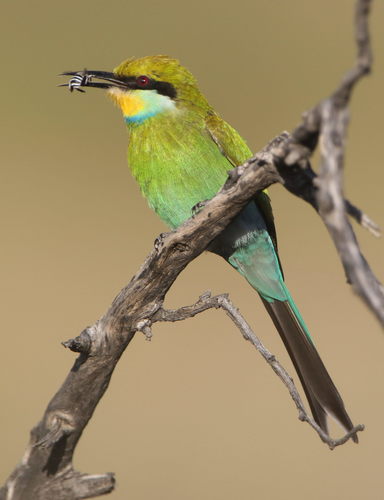
Merops hirundineus A.A.H.Lichtenstein, 1793
Merops hirundineus, the swallow-tailed bee-eater, is a coloured sub-Saharan African migratory bee-eater with a forked tail.
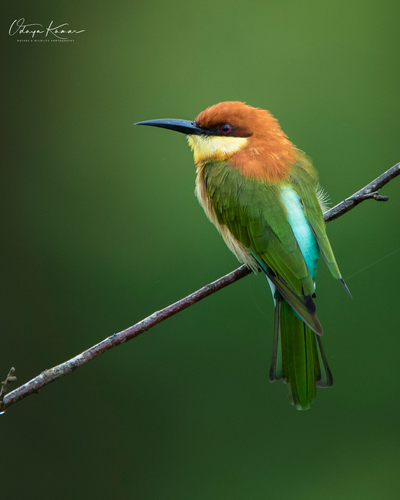
Merops leschenaulti Vieillot, 1817
Merops leschenaulti Vieillot, 1817
Merops leschenaulti, the chestnut-headed bee-eater, is an insect-eating bird that mostly preys on bees, wasps, and hornets.

Merops philippinus Linnaeus, 1767
Merops philippinus Linnaeus, 1767
Merops philippinus, the blue-tailed bee-eater, is a slender colored Asian bee-eater that eats flying insects and nests colonially.
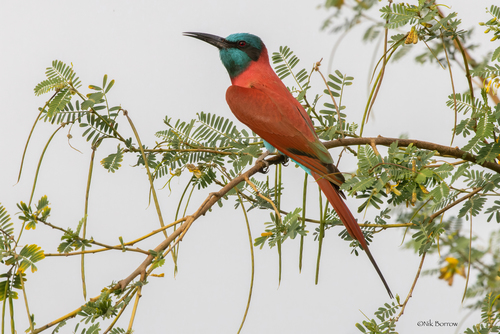
Merops nubicus J.F.Gmelin, 1788
Merops nubicus J.F.Gmelin, 1788
Merops nubicus J.F.Gmelin, 1788, or northern carmine bee-eater, is a slender richly colored bird native to much of Africa.
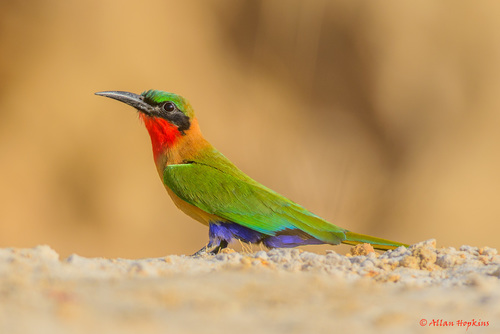
Merops bulocki Vieillot, 1817
Merops bulocki Vieillot, 1817
Merops bulocki, the red-throated bee-eater, is a tropical African colonial bee-eating bird that nests in river banks.
Start Exploring Nature Today
Download iNature for free. 10 identifications on us. No account needed. No credit card required.
Download Free on App Store
