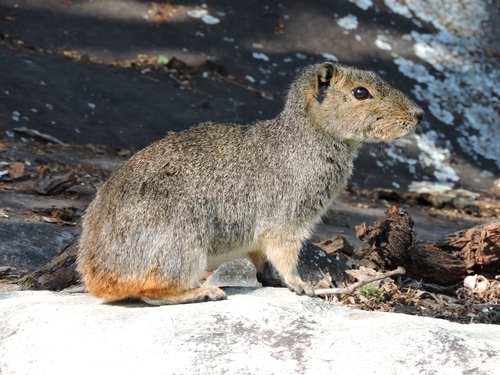
About Kerodon rupestris (Wied-Neuwied, 1820)
Size and Weight
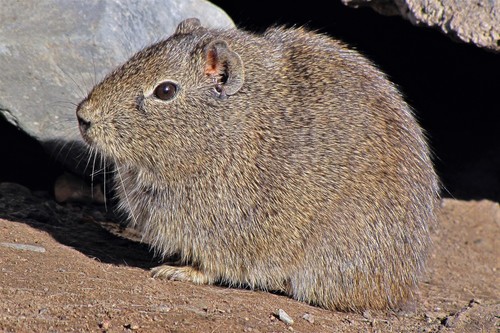
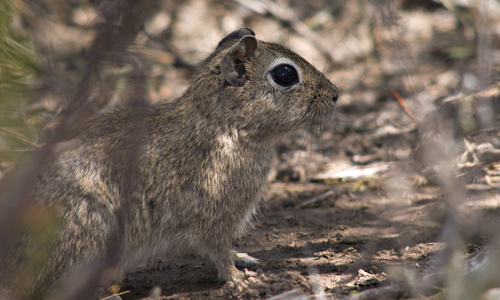
The rock cavy, Kerodon rupestris, is a fairly large rodent that can weigh up to 1 kilogram (2.2 pounds).
Tail Morphology
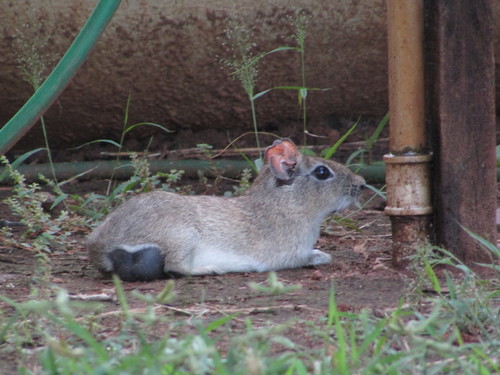
Like other cavy species, rock cavies have vestigial tails or no tails at all.
Coloration
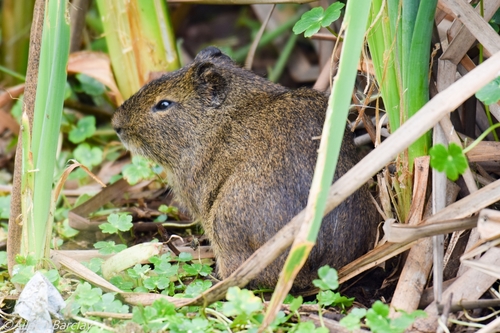
Their backs are grey-brown, and their bellies range from tan to light brown.
Convergent Evolution
In both appearance and habit, they closely resemble the unrelated African rock hyraxes, an example of convergent evolution.
Diet Type
Rock cavies are herbivorous.
Feeding Habits
They feed on the seeds and leaves of the scrubby vegetation that grows within their territories; this vegetation includes tender leaves and certain species of creeper.
Habitat Preferences
Rock cavies inhabit dry, rocky areas with low, scrubby vegetation, and they prefer to live close to stony mountainsides and hills.
Native Distribution
They are native to eastern Brazil, ranging from eastern Piauí state to Minas Gerais state.
Introduced Range
They have also been introduced to the island of Fernando de Noronha, located off Brazil’s eastern coast.
Female Weight
Female rock cavies weigh between 700 and 800 grams.
Reproductive Output
They give birth to only one or two young per litter, but producing several litters each year is common.
Gestation and Birth Weight
The average gestation period for rock cavies is 75 days, and newborn rock cavies weigh approximately 90 grams.
Placenta Structure
The placenta of a rock cavy is similar to that of other hystricomorph rodents: it has several lobes lined with blood vessels that undergo counter-current blood flow.
Placental Blood Vessel Arrangement
Blood vessels from the mother run along the placenta, while vessels from the fetus run back over the mother’s vessels.
Placental Function
This arrangement allows for more efficient oxygen flow between the mother and the fetus.