About Juniperus thurifera L.
Juniperus thurifera L. is a species of juniper native to the mountains of the western Mediterranean region. Its range extends from southern France (including Corsica) across eastern and central Spain to Morocco, and it occurs locally in northern Algeria. The specific epithet thurifera derives from the Latin word turifer, meaning "producer/bearer of incense".
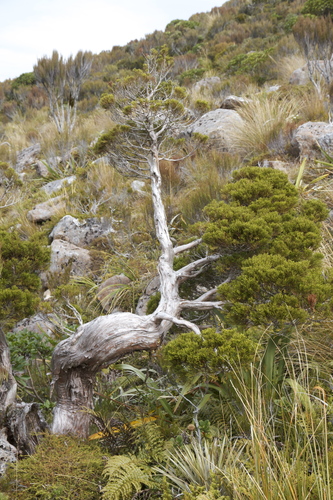
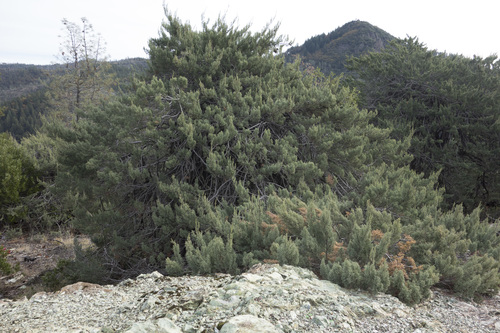
This plant grows as a large shrub or tree that reaches 6–20 metres (20–66 feet) in height. It has a trunk up to 2 m (6+1⁄2 ft) in diameter, and a crown that is broadly conical, rounded, or irregular in shape. Its foliage is strongly aromatic, with a spicy-resinous scent.
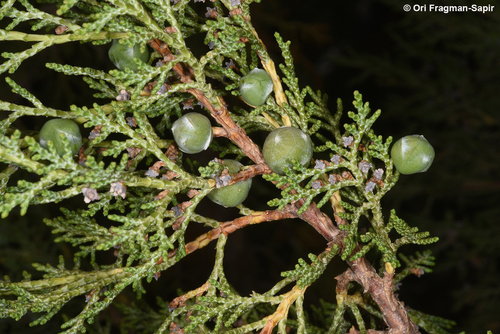
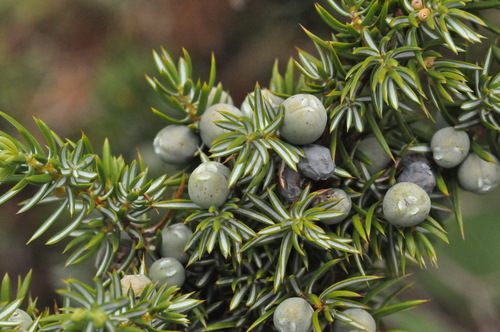
Juniperus thurifera produces two forms of leaves. Juvenile leaves are needle-like, 8–10 millimetres (5⁄16–3⁄8 inch) long, and grow on seedlings as well as irregularly on adult plants. Adult leaves are scale-like, 0.6–3 mm long, and grow on older plants. Both leaf forms are arranged in decussate opposite pairs. The species is dioecious, meaning male and female reproductive structures grow on separate individual plants.
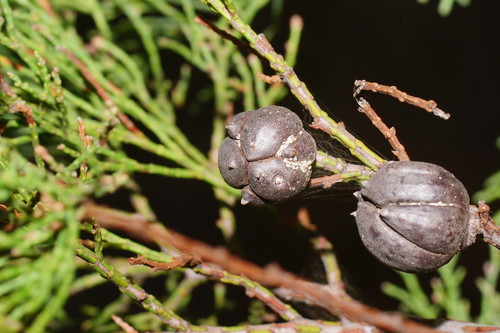
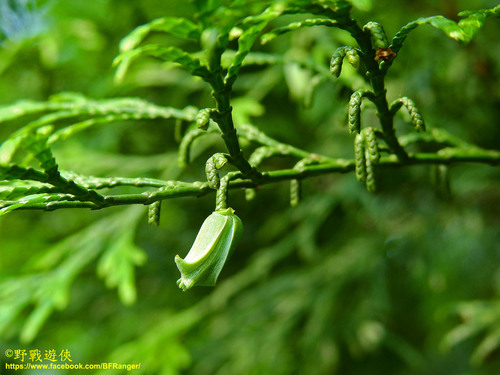
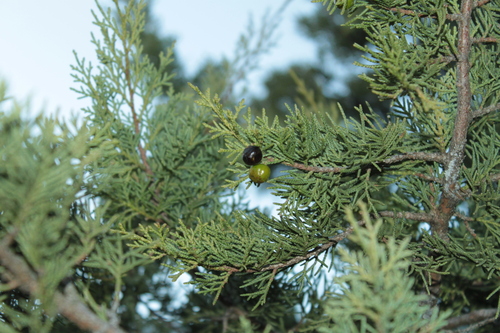
Female cones are berry-like, 7–12 mm in diameter, blue-black with a whitish waxy bloom, and contain 1–4 seeds. These cones mature in approximately 18 months. Male cones are 3–4 mm long, and shed their pollen in early spring.
Two varieties of Juniperus thurifera are recognized by some authors, but not by others. Juniperus thurifera var. thurifera is native to Spain and France; its mature cones measure 8–12 mm and contain 2–4 seeds. Juniperus thurifera var. africana Maire is native to Morocco and Algeria; its mature cones measure 7–8 mm and contain 1–2 seeds.
Overall, the full species is not considered threatened, and it maintains healthy populations in Spain. However, the African population is threatened by severe overgrazing, mainly by goats, and this population is listed as Endangered. The largest Spanish juniper forest in Europe is located in the Sierra de Solorio.